
Side Dishes
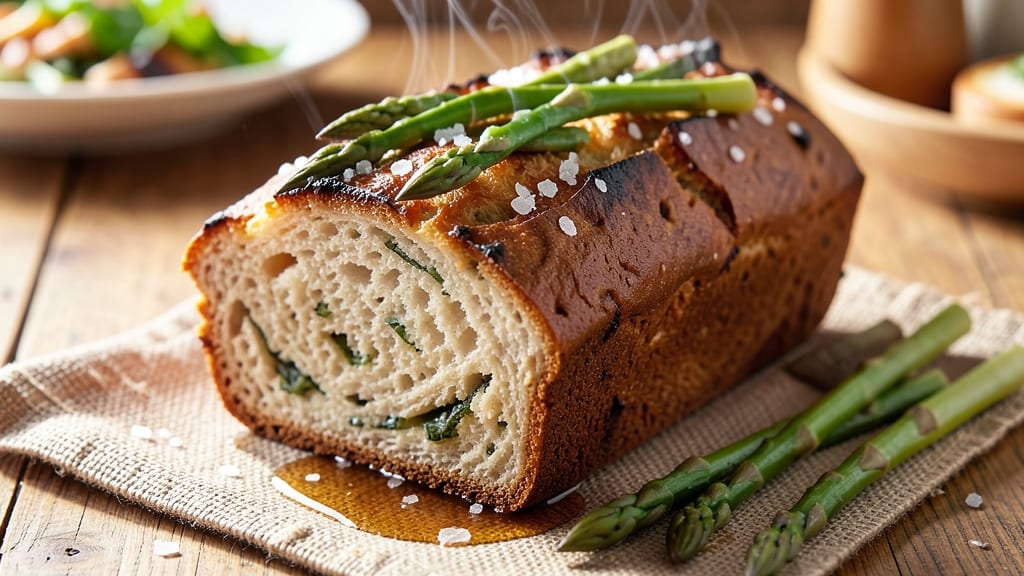
This asparagus bread recipe transforms spring's freshest greens into a fragrant, herb-infused loaf that's perfect for sandwiches or sides. The secret lies in puréeing tender asparagus stems into the dough, creating subtle earthy notes without overpowering the bread's natural flavor.
What makes this recipe stand out is how it balances moisture and texture—no soggy loaves here, just a tender crumb with just the right chew.
Unlike traditional bread recipes, this version incorporates asparagus in two ways: puréed stems for moisture and finely chopped tips for flecks of color and freshness. The dough proofing time is slightly extended to develop maximum flavor, while a light egg wash ensures a golden, crisp crust.
The result? A loaf that's as nutritious as it is delicious, with every slice offering a hint of spring's first harvest.
Perfect for brunch tables or picnic baskets, this bread keeps beautifully for up to 3 days when stored properly. The asparagus infusion adds a subtle gourmet touch that elevates simple toast or sandwiches to restaurant-quality status.
Whether you're a seasoned baker or new to the oven, this recipe delivers professional results with minimal effort.
For best flavor, use young asparagus spears—thicker stems work better for puréeing, while thinner ones add texture when chopped. The recipe scales easily, making it ideal for feeding a crowd or freezing portions for later. Here's how to create this herb-infused loaf that hides greens beautifully while delivering big flavor.
Ingredients for asparagus bread
Spring's freshest greens meet classic bread-making for a loaf that's secretly packed with asparagus goodness.
| Ingredient | Amount | Notes |
|---|---|---|
| Young Asparagus Spears 🌱 | 1 ½ lb | Thick stems for purée, thin for chopping |
| All-Purpose Flour 🌾 | 5 cups | King Arthur or similar high-gluten |
| Whole Milk 🥛 | 1 ½ cups | Full-fat for rich flavor |
| Granulated Sugar 🍚 | 2 tbsp | For subtle sweetness |
| Active Dry Yeast 🍞 | 2 ¼ tsp | Instant yeast works too |
| Salt 🧂 | 2 tsp | Kosher or sea salt |
| Large Eggs 🥚 | 2 whole | Room temperature preferred |
| Unsalted Butter 🧈 | ½ cup | Cold for egg wash |
| Fresh Dill 🌿 | ¼ cup | Chopped, stems removed |
| Fresh Chives 🌱 | ¼ cup | Finely chopped |
| Olive Oil 🫒 | ¼ cup | For dough enrichment |
| Garlic Cloves 🧄 | 2 cloves | Minced for flavor depth |
The asparagus is the star here—young spears with tender stems for puréeing and thinner tips for texture. Local farmers markets often have perfect spring asparagus, but grocery stores carry it too. Look for bright green spears with tightly closed tips. The thicker stems (about 1/4-inch diameter) purée beautifully into the dough, while the thinner ones get finely chopped for flecks of color. If you can't find asparagus, fennel or celery root purées work in a pinch, though they'll change the flavor profile slightly. For the flour, King Arthur or Caputo brands give that perfect chewy texture—don't skimp here.
No fresh dill? Dried dill at half the amount works, but fresh is ideal for that bright flavor. The garlic can be roasted first for a sweeter note—just toss whole cloves with olive oil and roast at 400°F for 10 minutes. For the yeast, make sure it's fresh by testing it in warm water—it should foam within 5 minutes. If your butter's too soft, pop it in the freezer for 10 minutes before making the egg wash. The milk can be warmed slightly (about 100°F) to help activate the yeast faster, but don't let it get hot. And if you're worried about the asparagus flavor being too strong, reduce the chopped tips to 2 tbsp—just enough for color.
This loaf keeps best in a bread bag at room temperature for 2 days, or wrapped in foil in the fridge for up to 5 days. For longer storage, freeze slices wrapped in parchment—reheat in a 350°F oven for 5-10 minutes. The asparagus-infused dough can be shaped and refrigerated overnight for easier morning baking. And if you make extras? Toasted slices make amazing croutons for soups or salads—just cube and bake at 375°F for 8-10 minutes until crispy.
Why You'll Love This Recipe
- No Waste, All Flavor: I chop the asparagus spears right into the dough—no fancy prep, no scraps. That earthy green taste? It’s like spring in every bite, and the spears add a fun texture that’s way more interesting than plain bread.
- Sweet-Savory Magic: The sugar and milk give it a tender crumb, but the asparagus keeps it bright and fresh. It’s not too sweet, not too veggie-heavy—just that perfect balance where you’ll want to toast a second slice before breakfast.
- Breakfast to Brunch: Honestly, this bread is my lazy weekend hero. Toast it with butter for breakfast, serve it warm with soup for lunch, or tear it into croutons for a salad—no one will question why you’re eating it three times a day.
- Budget-Friendly Staple: A whole loaf for under $3? With milk, flour, and a handful of asparagus, it’s cheaper than store-bought and lasts forever. Freeze slices for quick toast later—no sad, dried-out bread here.
Step-by-step instructions for herb-infused asparagus bread
Transform fresh asparagus into a fragrant, herb-packed loaf that hides its greens beautifully.
Prepare the Asparagus Purée and Herb Paste
Preheat your oven to 400°F. Trim the tough ends from 1.5 lb young asparagus spears, reserving the thick stems for purée and thin spears for chopping. Cut the thick stems into 1-inch pieces and steam them in a small pot with 1 cup water for 8-10 minutes until fork-tender. Drain well and return to the pot.
Add 0.25 cup olive oil and 2 cloves minced garlic cloves to the warm asparagus. Using an immersion blender (or regular blender), purée until completely smooth. Let cool to room temperature—this will be our secret green boost. In a separate bowl, finely chop 0.25 cup fresh dill and 0.25 cup fresh chives into a bright green paste.
Mix the Dough and Incorporate Asparagus Flavors
In a stand mixer fitted with the dough hook, combine 5 cups all-purpose flour, 2 tsp salt, 2 tbsp granulated sugar, and 2.25 tsp active dry yeast. Mix on low speed for 30 seconds to blend dry ingredients. Add 1.5 cups whole milk, 0.25 cup olive oil, and the cooled asparagus purée. Mix on medium speed for 5 minutes until a shaggy dough forms.
Switch to the paddle attachment and add 2 whole large eggs and the herb paste. Beat for another 2 minutes until the dough becomes smooth and elastic. The asparagus flavors will be subtle but deeply integrated—this is where the magic happens. If the dough feels too sticky, add 1 tablespoon flour at a time until it pulls away from the bowl.
Knead and Let the Dough Rise
Switch back to the dough hook and knead the dough for 8-10 minutes on medium speed until it becomes smooth and slightly tacky. Test by poking it—if it springs back slowly, it's ready. Shape into a round loaf, place in a lightly oiled bowl, cover with a damp towel, and let rise in a warm place for 1-1.5 hours or until doubled in size.
Here's the thing—this dough needs time to develop gluten properly. Don't rush it. The asparagus purée adds moisture, so the dough will be slightly softer than usual. Punch it down once after 1 hour if it rises unevenly. The second rise ensures a light, airy crumb that's perfect for hiding the subtle asparagus flavor.
Shape and Proof the Loaf
Turn the dough onto a lightly floured surface and shape it into an oval loaf, about 10 inches long. Place it seam-side down in a greased 9x5-inch loaf pan. Cover loosely with plastic wrap and let proof for another 45-60 minutes until it rises about 1 inch above the pan. The dough should feel springy when pressed gently.
While it proofs, preheat your oven to 375°F. Brush the top of the loaf with a mixture of melted 0.5 cup unsalted butter and 1 tablespoon water for a golden finish. Sprinkle with additional chopped herbs if desired. The loaf is ready when it's puffed and jiggly—this is your final test before baking.
Bake to Golden Perfection
Bake for 35-40 minutes until the bread is deep golden brown and sounds hollow when tapped on the bottom. If the top browns too quickly, tent loosely with foil after 20 minutes to prevent over-browning. The internal temperature should reach 190-200°F.
Remove from the oven and let cool in the pan for 10 minutes before transferring to a wire rack. The aroma of fresh herbs and subtle asparagus will fill your kitchen—this is your reward for the effort. Slice while still warm for the best texture, and you'll barely notice the hidden greens in every bite. The crust should be crisp, the crumb tender, and the herb notes bright throughout.
Pro Tips For Making Asparagus Bread
- Blanch Asparagus First: Trim the tough ends, then drop spears into boiling salted water for 90 seconds—just until bright green and slightly tender. Cold shock them in ice water right after to stop cooking; this keeps them vibrant in the dough and prevents a bitter bite. (Yes, it’s extra work, but the flavor pays off.)
- Proof Yeast in Warm Milk: Skip mixing yeast with flour first—dissolve it in the warm (not hot) milk with a pinch of sugar for 5 minutes until frothy. This guarantees it’s active before adding flour, so your bread rises reliably. (I learned this the hard way after making dense, flat loaves.)
- Knead Until Silky: Aim for a dough that stretches without tearing—like windowpane glass. If it feels sticky or cracks when pulled, knead 2–3 more minutes. Overmixing? Stop at 8–10 minutes total. The asparagus makes the dough heavier, so don’t rush this step.
- Shape Loaves Tightly: Roll the dough into a log, then pinch the seams shut like a sausage—no gaps. This traps steam during baking, giving you a crisp crust and even rise. (Loose seams = sad, flat bread. Trust me.)
Best sauces and condiments for these flavors
Herb Butter Spread
Whip up a quick herb-infused butter spread by mixing ½ cup softened unsalted butter with 1 tbsp chopped fresh dill, 1 tbsp chopped chives, and a pinch of salt.
Spread on warm slices while still soft—this adds richness that complements the bread's subtle asparagus flavor. I like to add a tiny pinch of garlic powder for extra depth. 🌿
Garlic Aioli Dip
For a crowd-pleasing dip, blend ½ cup mayonnaise, 2 tbsp sour cream, 1 minced garlic clove, 1 tsp lemon juice, and 1 tbsp chopped parsley.
The creamy texture contrasts beautifully with the bread's crust, while the garlic echoes the dough's flavor. Serve with extra herbs sprinkled on top for a pop of color. 🧄
Lemon-Herb Oil
Create a bright finishing oil by whisking ½ cup olive oil, 1 tbsp lemon zest, 1 tbsp chopped dill, and ½ tsp salt. Drizzle over slices before serving to cut through the bread's richness.
The citrus notes balance the earthy asparagus perfectly. Store any leftovers in a sealed jar in the fridge for up to 1 week. ✨
Spicy Mustard Glaze
For a tangy kick, mix 2 tbsp Dijon mustard, 1 tbsp honey, and 1 tsp apple cider vinegar. Warm the mixture in a small saucepan over low heat until smooth, then brush onto toasted slices.
The sweetness and heat pair wonderfully with the bread's herbal notes. Great for breakfast sandwiches or charcuterie boards. 🌶️
Cream Cheese and Asparagus Dip
Blend 8 oz cream cheese, ¼ cup sour cream, 1 tbsp chopped asparagus tips (from the recipe), and 1 tsp lemon juice until smooth. The asparagus adds a subtle green hue and fresh flavor that ties back to the bread.
Serve with cucumber slices or radishes for a spring-inspired appetizer. 🥒
Nutrition facts
Frequently asked questions
Why does this recipe use asparagus purée instead of chopped asparagus?
The purée blends seamlessly into the dough, adding moisture and subtle flavor without altering the bread's texture. Chopped asparagus would create pockets of moisture that could make the bread dense. The purée method ensures even distribution of nutrients while keeping the crumb light and airy.
Can I substitute frozen asparagus in this recipe?
Fresh asparagus works best for optimal flavor and texture, but you can use frozen in a pinch. Thaw and drain it thoroughly, then steam until tender before puréeing. The frozen version will be slightly less vibrant, but the bread will still turn out delicious. For best results, use high-quality frozen asparagus with no added sauces.
How do I know when the dough has risen enough?
Your dough is ready when it's doubled in size and springs back slowly when gently pressed with one finger. For this recipe, the asparagus purée makes the dough slightly softer than traditional bread dough, so it may feel springier even when fully risen. The second rise in the loaf pan should show about 1 inch of growth above the pan's edge.
What if my bread turns out too dense? Dense bread usually means the dough didn't develop enough gluten or was overworked.
Can I make this bread without a stand mixer?
Mix the dough by hand in a large bowl, using a wooden spoon to combine ingredients initially. Then knead on a lightly floured surface for about 10 minutes, folding and pressing until smooth. The dough will be slightly stickier by hand, but the final texture will be just as good. The key is patience—knead until it's elastic and springs back when poked.