
Side Dishes
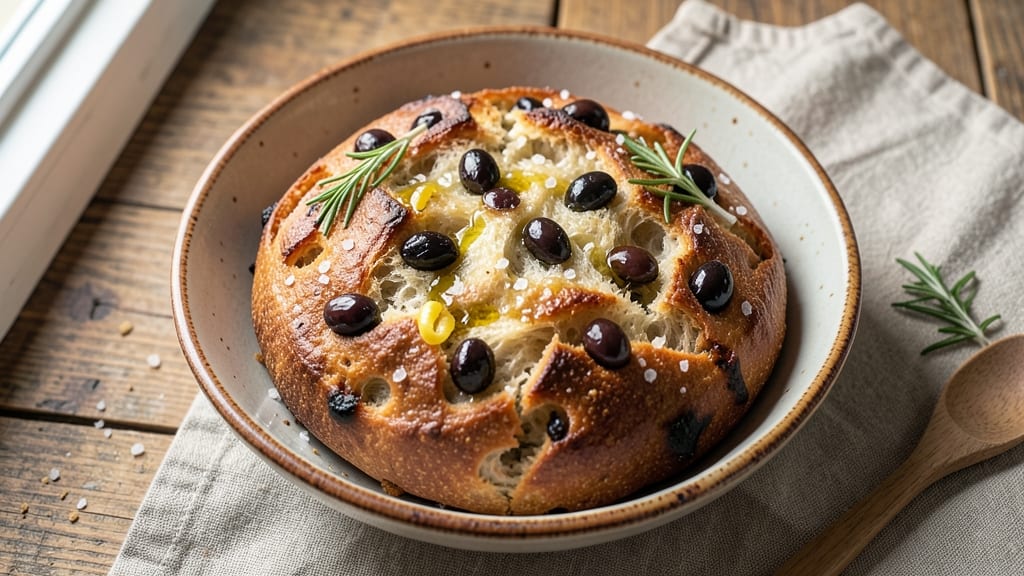
This artisan olive bread recipe delivers rustic, herb-infused loaves with tangy depth and a crispy crust—perfect for elevating any meal. The secret lies in blending finely chopped olives directly into the dough, creating pockets of briny flavor with every bite.
Unlike store-bought versions, this recipe uses a slow fermentation and high-heat bake to develop an open crumb and golden crust that rivals traditional wood-fired loaves.
The process starts with a simple yet precise dough formula: bread flour, active dry yeast, water, and extra-virgin olive oil, combined with pitted Kalamata olives for that signature Mediterranean tang.
Optional herbs like rosemary or thyme add aromatic layers, while a generous sprinkle of coarse salt enhances the olive flavor. The dough undergoes two rises—one at room temperature, another in the fridge—to develop complexity without overproofing.
When baked, the loaf emerges with a shatteringly crisp crust and a soft, airy interior studded with olive flecks. The aroma alone—briny, herby, and toasty—transforms your kitchen into a rustic bakery.
This bread pairs beautifully with tomato soups, charcuterie boards, or simply slathered with olive oil for dipping.
For a modern twist, try swirling olive tapenade into the dough before shaping or topping with herbed olive oil before baking. Whether you use a home oven (with steam for extra crustiness) or a wood-fired setting, this recipe delivers restaurant-quality results with minimal effort. Ready to bake?
Ingredients for artisan olive bread
Simple yet precise ingredients transform into rustic, briny, herb-infused artisan bread with restaurant-quality crust.
| Ingredient | Amount | Notes |
|---|---|---|
| Bread Flour 🌾 | 4 cups | High-protein for structure |
| Active Dry Yeast 🍞 | ¼ oz | Or 2 1/4 tsp (1 packet) |
| Extra-Virgin Olive Oil 🫒 | ½ cup | Fruity, high-quality preferred |
| Pitted Kalamata Olives 🫒 | 1 cup | Finely chopped, skin removed |
| Warm Water 💧 | 1 ¼ cups | 110°F for optimal yeast activation |
| Coarse Sea Salt 🧂 | 1 ½ tsp | Diamond Crystal preferred |
| Fresh Rosemary 🌿 | 2 tbsp | Finely chopped, stems removed |
| Fresh Thyme 🌿 | 1 tbsp | Leaves only, finely chopped |
| All-Purpose Flour 🌾 | ¼ cup | For dusting work surface |
| Cornmeal 🌽 | ¼ cup | For baking surface |
| Olive Tapenade 🫒 | ¼ cup | Optional, for modern twist |
| Herbed Olive Oil 🫒 | ⅛ cup | Optional, for topping |
The quality of your flour and olive oil makes all the difference here. King Arthur or Caputo bread flour delivers the best structure—avoid all-purpose unless you're in a pinch. For olives, Kalamata from Mediterranean markets offer the deepest flavor; if using canned, ensure they're pitted and skinless. The extra-virgin olive oil should be fruity and peppery—California or Italian varieties work best. Fresh herbs are non-negotiable; dried can't replicate their aromatic punch. Store your flour in an airtight container to prevent absorption of kitchen odors, and keep yeast refrigerated until use for maximum potency.
No Kalamata olives? Green olives or niçoise olives work in a pinch, but chop them slightly finer to mimic the texture. Running short on rosemary? Substitute with 1 tbsp fresh oregano or 1 tsp dried, but the flavor profile will shift. The olive tapenade can be homemade with blended olives, capers, and garlic or store-bought from Trader Joe's or Whole Foods. For the herbed olive oil topping, infuse olive oil with fresh herbs and garlic for 24 hours before using. If you lack cornmeal, a sprinkle of semolina or rice flour works equally well for preventing sticking.
This dough requires patience—plan for at least 24 hours from start to finish with the cold proof. Store unused flour in a cool, dark pantry for up to 6 months; yeast lasts 2 weeks refrigerated. Fresh herbs keep 5-7 days wrapped in damp paper towels. The finished loaf stays fresh 3-4 days at room temperature or 1 week wrapped in the fridge. For longer storage, freeze slices wrapped in parchment for up to 3 months—reheat in a 350°F oven for 5 minutes to restore crispness.
Why You'll Love This Recipe
- No-Knead Nightmare Solved: I swear by this recipe when I’ve had enough of kneading until my arms give out—just mix, let it rise, and bake. The dough comes together in minutes, and the olives fold right in without fuss, so you’re not stuck chopping or prepping extra.
- Salty, Briny Magic: That first bite? The crisp crust gives way to soft, airy bread packed with briny Kalamata olives and the rich depth of extra-virgin olive oil. It’s the kind of flavor that makes you reach for a second slice before you even finish the first.
- Weeknight Hero: Between us, this bread is my secret weapon for lazy dinners. Toss it with tomatoes and basil for a quick lunch, or serve it alongside soups and stews—it’s the perfect side that doesn’t require a side dish. (Yes, even on a Tuesday night.)
- Budget-Friendly Staple: A single batch feeds my family for days, and the ingredients won’t break the bank. The olives add luxury without the price tag, and the dough keeps well for 2-3 days, so you’re not scrambling to bake every morning. Win.
Step-by-step instructions for artisan olive bread
Mastering this crusty loaf requires precision in technique and timing for that perfect balance of tangy olives, aromatic herbs, and crisp exterior.
Activate the Yeast and Mix the Dough
In a large mixing bowl, combine the 1.25 cups warm water (around 110°F) with the 0.25 oz active dry yeast. Let it sit for 5-10 minutes until the mixture becomes frothy and bubbles form on the surface. This confirms your yeast is active and ready to work.
To the yeast mixture, add the 4 cups bread flour, 1.5 tsp coarse sea salt, 2 tbsp finely chopped fresh rosemary, 1 tbsp finely chopped fresh thyme, and 0.5 cup extra-virgin olive oil. Using a wooden spoon or dough whisk, stir until a shaggy dough forms. The dough will be sticky, but that's normal with high-hydration doughs like this one.
Knead the Dough to Develop Gluten
Turn the dough out onto a lightly floured surface dusted with 0.25 cup all-purpose flour. Knead vigorously for 8-10 minutes until the dough becomes smooth, elastic, and slightly tacky. You'll know it's ready when it springs back slowly when poked with your finger—a sign the gluten has properly developed.
During kneading, resist the temptation to add more flour. The dough should be soft but not sticky to the touch. If it's too sticky, just wet your hands slightly to prevent sticking. The high protein content in bread flour helps create that beautiful open crumb structure we're after.
First Rise and Incorporate Olives
Place the dough back in the mixing bowl, cover it loosely with plastic wrap, and let it rise in a warm place for 1-2 hours or until it has doubled in size. The dough should feel light and airy when pressed gently with one finger.
After the first rise, punch down the dough to release air, then transfer it to the floured surface. Gently fold in the 1 cup finely chopped pitted Kalamata olives and 0.25 cup olive tapenade (if using), pressing them lightly into the dough. The olives will add that signature tangy depth while the tapenade enhances the Mediterranean profile. Shape the dough into a log and let it rest for 20 minutes—this final rest helps the dough relax before shaping.
Shape and Second Rise
Shape the dough into a smooth, slightly tapered log by rolling it gently from one end to the other. Place it seam-side down on a baking sheet dusted with 0.25 cup cornmeal, then cover loosely and let it rise for another 1-2 hours until puffy and nearly doubled in size. The dough should feel firm to the touch and spring back slowly when pressed.
For an extra touch, brush the risen dough with 0.125 cup herbed olive oil (if using) just before baking. This creates a beautiful golden crust while infusing the bread with additional herbaceous flavor. Preheat your oven to 425°F with a baking stone or inverted baking sheet inside—this ensures even heat distribution for that perfect crust.
Bake for Crispy Perfection
Bake the bread for 30-35 minutes until the crust is deep golden brown and sounds hollow when tapped on the bottom. The internal temperature should reach 190-200°F. If the top browns too quickly, tent loosely with foil to prevent over-browning while the interior finishes baking.
Remove the bread from the oven and let it cool on a wire rack for at least 30 minutes before slicing. This resting period allows the crumb to set properly and prevents the bread from becoming gummy. The result should be a beautifully crusty exterior with an open, airy crumb studded with briny olives and fragrant herbs—perfect for serving with soups, olive oil, or simply enjoying on its own.
Pro Tips For Making Artisan Olive Bread
- CHOP OLIVES SMALL: Kalamata olives are stubborn—don’t just toss them in whole. Roughly chop them into ¼-inch pieces so they distribute evenly in the dough and release flavor during baking. (Yes, even if you’re tempted to skip this, your first bite will make you regret it.)
- USE A THERMOMETER FOR DOUGH: The dough is ready to shape when it springs back slowly (not instantly) when poked—but don’t guess. Aim for 78–80°F (25–27°C). Too cold? It’ll fight you. Too warm? The olives will bleed oil everywhere.
- DON’T OVERMIX THE OLIVES: Tossing olives into the dough after the autolyse (flour + water rest) keeps them from turning into a mushy paste. Fold them in gently with the final olive oil—just enough to coat, not drown.
- COOL ON A WIRE RACK: That golden crust? It’s fragile. Slapping bread onto a counter will steam the bottom and ruin the texture. Let it cool on a wire rack for 30 minutes—yes, even if you’re starving. (Your sandwich tomorrow will thank you.)
Regional styles of artisan olive bread
Italian Rustic Style
In Italy, this bread often takes the form of a focaccia-like loaf with a thicker, more rustic texture. The traditional approach uses whole wheat flour (replacing 1 cup of bread flour) for a nuttier flavor and fresh basil instead of rosemary.
For authenticity, shape the dough into a thick rectangle and dimple the top with your fingers before baking. Brush with extra-virgin olive oil and sprinkle with flaky sea salt and black pepper after baking.
The result is a chewy, olive-speckled loaf perfect for pairing with tomato-based sauces or burrata cheese. 🌿
French Baguette Twist
For a French-inspired version, reduce the olive amount to ½ cup and replace the rosemary with fresh tarragon. Shape the dough into a long, tapered baguette and bake on a peel in a hot oven (preheated to 475°F) for 20-25 minutes.
The high heat creates a shatteringly crisp crust while keeping the interior tender. Finish with a light dusting of flour and a sprinkle of coarse salt for that classic Parisian bakery touch. This version pairs beautifully with butter and jam or charcuterie boards. 🥖
Greek Olive Bread
In Greece, this bread often incorporates oregano and lemon zest alongside the olives. Use green olives instead of Kalamata for a milder tang, and add 1 tbsp lemon zest to the dough for brightness. Shape the loaf into a round boule and bake on a preheated baking stone.
After baking, drizzle with a mix of olive oil and lemon juice for a zesty, herby finish. This version is perfect with tzatziki dip or grilled meats. 🍋
Spanish Pan Con Aceite
For a Spanish adaptation, replace the rosemary with smoked paprika and add 1 tsp garlic powder to the dough. Shape the bread into a round loaf and bake until the crust is deep golden and crisp.
After baking, brush the top with olive oil and sprinkle with coarse salt and smoked paprika for a tapas-style finish. Serve with manchego cheese or jamón ibérico for a bold, savory-sweet combination. 🧀
Modern Fusion Loaf
For a contemporary twist, try adding 1 tbsp honey to the dough for subtle sweetness or swirling in sun-dried tomatoes alongside the olives. Shape the dough into a free-form loaf with a cracked top (score with a razor blade before baking).
Top with herbed olive oil and crushed red pepper flakes before baking for a spicy, herby crust. This version works beautifully as a gourmet side or charcuterie base. 🌶️
Nutrition facts
Frequently asked questions
Why does the dough need two rises?
The first rise activates the yeast and develops basic structure, while the second—especially the cold proof—enhances flavor complexity and gluten development. This 24-hour process creates that signature open crumb and deep olive aroma. Skipping it results in a denser, less flavorful loaf.
Can I substitute all-purpose flour for bread flour?
You can, but expect a slightly denser crumb with less rise. For best results, use King Arthur or Caputo bread flour—its higher protein content creates that perfect airy texture. If substituting, add 1 tbsp vital wheat gluten per cup of all-purpose flour.
How do I fix a dough that's too sticky?
Wet your hands slightly and keep kneading—adding extra flour tightens the crumb. For stubborn stickiness, chill the dough for 20 minutes before shaping. The high hydration comes from the olive oil and water, but proper kneading and resting solve this.
What's the best way to reheat sliced olive bread?
Wrap slices in foil and warm in a 350°F oven for 5-7 minutes to restore crispness. For extra flavor, brush with olive oil before reheating. Avoid microwaving—it makes the crust soggy.
Can I make this bread without a baking stone?
Use an inverted baking sheet or place the dough on a preheated cast-iron skillet. For extra steam (key for crust), add a pan of boiling water to the oven. The result will be nearly identical to stone-baked bread.