
Desserts
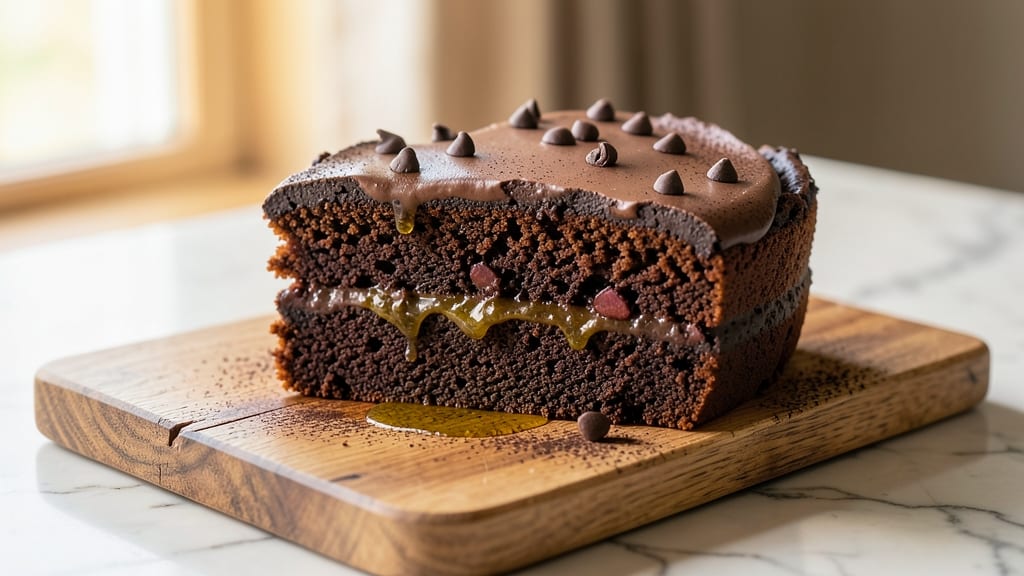
This chocolate olive oil cake delivers the kind of decadent richness that makes every slice feel like a celebration. 🔥 Candace Nelson’s signature technique—combining olive oil’s smooth texture with deep chocolate flavor—creates a moist crumb and velvety frosting that’s impossible to resist.
The secret lies in precise ingredient ratios and gentle baking, ensuring a tender yet sturdy cake that holds its shape.
What sets this recipe apart is the balance of flavors: bitter dark chocolate meets the fruity depth of extra-virgin olive oil, while a touch of espresso powder intensifies the cocoa notes.
The frosting, made with the same olive oil base, ties everything together with a silky finish that’s neither too sweet nor too heavy. It’s the kind of dessert that feels luxurious yet approachable—perfect for special occasions or spontaneous cravings.
The result is a fudgy-yet-light cake with a crackly top and a crumb so tender it melts in your mouth. Each layer is generously filled with frosting, and the edges stay clean, making it as impressive to serve as it is to eat.
Whether you’re baking for a gathering or treating yourself, this recipe delivers restaurant-quality results at home. For best results, use high-quality ingredients—especially the olive oil—and don’t rush the baking process. The patience pays off in a cake that’s rich, balanced, and unforgettable. Let’s get baking!
Ingredients for candace nelson chocolate olive oil cake
High-quality ingredients transform this chocolate olive oil cake into a luxurious dessert with restaurant-quality depth.
| Ingredient | Amount | Notes |
|---|---|---|
| Extra-Virgin Olive Oil 🫒 | 1 cup | High quality, fruity, cold-pressed |
| Unsalted Butter 🧈 | ½ cup | Room temperature for creaming |
| Granulated Sugar 🍚 | 2 cups | Superfine preferred for smoothness |
| Dark Chocolate Chips 🍫 | 12 oz | 70% cocoa or higher, chopped fine |
| All-Purpose Flour 🌾 | 2 ½ cups | Sifted, spooned lightly |
| Instant Espresso Powder ☕ | 1 tbsp | Enhances chocolate depth |
| Baking Powder 🧂 | 1 tsp | Aluminum-free preferred |
| Salt 🧂 | ½ tsp | Fine sea salt |
| Large Eggs 🥚 | 2 whole | Room temperature |
| Vanilla Extract 🌸 | 1 tbsp | Pure Madagascar preferred |
| Whole Milk 🥛 | ½ cup | Room temperature |
| Powdered Sugar 🍚 | 3 cups | For frosting, sifted |
| Heavy Cream 🥛 | 1 cup | Chilled for frosting |
| Dark Chocolate Bar 🍫 | 8 oz | 70% cocoa, melted for garnish |
The extra-virgin olive oil is non-negotiable here—look for cold-pressed, fruity varieties from California or Italy (like Colavita or Bertolli) to capture that rich, fruity depth. Dark chocolate should be 70% cocoa or higher—Valrhona or Guittard are excellent choices, but any high-quality brand works. For the espresso powder, Starbucks or La Marzocco brands deliver consistent intensity. Sift your flour and powdered sugar to avoid dense crumb—King Arthur or Bob's Red Mill brands are ideal for their fine texture. Room-temperature eggs and butter ensure proper emulsification, so take them out 30 minutes before baking.
No extra-virgin olive oil? Light olive oil works in a pinch, but the flavor will be less complex. Substitute dark chocolate with high-quality cocoa powder (like Callebaut) if needed—reduce by 1 oz per 2 tbsp cocoa. For a lighter cake, replace half the butter with apricot jam (mixed with the wet ingredients). If you lack espresso powder, instant coffee granules at half the amount will intensify the chocolate flavor. For the frosting, whipped cream can replace heavy cream, but it won’t be as stable. Always use powdered sugar for frosting—granulated sugar won’t dissolve properly.
Store the cake in an airtight container at room temperature for up to 3 days, or refrigerate for up to 5 days. The frosting may weep slightly if refrigerated, so bring it to room temperature before serving. For longer storage, freeze the unfrosted cake layers for up to 2 months—thaw and frost before serving. Garnish with melted dark chocolate drizzle or flaky sea salt right before serving to preserve texture. This cake reheats beautifully—warm slices in the oven at 300°F for 5 minutes to restore moisture.
Why You'll Love This Recipe
- No Mixer Needed: I swear by this recipe when I’m too tired for stand mixers—just whisk the olive oil and butter together until smooth. The rich, velvety batter comes together in minutes, and honestly? That’s half the battle won.
- Rich Without Overpowering: The dark chocolate chips melt into the crumb like little pockets of decadence, but the olive oil keeps it from being heavy. Between us, it’s the kind of cake that tastes like a bakery’s secret—moist, deep, and just sweet enough.
- Weeknight Dinner Hack: Slice it up and serve with a dollop of whipped cream or a sprinkle of flaky salt for a dessert that feels fancy but takes zero effort. I’ve even used it as a base for breakfast pastries—trust me, it’s a game-changer when you’re running late.
- Budget-Friendly Luxury: Olive oil and butter make this cake feel indulgent without breaking the bank. A single batch stretches to gifts, lunches, or late-night cravings, and the leftovers? They disappear faster than I can say “second slice.”
Step-by-step instructions for Candace Nelson's chocolate olive oil cake
This method delivers a decadent yet balanced chocolate cake with moist crumb and rich olive oil depth.
👨🍳 Step 1: Cream Olive Oil and Butter with Sugar
In a stand mixer fitted with the paddle attachment, combine the 1 cup extra-virgin olive oil, 0.5 cup unsalted butter, and 2 cups granulated sugar. Beat on medium speed for 5-6 minutes until the mixture is light, fluffy, and nearly doubles in volume. You're looking for a pale, ribbon-like consistency that holds its shape when the paddle is lifted.
Here's the thing—olive oil has a lower melting point than butter, so we need that extra creaming time to fully incorporate air. Scrape down the sides of the bowl every 2 minutes to ensure even mixing. If the mixture feels too warm after creaming, chill it in the fridge for 10 minutes before proceeding.
👨🍳 Step 2: Add Eggs and Espresso for Depth
Add the 2 whole large eggs, one at a time, mixing on low speed for 30 seconds after each addition until fully incorporated. Then add the 1 tbsp vanilla extract and 1 tbsp instant espresso powder, mixing on low speed for another 1 minute until smooth.
The espresso powder enhances the chocolate flavor without adding bitterness. I like to sift it directly over the mixture to prevent clumping. This is also where the cake's signature depth comes from—the combination of olive oil, chocolate, and espresso creates a complex flavor profile that's far more interesting than vanilla chocolate cake.
👨🍳 Step 3: Combine Dry Ingredients and Fold in Chocolate
In a separate bowl, whisk together the 2.5 cups all-purpose flour, 1 tsp baking powder, and 0.5 tsp salt. With the mixer on low speed, gradually add the dry ingredients to the wet mixture, mixing just until combined—you should still see some flour streaks. Remove the bowl from the mixer and gently fold in the 12 oz dark chocolate chips using a silicone spatula.
Don't overmix at this stage—you're looking for a thick, fudgy batter with just enough structure to hold its shape. If the batter feels too thick, add 0.5 cup whole milk tablespoon by tablespoon until it reaches a smooth, pourable consistency. The chocolate chips should be evenly distributed throughout the batter.
🔥 Step 4: Bake to Perfect Doneness
Preheat your oven to 350°F and grease two 8-inch round cake pans with olive oil, then line the bottoms with parchment paper. Divide the batter evenly between the pans and smooth the tops. Bake for 30-35 minutes until a toothpick inserted into the center comes out with moist crumbs (not wet batter).
This cake has a dense texture, so it needs that extra minute or two to fully set. The edges should be golden brown while the center remains slightly fudgy. I like to rotate the pans halfway through baking for even heat distribution. Let the cakes cool in the pans for 10 minutes, then transfer to a wire rack to cool completely before frosting.
🥘 Step 5: Prepare the Chocolate Ganache Frosting
Place the 8 oz dark chocolate bar in a heatproof bowl set over a pot of simmering water (double boiler). Add the 1 cup heavy cream and let the mixture sit for 2 minutes until the chocolate melts completely. Remove from heat and whisk until smooth and glossy. Let the ganache cool slightly, then fold in 3 cups powdered sugar until fully incorporated.
The ganache should be thick enough to pipe but still spreadable. If it's too thin, chill it for 10 minutes to thicken. This frosting is rich but balanced by the acidity of the espresso in the cake. Spread it between the cooled cake layers and over the top and sides, creating a smooth finish. Chill the frosted cake for 1 hour before slicing for clean layers.
Pro Tips For Making Candace Nelson Chocolate Olive Oil Cake
- Measure Olive Oil Cold: The recipe calls for room-temperature olive oil, but I learned the hard way—if it’s too warm, the cake turns greasy. Pop the bottle in the fridge for 10 minutes before measuring, then let it sit out just until it drizzles smoothly. Trust me, your texture will thank you.
- Cut Butter in Small Batches: Dumping all the butter at once makes it melt into a soupy mess. Work in 2-tablespoon chunks, pulsing just until crumbly, then repeat. The goal is tiny, pea-sized butter bits—this keeps the cake tender without turning it dense.
- Don’t Overmix the Batter: I used to beat this like a smoothie, but the second I saw the flour turn grayish, I knew I’d ruined it. Mix just until combined—lumps are fine. Overworking the batter makes the cake tough, and this recipe is all about that melt-in-your-mouth richness.
- Use a Toothpick, Not a Cake Test: This isn’t a vanilla cake—it’s dense with olive oil and chocolate. A toothpick should come out with moist crumbs, not clean. Pull it out at 55–60 minutes, tent with foil if needed, and let it rest 15 minutes before slicing. Patience here keeps it from falling apart.
Troubleshooting this recipe
Crackly Top Issues
If your cake emerges with a dry, cracked top instead of a glossy sheen, it’s usually from overbaking or insufficient moisture. First, check your oven temperature—use an oven thermometer to confirm it’s at 350°F (many ovens run hot).
For extra richness, brush the tops with 1 tbsp extra-virgin olive oil right before baking. I’ve also found that adding 1 extra tablespoon of milk to the batter helps retain moisture during baking. 🌡️
Dense or Dry Crumb
A dense or dry cake often means overmixing or incorrect flour measurement. Always spoon flour lightly into your measuring cup (don’t scoop directly from the bag) to avoid packing. For extra moisture, replace 2 tbsp of flour with 2 tbsp cornstarch—this keeps the crumb tender.
If the batter feels too thick, add 1 tbsp milk at a time until it reaches a smooth, pourable consistency. Overmixing activates the gluten, so mix just until combined. ⚡
Frosting Too Thin
If your ganache frosting is too runny, it’s likely because the chocolate didn’t cool enough before adding powdered sugar. Let the melted chocolate and cream mixture cool to room temperature (about 70-75°F) before folding in the sugar.
For stability, chill the ganache for 10-15 minutes in the fridge before using. If it’s still too thin, mix in 1 tsp cornstarch to thicken it. For a smoother finish, strain the ganache through a fine-mesh sieve before spreading. 💫
Cake Sticking to Pans
Greasing your pans with olive oil is key, but sometimes the cake still sticks. Line the bottoms with parchment paper and grease the sides with oil for easy release. I also recommend using 8-inch round cake pans with 2-inch tall sides—they provide better structure.
If the cake still sticks, run a thin knife around the edges before removing from the pan. For extra insurance, dust the parchment with powdered sugar before adding the batter. 🔥
Uneven Baking
Uneven baking often happens when heat isn’t distributed properly. Rotate your pans halfway through baking (after 15-17 minutes) for even cooking. If one side browns faster, cover it loosely with aluminum foil for the remaining bake time.
Preheat your oven for at least 30 minutes to ensure consistent temperature. For extra evenness, place a baking sheet on the rack below the pans to reflect heat upward. ✨
Frosting Separating
If your frosting separates into a buttery layer and a sugary layer, it’s likely due to temperature shock. Let the ganache cool gradually at room temperature (don’t rush it in the fridge). For extra stability, whisk in 1 tsp lemon juice (the acidity helps emulsify).
If separation happens after mixing, gently reheat the ganache for 10-15 seconds in the microwave, then whisk vigorously until smooth. Spread it quickly while still warm for a seamless finish. 💡
Nutrition facts
Frequently asked questions
Why does this recipe use olive oil instead of butter?
Olive oil adds a unique fruity depth that complements the chocolate beautifully while keeping the cake incredibly moist. Unlike butter, it doesn't solidify when chilled, creating a tender crumb that stays rich and fudgy. The high-quality extra-virgin variety enhances the cake's complexity with subtle herbal notes.
Can I make this cake without espresso powder?
Yes! If you don't have espresso powder, substitute with 1 tsp instant coffee granules or even ½ tsp cocoa powder. The espresso enhances the chocolate flavor but isn't essential. For a different twist, try 1 tsp orange zest to add brightness instead.
How do I prevent the frosting from melting in warm weather?
Chill the frosted cake for at least 2 hours before serving to stabilize the ganache. For extra insurance, add 1 tsp cornstarch to the frosting mixture. Serve with a dusting of powdered sugar on top to create a protective barrier against humidity.
What's the best way to store leftovers?
Wrap individual slices tightly in plastic wrap, then store in an airtight container at room temperature for up to 3 days. For longer storage (up to 5 days, refrigerate the whole cake. The frosting may weep slightly when cold, so bring it to room temperature before serving.
Can I substitute dark chocolate chips for melted chocolate?
Melt 12 oz dark chocolate (70% cocoa or higher) and let it cool slightly before folding into the batter. This creates a smoother texture with more intense chocolate flavor. For best results, chop the chocolate into small pieces first to ensure even distribution throughout the batter.