
Side Dishes
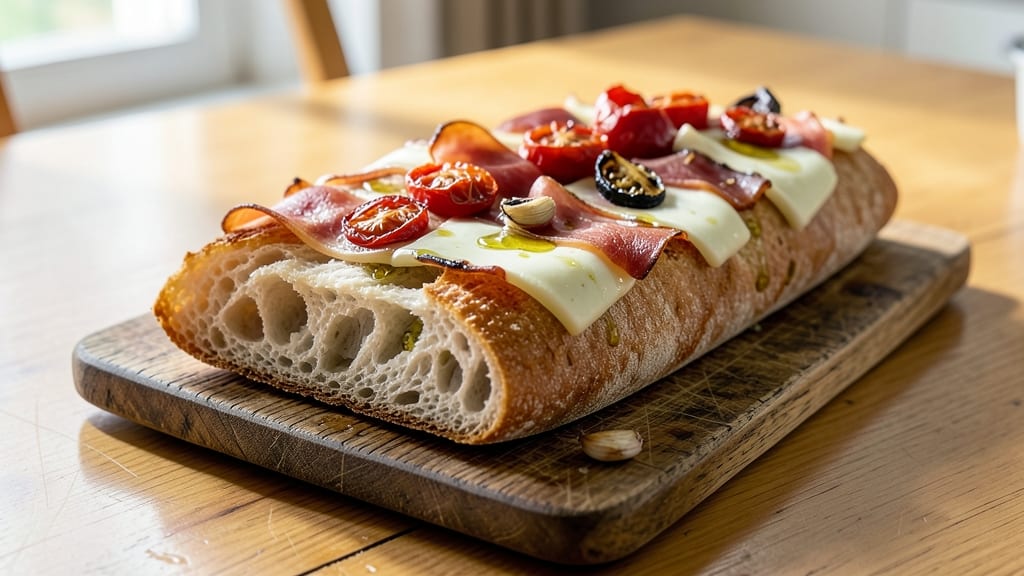
The antipasto bread loaf transforms a simple loaf of focaccia or ciabatta into a showstopping centerpiece that captures the heart of Italian antipasto—crusty, herbed, and layered with salty-sweet toppings. This recipe blends tradition with modern convenience, delivering restaurant-quality results in just 45 minutes of active time.
The secret lies in a crispy, golden crust that frames rivers of melted cheese and cured meats, making every bite a celebration of Italian flavors.
What sets this antipasto bread apart is its versatility. Start with a sturdy bread base like ciabatta or focaccia, then layer it with prosciutto, mozzarella, sun-dried tomatoes, and roasted peppers—classic antipasto ingredients reimagined as a cohesive, shareable dish.
The bread absorbs the flavors while baking, creating a harmonious blend of textures: tender crust, creamy cheese, and the briny tang of cured meats. It’s perfect for gatherings, game day, or a weekend brunch where you want to impress without fuss.
By the time it emerges from the oven, your loaf will be crowned with a golden, crackly crust and topped with melted cheese rivers that pull apart at the touch. The aroma alone—herbs, garlic, and cured meats—will have everyone gathering around the table.
Whether you stick to traditional toppings or experiment with vegan cheese or gluten-free bread, this recipe delivers a dish that’s as satisfying to make as it is to eat.
The best part? It’s customizable. Swap in roasted red peppers for sun-dried tomatoes, add a sprinkle of fresh basil, or drizzle with extra virgin olive oil before serving.
This antipasto bread loaf is more than just a side—it’s a flavor-packed centerpiece that brings the essence of Italy to your kitchen. Let’s get started on creating it.
Ingredients for antipasto bread loaf
Crusty bread, salty-sweet toppings, and Italian flavors—this antipasto loaf steals the show.
| Ingredient | Amount | Notes |
|---|---|---|
| Focaccia or Ciabatta Loaf 🍞 | 1 whole | Store-bought or homemade, crusty variety |
| Prosciutto 🥓 | 8 oz | Thinly sliced, high-quality preferred |
| Mozzarella Cheese 🧀 | 16 oz | Fresh mozzarella, sliced into strips |
| Sun-Dried Tomatoes 🍅 | ½ cup | Oil-packed, sliced into thin strips |
| Roasted Red Peppers 🌶️ | ½ cup | Jarred, sliced into thin strips |
| Garlic Cloves 🧄 | 4 cloves | Minced, for bread topping |
| Fresh Rosemary 🌿 | 2 tbsp | Chopped, for bread topping |
| Extra-Virgin Olive Oil 🫒 | ¼ cup | For brushing bread |
| Parmesan Cheese 🧀 | ½ cup | Freshly grated, for topping |
| Fresh Basil Leaves 🌿 | ¼ cup | Chopped, for garnish |
| Sea Salt 🧂 | 1 tsp | Flaky salt preferred for topping |
| Black Pepper 🌶️ | ½ tsp | Freshly cracked |
| Balsamic Glaze 🍷 | 2 tbsp | For drizzling before serving |
The bread is the foundation, so focaccia or ciabatta is non-negotiable—look for a sturdy loaf with a thick crust at Whole Foods or Trader Joe's. If you're feeling ambitious, a homemade version with olive oil and rosemary works even better. For the prosciutto, high-quality slices make all the difference—skip the pre-packaged stuff from the deli counter. Fresh mozzarella is ideal, but low-moisture shredded in a pinch (just squeeze out excess moisture). Sun-dried tomatoes and roasted peppers should be oil-packed for that authentic Italian flavor—Mutti or California brands are reliable.
No prosciutto? Salami or pancetta works in a pinch, though the flavor will differ. Skipping the mozzarella? Vegan mozzarella or goat cheese adds a tangy twist. Fresh herbs like basil and rosemary can be swapped for dried at one-third the amount, but fresh is always better. For the olive oil, extra-virgin with fruity notes elevates the dish—California Olive Ranch or Colavita are solid choices. The balsamic glaze can be store-bought or homemade (simmer balsamic vinegar until thickened). If you're short on time, jarred roasted peppers are perfectly fine—just drain them well.
Store the assembled loaf (unbaked) in the fridge for up to 24 hours before baking—this lets flavors meld beautifully. Once baked, it reheats best at 350°F for 10 minutes to revive the crust. The leftovers keep for 3-4 days in an airtight container, though it’s best enjoyed fresh. For extra crispiness, bake again at 400°F for 5 minutes before serving. This loaf is a crowd-pleaser—double the recipe if you're hosting!
Why You'll Love This Recipe
- No-Knead Magic: I swear, this loaf comes together with zero fuss—just slice the bread, layer the prosciutto and cheese, and pop it in the oven. The focaccia’s airy crumb soaks up the juices like a dream, and honestly? I’ve made it three times while scrolling through emails.
- Salty-Sweet Crunch: That first bite—crispy bread, salty prosciutto, melty mozzarella—it’s like a party in your mouth. The sun-dried tomatoes add a tangy punch, while the roasted peppers bring a smoky depth that makes it taste like you slaved over it for hours.
- Weeknight Hero: Between us, this is my go-to when I’m too tired to cook but still want something impressive. Serve it warm with a simple arugula salad, or let it cool slightly for sandwiches the next day. (Yes, even on a Tuesday night.)
- Budget-Friendly Feast: A single loaf stretches for days—slice it for charcuterie boards, toss it into pasta, or just eat it straight. I’ve fed four people for under $10, and the leftovers? They disappear faster than I can say “more wine, please.”
Step-by-step instructions for antipasto bread loaf
Transform your crusty loaf into a showstopping antipasto masterpiece with layers of salty prosciutto and gooey mozzarella.
Prepare the Antipasto Filling
Start by slicing the 16 oz mozzarella cheese into ¼-inch thick strips—about 16 pieces total—and patting them dry with paper towels. This ensures they'll melt beautifully without making the bread soggy. Next, arrange 8 oz thinly sliced prosciutto in overlapping layers over the mozzarella, creating a continuous spiral that will encase the cheese like a salty blanket.
Lay out the 0.5 cup sun-dried tomatoes and 0.5 cup roasted red peppers in alternating strips alongside the prosciutto. This creates visual contrast and bursts of sweet-tangy flavor that cut through the richness. For the final touch, sprinkle ½ tsp black pepper and 1 tsp sea salt over the entire arrangement—this seasoning will permeate the bread as it bakes, infusing every bite with savory depth.
Assemble the Loaf with Cheese Rivers
Carefully slice the 1 whole Focaccia or Ciabatta Loaf horizontally in half, creating two identical bases. If your loaf has a thick crust, trim slightly to ensure even layers. Spread 2 tbsp freshly chopped rosemary and 2 tbsp minced garlic over the bottom half, then place the antipasto filling on top in a neat, centered pile.
Gently press down on the filling to create a compact center, then fold the top half of the loaf over it like a book. Secure the loaf with kitchen twine, tying it tightly at 2-inch intervals to maintain its shape during baking. Brush the exterior generously with 0.25 cup extra-virgin olive oil—this will create a golden, crispy crust while keeping the interior moist.
Bake to Crispy Perfection
Preheat your oven to 375°F and position a rack in the lower third. Place the assembled loaf on a parchment-lined baking sheet and bake for 25-30 minutes until the crust turns a deep golden brown and the internal temperature reaches 160°F. The key here is patience—resist the urge to peek, as opening the oven door causes heat loss and can make the crust soggy.
About 5 minutes before the loaf is done, sprinkle 0.5 cup freshly grated Parmesan cheese and 0.25 cup chopped fresh basil leaves over the top. The basil will wilt slightly from the heat, releasing its aromatic oils, while the Parmesan adds a nutty, umami finish. Let the loaf rest for 10 minutes before slicing—this allows the juices to redistribute, ensuring every bite is moist and flavorful.
Serve with Balsamic Drizzle
Slice the loaf into ½-inch thick pieces and arrange on a platter. Drizzle with 2 tbsp balsamic glaze in a zigzag pattern, letting it pool slightly in the crevices. The glaze adds a sweet, tangy contrast to the salty prosciutto and creamy mozzarella, balancing the flavors perfectly. Garnish with an extra sprinkle of flaky sea salt and serve immediately while the bread is still warm and the cheese is melty.
This antipasto loaf makes an impressive centerpiece for gatherings or a satisfying meal when paired with a simple green salad and a crisp white wine. The combination of textures—crispy crust, gooey cheese, and salty prosciutto—creates a bite that's as visually stunning as it is delicious.
Pro Tips For Making Antipasto Bread Loaf
- TOAST THE BREAD FIRST: Skip the soggy mess by slicing your focaccia or ciabatta and toasting it in the oven at 375°F (190°C) for 5-7 minutes before assembling. I learned this the hard way—raw bread turns into a gluey disaster when melted cheese gets involved.
- DRY THE PROSCIUTTO: Pat the prosciutto slices with paper towels to remove excess moisture before layering. Wet prosciutto will steam instead of crisp up, and you’ll end up with a sad, limp loaf. (Yes, even if you’re impatient like me.)
- SALT THE MOZZARELLA: Sprinkle a pinch of flaky sea salt over the mozzarella before baking—it cuts through the richness and keeps the cheese from turning into a greasy puddle. My grandmother swore by this, and she was right: it’s the thing that makes the dish feel finished.
- STACK IN ORDER: Layer ingredients in this sequence: bread → sun-dried tomatoes → prosciutto → roasted peppers → cheese. Any other order and you’ll end up with cheese leaking out the sides or tomatoes floating to the top like a sad salad. (Does it look weird? Yes. Does it work? Every single time.)
Troubleshooting your antipasto bread loaf
Crust Too Soft
If your antipasto bread loaf emerges with a soft, doughy crust instead of crispy, it’s likely due to insufficient baking time or moisture. First, ensure your bread is fully baked at 375°F for 25-30 minutes—don’t rush it!
I’ve found that using a parchment-lined baking sheet helps create steam initially, but the final 5 minutes should be uncovered to crisp the top. For extra insurance, broil for 1-2 minutes at the end, watching closely to avoid burning. 🔥
Cheese Not Melted
Unevenly melted cheese is usually caused by overcrowding or insufficient heat. When assembling, arrange the mozzarella strips in a single layer, ensuring they’re not overlapping too much. If your oven runs hot, reduce the temperature to 350°F and bake for 35-40 minutes.
For stubborn cheese, try wrapping the loaf in aluminum foil for the first 15 minutes to help it melt through, then uncover to crisp. 🧀
Prosciutto Overcooking
Prosciutto can turn rubbery if exposed to too much heat. To prevent this, place the assembled loaf on the middle rack instead of the lower third, where it’s hotter. If you notice the prosciutto browning too quickly, cover the loaf with foil for the last 10 minutes of baking.
I also recommend using high-quality, thinly sliced prosciutto—cheaper cuts with thicker slices tend to dry out faster. 🥓
Loaf Falling Apart
A poorly secured loaf can unravel during baking. Always slice the bread horizontally with a serrated knife to create clean halves, and use kitchen twine to tie it tightly at 2-inch intervals before baking.
For extra stability, place the loaf on a wire cooling rack over a baking sheet—this allows heat to circulate evenly and prevents sogginess at the bottom. 💪
Dry Bread Texture
If your bread turns out dry, it’s likely because the olive oil wasn’t distributed evenly or the loaf baked too long. Brush the exterior with olive oil generously before baking, and consider adding a spritz of water to the bread before assembling—this creates steam during baking, keeping the interior moist.
For reheating, wrap slices in foil and warm in the oven at 350°F for 5-7 minutes to restore crispiness. 💫
Uneven Baking
Hot spots in your oven can cause uneven baking. Rotate the baking sheet halfway through the baking time to ensure even heat distribution. If your oven has trouble with consistent temperatures, use an oven thermometer to verify accuracy—many home ovens run 25°F hotter or cooler than set.
For extra insurance, bake the loaf on the middle rack where temperatures are most stable. 🌡️
Nutrition facts
Frequently asked questions
Can I use a different type of bread for this recipe?
While focaccia or ciabatta works best, you can experiment with other sturdy Italian breads like rosemary focaccia or ciabatta rustica. Avoid soft breads like brioche—they won’t hold up to the toppings. For a lighter option, try a gluten-free baguette (check for sturdy texture). The key is a bread with a thick crust to support the cheese and meat layers.
How do I make this antipasto loaf ahead of time?
Assemble the loaf completely (including twine) and refrigerate for up to 24 hours before baking. This allows flavors to meld beautifully. For make-ahead serving, bake the loaf, then reheat slices at 350°F for 10 minutes wrapped in foil to restore moisture. Store leftovers in an airtight container for 3-4 days—just add a quick broil for 2-3 minutes to crisp the crust before serving.
What are the best toppings to customize this recipe?
For a meat lover's version, add sliced salami or pancetta alongside the prosciutto. Vegetarian? Swap in marinated artichokes, kalamata olives, or roasted eggplant. Try goat cheese or vegan mozzarella for a tangy twist, or add sun-dried tomato pesto between layers. For extra flavor, sprinkle crumbled feta or pecorino on top before baking. The possibilities are endless!
Why does my antipasto loaf get soggy?
Sogginess usually happens when moisture from the toppings seeps into the bread. To prevent this, pat all cheese and cured meats very dry before assembling. Also, avoid overloading the bread—stick to 1-2 layers of toppings. For extra insurance, bake the loaf on a wire rack over a baking sheet to allow air circulation. If it starts to look dry, brush with olive oil before baking to maintain moisture balance.
Can I make this antipasto loaf gluten-free?
Use a gluten-free ciabatta or focaccia loaf (look for brands with sturdy texture like Canyon Bakehouse). For the filling, ensure all toppings are gluten-free—check cured meats for additives and use certified gluten-free cheese. The assembly and baking process remain the same. Just be patient with gluten-free bread as it may require 5-10 extra minutes in the oven to achieve a crispy crust.