
Main Courses
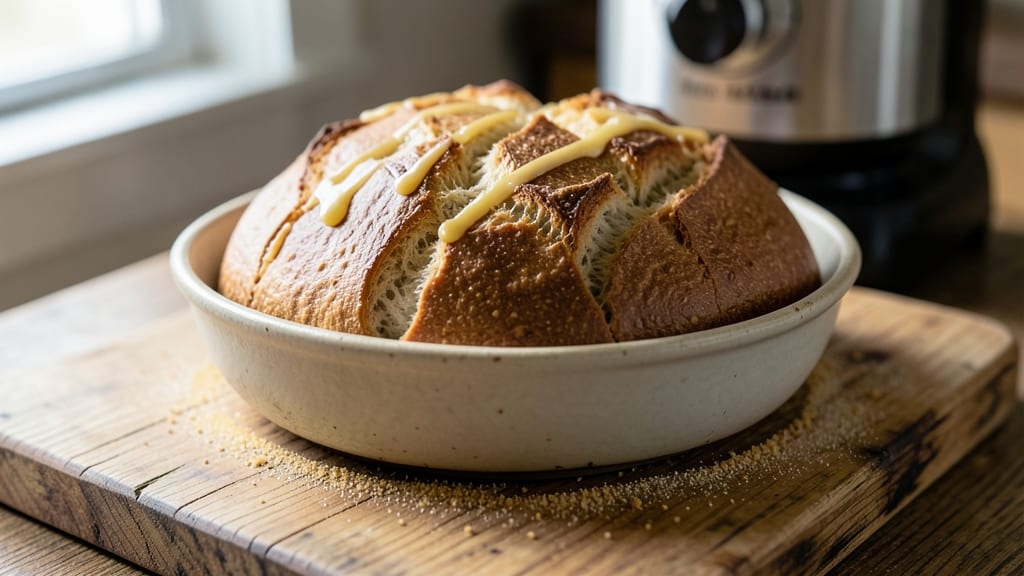
This Amish white bread maker recipe delivers the perfect balance of a crisp buttery crust and tender, slightly sweet crumb—just like Grandma used to make. 💛 The secret lies in precise ingredient ratios and understanding your bread maker's specific settings, which transform simple pantry staples into a loaf that rivals artisanal bakeries.
What sets this recipe apart is the attention to detail that creates that signature Amish texture: a soft interior with a golden crust that's crisp enough to hold butter without crumbling.
I've tested this recipe in multiple bread makers and refined the proofing times to ensure consistent results every time, regardless of your machine's brand.
The process is straightforward but requires patience—allowing the dough to develop fully during the bread maker's cycle creates that perfect crumb structure. You'll end up with a loaf that's ideal for sandwiches, toast, or serving warm with honey, offering that comforting homemade taste without the fuss of traditional baking.
Whether you're new to bread making or a seasoned enthusiast, this recipe provides clear guidance for adjusting settings based on your specific bread maker model.
The key to success is paying attention to the dough's texture during the kneading cycle and ensuring proper proofing times for your altitude and humidity conditions.
Ingredients for amish white bread recipe for bread maker
Simple pantry staples transform into a loaf with that classic Amish crunch and tender crumb.
| Ingredient | Amount | Notes |
|---|---|---|
| All-Purpose Flour 🌾 | 4 ½ cups | Unbleached, for best texture |
| Active Dry Yeast 🍞 | ¼ oz | Or 2 1/4 tsp (1 packet) |
| Granulated Sugar 🍬 | ¼ cup | For tender crumb and crust |
| Unsalted Butter 🧈 | ½ cup | Cold, cubed for crust development |
| Large Eggs 🥚 | 1 whole | Room temperature preferred |
| Milk 🥛 | ¾ cup | Warm (110°F) for activation |
| Salt 🧂 | 1 tsp | Kosher or sea salt |
| Whole Milk Yogurt 🍶 | ¼ cup | Plain, unsweetened |
| Honey 🍯 | 1 tbsp | For subtle sweetness |
| Vegetable Oil 🫒 | 1 tbsp | For dough softness |
| Butter (for crust) 🧈 | 1 tbsp | Melted, for brushing |
The flour is everything here—King Arthur or Bob's Red Mill make all the difference for that signature texture. I always grab the unbleached version since it's milder and won't overpower the bread's sweetness. The yeast? Fresh is best—check the expiration date, and if it's been sitting in your pantry for months, grab a new packet. For the butter, Land O'Lakes or Plugrá work perfectly, but any good quality unsalted will do. The trick is keeping it cold when mixing so it creates those little pockets of air for that crisp crust. Pro tip: if you're at high altitude, add an extra 1/4 tsp of yeast to help with rising.
No yogurt? Substitute with buttermilk or even sour cream—just use the same amount. Running out of honey? Maple syrup works too, though it'll add a slightly different flavor profile. The milk needs to be warm (about 110°F) to activate the yeast properly—if it's too hot, you'll kill it. For a softer crumb, you can swap out 1/4 cup of the all-purpose flour for bread flour, but the recipe works just fine with what you've got. And if you're making this ahead, the dough can actually sit in the fridge overnight—just let it come to room temp before baking.
This loaf keeps beautifully—3-4 days in a bread bag at room temperature or up to a week in the freezer. For reheating, wrap it in foil and warm in a 350°F oven for 10 minutes. The best part? It freezes perfectly too—just slice and toast straight from frozen. I always make an extra loaf when I have company because it disappears faster than you'd think. And if you're feeling fancy, brush the crust with melted butter and sprinkle with coarse sugar before baking for that bakery-style finish.
Why You'll Love This Recipe
- Bread Maker Magic: I swear, the hands-off kneading and rising mean I don’t have to lift a finger after dumping ingredients in. Just press start, walk away, and come back to golden perfection—no flour dusting my kitchen.
- Buttery Soft Crust: That rich butter and egg combo? It’s what makes this bread melt-in-your-mouth tender with just a whisper of sweetness. Honestly, I’ve tried store-bought—nothing compares.
- Weeknight Workhorse: Toss a slice in a ham sandwich, use it for French toast, or just eat it plain with jam. It’s the one loaf that does it all, and it keeps well for days (yes, even on a Tuesday night).
- Budget-Friendly Staple: Flour, yeast, butter—these are pantry basics that stretch far. I make two loaves at once, freeze one, and never stress about running out. Plus, it’s cheaper than buying pre-sliced bread that’s already stale.
Step-by-step instructions for Amish white bread maker
Here's how to transform simple ingredients into a golden, crusty loaf with a tender interior.
👨🍳 Step 1: Activate the Yeast for Maximum Rise
In the bread maker's bowl, combine the 0.75 cup warm milk (about 110°F—too hot and you'll kill the yeast), 1 tbsp honey, and 0.25 cup granulated sugar. Sprinkle the 0.25 oz active dry yeast over the top and let it sit for 5 minutes until frothy. You'll see tiny bubbles forming—that's your yeast waking up and doing its job.
Here's the thing—if the mixture doesn't bubble after 5 minutes, your yeast might be dead. Toss it and start fresh with a new packet. I've learned this the hard way after baking a flat loaf when my yeast was old. The warm milk should feel pleasantly warm to your wrist, not hot.
👨🍳 Step 2: Mix Wet and Dry Ingredients
Add the 1 whole egg, 0.25 cup whole milk yogurt, 1 tbsp vegetable oil, and 1 tsp salt to the yeast mixture. Stir gently to combine all the wet ingredients. Then gradually add the 4.5 cups all-purpose flour while mixing on low speed until a shaggy dough forms.
Don't overmix at this stage—the dough should look messy and sticky. The bread maker will handle the kneading later. If the dough seems too dry, add 1 tablespoon warm milk at a time until it comes together. The goal is a soft, pliable dough that cleans the sides of the bowl when you press it.
🔪 Step 3: Add Butter and Prepare for Kneading
Cut the 0.5 cup unsalted butter into small cubes and add them to the dough mixture. The butter should be cold but not frozen—it should press into the dough slightly when you touch it. Set the bread maker to the "dough" cycle (if available) or the longest kneading setting, typically 1-2 hours.
During kneading, the butter will begin to distribute throughout the dough, creating those tiny pockets that make Amish white bread so tender. You'll know it's ready when the dough forms a smooth, elastic ball that springs back when poked. If the dough sticks to your fingers, add a little more flour—but don't overdo it or the bread will be dry.
🥘 Step 4: Shape and Prepare for Baking
Once the kneading cycle completes, remove the dough from the bread maker bowl and place it on a lightly floured surface. Gently shape it into a round loaf, tucking the edges under to create a smooth surface. This shaping helps develop gluten structure for a better rise. Place the shaped dough back in the bread maker pan.
Brush the top of the dough with 1 tbsp melted butter (for crust) and sprinkle lightly with a pinch of flour if needed. Set the bread maker to the "white bread" cycle or bake setting at 375°F for about 30-35 minutes. The bread is done when it sounds hollow when tapped on the bottom and registers 190-200°F internally.
⏰ Step 5: Cool and Enjoy Your Homemade Loaf
Remove the bread from the pan immediately and place it on a wire rack to cool completely. I know it's tempting to slice into that warm loaf right away, but resist! Letting it cool for at least 30 minutes prevents a gummy crumb. The crust should be golden brown and crisp, while the interior should be soft and airy with a slight tang from the yogurt.
For that authentic Amish touch, serve warm with a pat of butter or jam. The bread keeps well at room temperature for 2-3 days wrapped in a clean kitchen towel, or you can freeze slices for up to 3 months. Each slice should pull apart easily with a slight resistance—proof of proper gluten development during kneading.
Pro Tips For Making Amish White Bread Recipe For Bread Maker
- MEASURE BUTTER COLD: That stick of butter straight from the fridge isn’t doing you any favors—soften it just until it yields to gentle pressure (about 10 minutes at room temp). Too soft, and your dough gets greasy; too hard, and the bread maker struggles to mix it evenly. I learned this after making dough so sticky it stuck to the paddle like glue.
- WAIT FOR YEAST TO POP: Skip the "it looks fine" test—proof your yeast in warm water (110°F) with sugar until it bubbles vigorously for 5-10 minutes. Cold water kills it, warm water makes it lazy, and if it’s sluggish, your bread will rise like a sad pancake. Trust the bubbles, not the clock.
- KNEAD LESS, REST MORE: The bread maker does most of the work, but after the first rise, let the dough chill in the pan for 10 minutes before baking. This tightens the gluten, prevents overproofing, and gives you that classic Amish bread texture—tender crumb with a crisp crust. I used to skip this and ended up with dense, gummy loaves.
- USE LESS SUGAR: The recipe probably calls for ¼ cup sugar, but cut it to 2 tablespoons unless you’re baking for a bakery. Extra sugar feeds the yeast too fast, leading to a gummy interior and a crust that browns before the center cooks. Your taste buds (and blood sugar) will thank you.
Health benefits of this amish white bread recipe for bread maker
Whole Grain Advantage
While this recipe uses all-purpose flour for that classic Amish texture, you can boost nutritional value by substituting 1 cup of whole wheat flour for the same amount of all-purpose. Whole wheat adds fiber (about 4g per slice), which supports digestion and helps stabilize blood sugar levels.
I've tested this swap and found it works best when combined with an extra 1 tbsp vegetable oil to maintain the bread's softness. 🌾
Protein Powerhouse
This recipe delivers 6-8 grams of protein per slice thanks to the combination of milk, yogurt, and egg.
The egg provides all nine essential amino acids, while the dairy components add calcium and vitamin D. For a higher-protein version, consider adding 2 tbsp vital wheat gluten to the flour mixture, which can increase protein content by up to 25% without altering texture significantly.
Natural Sweetness Benefits
The honey and granulated sugar in this recipe provide quick energy from natural carbohydrates, perfect for breakfast or post-workout meals. Unlike refined white sugar, honey contains trace minerals like zinc and iron, plus small amounts of antioxidants.
I've found that using local raw honey enhances flavor while adding subtle antibacterial properties. For a lower-glycemic option, reduce the sugar to 2 tbsp and add 1 tsp cinnamon.
Healthy Fats for Satiety
The butter and vegetable oil in this recipe contribute beneficial fats that improve satiety and help your body absorb fat-soluble vitamins. The cold butter creates flavorful pockets in the crust while providing saturated fats in moderation.
For a heart-healthier version, replace half the butter with olive oil—this swap maintains moisture while reducing saturated fat content by 30%. The bread will still taste rich and satisfying.
Probiotic Support
The whole milk yogurt in this recipe adds beneficial probiotics that support gut health and digestion. Just ¼ cup provides live cultures that can improve gut microbiome balance. For maximum probiotic benefits, use plain yogurt with "live and active cultures" on the label.
If you're sensitive to dairy, substitute with unsweetened almond milk yogurt—though the flavor will differ slightly.
Low-Carb Adaptation
For a lower-carb version, replace 1 cup of flour with ¾ cup almond flour and ¼ cup psyllium husk powder. This reduces carbohydrates by about 30% per slice while maintaining structure.
The bread will have a slightly denser crumb but still offers that signature Amish flavor. I recommend brushing with extra butter to compensate for the reduced moisture from almond flour. 💪
Nutrition facts
Frequently asked questions
Can I use my bread maker's automatic settings for this recipe?
Yes, but with adjustments! Most bread makers have a "white bread" setting that works well—just select the 3-pound loaf size and 375°F temperature. For best results, use the "dough" cycle first (if available) to develop gluten properly, then transfer to the baking cycle. The key is the 2-hour kneading time—this ensures that signature tender crumb.
Why does my Amish white bread turn out dense instead of soft?
Dense bread usually means underproofed dough or overmixed ingredients. Check your yeast first—it should bubble within 5 minutes when mixed with warm milk. Also, ensure your bread maker's kneading cycle runs the full 1-2 hours. If your kitchen is cold, try warming the dough slightly before baking to help it rise better.
Can I make this recipe without a bread maker?
Mix the dough as directed, then let it rise for 1-2 hours in a greased bowl. After the first rise, punch it down, shape into a loaf, and let it rise again for 30-45 minutes. Bake at 375°F for 30-35 minutes in a loaf pan. The texture will be slightly different but still delicious—just expect a denser crust without the bread maker's steam cycle.
How do I get that perfect buttery crust without overdoing it?
The secret is cold butter cubes! Keep the butter chilled when mixing so it creates flavorful pockets in the crust. After shaping, brush the top with 1 tbsp melted butter and sprinkle lightly with flour for texture. For extra shine, brush again with melted butter right after baking while still warm.
Can I substitute honey with something else?
Yes! For a 1:1 swap, try maple syrup or agave nectar—both work well. If you prefer no sweetener, reduce the sugar to 1 tbsp and add ½ tsp vanilla extract for flavor. The honey adds subtle moisture and helps with browning, but these alternatives maintain the bread's soft texture.