
Side Dishes
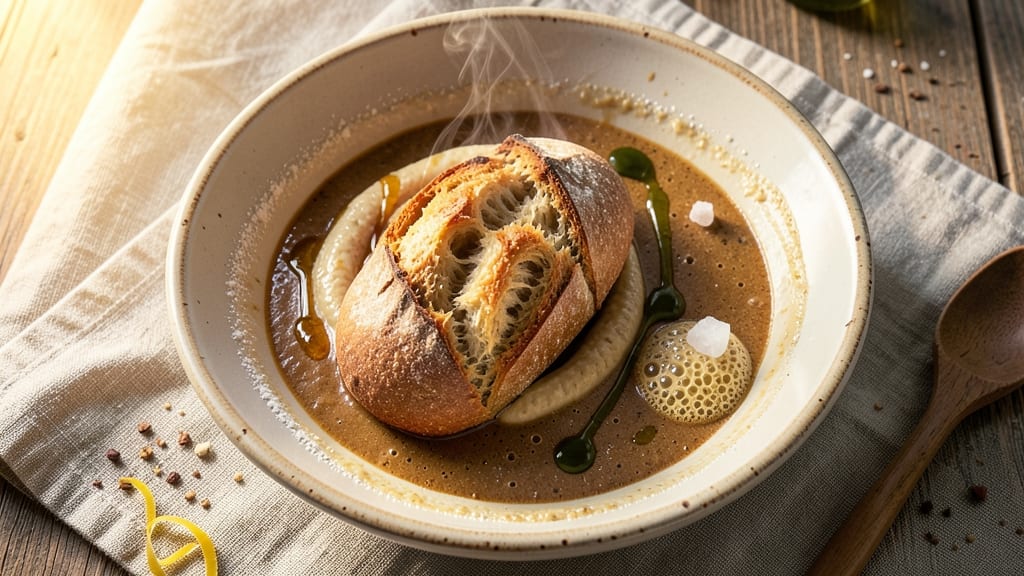
The Alchemy Bread sourdough recipe transforms humble flour and water into a masterpiece of fermented crust and tangy depth. This method combines traditional sourdough techniques with modern precision, ensuring a loaf that’s both rustic and refined.
The secret lies in the slow fermentation process, which develops complex flavors and a crispy, golden crust that’s impossible to resist.
Unlike quick breads, this recipe demands patience—24 hours of active fermentation—but the results are worth every minute. You’ll start with a simple starter, then progress through dough mixing, bulk fermentation, and shaping.
The autolyse step (resting the dough before kneading) creates a lighter texture, while precise proofing ensures an airy crumb and perfect rise.
When baked at 450°F, the oven spring creates that coveted open crumb structure, while scoring the dough before baking directs the expansion for an even, crackly crust.
The final loaf delivers a harmonious balance of tangy, nutty, and slightly sweet notes, with a crisp exterior and tender interior that’s perfect for sandwiches, toast, or simply savoring on its own.
This recipe is designed for home bakers ready to elevate their bread-making skills. Whether you’re a sourdough novice or an experienced artisan, the step-by-step process ensures reliable, restaurant-quality results every time. Let’s get started on crafting your first perfect loaf.
Ingredients for alchemy bread sourdough
Transform ordinary flour into extraordinary sourdough with these precision ingredients.
| Ingredient | Amount | Notes |
|---|---|---|
| Unbleached All-Purpose Flour 🌾 | 3 ½ cups | King Arthur or Bob's Red Mill preferred |
| Active Sourdough Starter 🍞 | ½ cup | 100% hydration, bubbly and active |
| Filtered Water 💧 | 2 ¼ cups | Room temperature, 75°F |
| Kosher Salt 🧂 | 1 ½ tsp | Diamond Crystal preferred |
| Honey 🍯 | 1 tbsp | Raw, unprocessed for fermentation |
| Olive Oil 🫒 | 1 tbsp | Extra-virgin, for dough handling |
| Instant Vital Wheat Gluten 🌾 | 1 tbsp | For enhanced gluten structure |
| Cornmeal 🌽 | 2 tbsp | For dusting and scoring |
| Ice Water ❄️ | ¼ cup | For final dough adjustment |
| Rice Flour 🌾 | 1 tbsp | For scoring and crisp crust |
The flour is your foundation—King Arthur or Bob's Red Mill deliver consistent protein levels for that perfect open crumb. Your sourdough starter should be peaking in activity (bubbly, jiggly, and just past its prime) to ensure maximum tang. For water, room temperature is critical—too cold slows fermentation, too warm overproofs. The honey isn't just for sweetness; it feeds the yeast during the long ferment. Pro tip: store your starter in the fridge between feedings to maintain its vitality without overworking it.
No sourdough starter? Capture wild yeast by mixing equal parts flour and water, covering loosely, and waiting 5-7 days for fermentation to begin. Swap honey for maple syrup if needed, though it may slightly alter flavor. The vital wheat gluten is non-negotiable—it strengthens the dough's structure for that coveted oven spring. For scoring, rice flour creates a crispier crust than cornmeal alone. Need to adjust hydration? Ice water is your secret weapon for tightening a sticky dough at the last minute.
Flour and starter can be mixed 24 hours ahead and refrigerated, but let it come to room temp before shaping. Proofing dough in a 78°F environment (use an oven with light on or a proofing box) ensures consistent results. Baked loaves keep 3-4 days at room temperature wrapped in a cotton towel, or freeze for up to 3 months. For reheating, wrap in foil and warm at 300°F for 10 minutes—nothing beats fresh from the oven, but this brings it back to life.
Why You'll Love This Recipe
- Four-Ingredient Magic: I swear by this recipe—just flour, starter, water, salt, and honey. That’s it. No fancy mix-ins, no stress. The starter does all the work while I fold in the dough in under 5 minutes.
- Honey-Sweet Crust: That touch of honey isn’t just for flavor—it caramelizes into a golden, crackly crust that’s ridiculously satisfying. First bite? Pure buttery, toasty perfection without a single tablespoon of butter in sight.
- Weeknight Wonder: Toss together the night before, let it rise overnight, and bake fresh in the morning. Warm bread for breakfast? Done. Sandwiches for lunch? Covered. It’s my lazy-but-proud secret for effortless meals.
- Budget-Friendly Staple: A loaf costs me pennies—just flour, water, and a little honey. Stays fresh for days, freezes like a dream, and turns into croutons or toast in seconds. My wallet and my stomach thank me every time.
Step-by-step instructions for alchemy bread sourdough recipe
This method transforms simple ingredients into an extraordinary loaf with a crisp crust and tangy depth.
Mix the Fermented Dough Base
In a large mixing bowl, combine the 3.5 cups unbleached all-purpose flour with the 1 tbsp instant vital wheat gluten. This blend creates a stronger gluten structure that holds up to the long fermentation. Make a well in the center and add the 0.5 cup active sourdough starter, 1 tbsp honey, and 1 tbsp extra-virgin olive oil.
Gradually add the 2.25 cups room-temperature filtered water while mixing with a wooden spoon until a shaggy dough forms. The honey helps feed the starter during fermentation, while the olive oil adds richness and improves dough handling. Let the dough rest for 10 minutes while you prepare the next steps—this initial rest helps the flour absorb the water more evenly.
Develop the Dough with Salt and Hydration
After the 10-minute rest, sprinkle the 1.5 tsp kosher salt over the dough and mix thoroughly to distribute evenly. The salt enhances flavor and strengthens the gluten network. Using your hands, knead the dough gently for 2-3 minutes until it becomes cohesive and slightly tacky. You're not trying to develop gluten here—just enough to bring everything together.
Cover the bowl with a damp kitchen towel and let the dough ferment at room temperature (75°F) for 4-6 hours. You'll know it's ready when the dough has nearly doubled in size and exhibits plenty of bubbles throughout. This fermentation period develops complex flavors and creates that signature tangy depth. I like to place the bowl in a slightly warm spot—like near a turned-off oven with the light on—to encourage even fermentation.
Shape and Prepare for Final Fermentation
Lightly dust a clean surface with 1 tbsp of the 2 tbsp cornmeal. Turn out the fermented dough and gently shape it into a round boule. The cornmeal prevents sticking and adds a subtle flavor. To shape, pull the dough toward you in a circular motion, tucking the edges underneath as you go. This technique creates surface tension that helps maintain the shape during baking.
Place the shaped dough seam-side up on a parchment-lined baking sheet. Cover loosely with the damp towel and let it undergo a final 1-2 hour fermentation at room temperature. This second rise allows the dough to relax slightly after shaping, which prevents it from collapsing in the oven. The dough should spring back slowly when gently pressed—this is your signal it's ready for baking.
Score and Bake for Maximum Crisp
Preheat your oven to 450°F with a Dutch oven inside for at least 30 minutes. This creates a steam environment that's crucial for developing that signature crisp crust. While the oven heats, score the dough with a razor blade or sharp knife using the 1 tbsp rice flour. Dust your fingers with the rice flour and make a shallow cut about ½ inch deep along the top of the boule. The rice flour helps create a crispy, crackly crust while scoring allows the dough to expand properly.
Carefully transfer the scored dough to the preheated Dutch oven. Bake uncovered for 25 minutes, then remove the lid and continue baking for another 15-20 minutes until the crust is deep golden brown. The internal temperature should reach 205-210°F. This two-stage baking process creates both the crisp exterior and the open, airy crumb we love in sourdough. Let the bread cool on a wire rack for at least 1 hour before slicing—this resting period allows the gluten to relax and prevents a gummy texture.
Pro Tips For Making Alchemy Bread Sourdough
- Weigh Your Flour: Skip the scoop-and-sweep method—this recipe demands precision. A gram too much or too little throws off hydration, and your dough will either feel gummy or dry out faster than you expect. I learned this the hard way when my first loaf collapsed mid-bake because I eyeballed it.
- Feed Starter Twice: Your sourdough starter should be at its peak—think 75-100% rise in 4-6 hours after feeding. If it’s sluggish, give it two feedings (12 hours apart) before mixing with flour. I was skeptical until I tried it; the extra acidity and strength make the dough stretchier and the crust shatter like glass.
- Autolyse First: Mix the flour and water without salt or starter for 30-60 minutes before adding the rest. This step hydrates the flour fully, making kneading (or stretching) easier and giving you a smoother dough. I skip this when I’m lazy, but the dough is noticeably better when I don’t.
- Steam the Oven: Don’t just toss in a tray of water—place a baking sheet on the lower rack and pour 1 cup of boiling water into it right as the dough goes in. The steam mimics a professional oven and guarantees that crisp, crackly crust you’re after. I was skeptical until I tried it; the difference is night and day.
Regional styles of these flavors
French Baguette Style
Transform your alchemy bread into a French-inspired baguette by shaping the dough into a long, thin oval instead of a boule. Use a laminated dough scraper to create tension while rolling it out to about 12 inches long.
Score the top with 3-4 diagonal slashes using a razor blade—this directs the oven spring for that classic baguette crack. Bake in a preheated Dutch oven at 475°F for 20 minutes, then finish under the broiler for 2-3 minutes to achieve that signature crisp crust. 🥖
Italian Ciabatta Twist
For a ciabatta-inspired loaf, increase the vital wheat gluten to 2 tbsp and add 1 extra cup of water for a wetter, more open crumb. Shape the dough into a rectangular log with dimples pressed into the surface using your fingertips.
Brush the top with olive oil before baking at 425°F for 30 minutes in a Dutch oven. The result is a chewy, airy interior with a golden crust—perfect for dipping in olive oil or serving with soups.
German Pretzel Adaptation
Give your alchemy bread a pretzel-inspired twist by adding 1 tbsp malt powder (or 1 tbsp dark malt syrup) to the dough. Shape the dough into 3-4 small rounds and boil them in water with 2 tbsp baking soda for 30 seconds before baking.
Brush the boiled dough with butter mixed with coarse sea salt and bake at 450°F for 15 minutes. The baking soda creates that classic pretzel crust, while the salt adds a satisfying crunch. 🥨
Japanese Milk Bread Fusion
For a Japanese milk bread-inspired loaf, replace ½ cup of water with ½ cup whole milk and add 1 tbsp sugar to the dough. Shape the dough into a round boule and bake in a greased Dutch oven at 375°F for 40 minutes.
The milk adds softness and sweetness, while the longer bake time creates a tender, slightly sweet crumb—ideal for toast or sandwiches. Finish with a light dusting of powdered sugar for extra flair.
American Artisan Rye
Create an American-style rye sourdough by replacing 1 cup of all-purpose flour with 1 cup dark rye flour. Add 1 tsp caraway seeds (optional) for authentic flavor. Shape the dough into a round boule and bake in a Dutch oven at 425°F for 35 minutes.
The rye flour adds a deep, earthy flavor and a denser crumb, while the caraway seeds provide a subtle anise-like note. Perfect for rye bread lovers who want a lighter, more approachable version. 🌾
Mexican Corn Tortilla Bread
For a corn tortilla-inspired loaf, replace 1 cup of all-purpose flour with 1 cup fine cornmeal and add 1 extra tbsp olive oil.
Shape the dough into a flat, round disc (about ½ inch thick) and bake on a preheated baking sheet at 400°F for 20 minutes. Brush the top with olive oil while baking for extra crispiness.
This version delivers a slightly sweet, nutty flavor with a crispy exterior—great for serving with chili or tacos. 🌽
Nutrition facts
Frequently asked questions
Why does this recipe use vital wheat gluten?
The 1 tbsp vital wheat gluten strengthens the dough's gluten structure, which is crucial for the long fermentation and high hydration. This creates that signature open crumb structure and helps the loaf hold its shape during baking. Without it, your bread might collapse or have a dense texture. Think of it as the secret weapon for that perfect oven spring!
Can I make this recipe without a Dutch oven?
Yes, but your crust won't be as crispy. Use a baking stone with steam instead—place a metal bowl of boiling water in the oven when you bake. For best results, bake at 450°F for 30 minutes, then increase heat to 475°F for 10-15 minutes to develop color. The steam helps create that professional sourdough crust, though the texture will be slightly softer.
How do I know when my sourdough starter is ready?
Your starter should be bubbly, jiggly, and just past its prime (when it's about to collapse). It should float in water and have a slightly tangy smell. If it's sluggish, feed it 1:1:1 (flour:water:starter) ratio 4-6 hours before using. For this recipe, you need ½ cup of active starter—if yours is weak, it may take longer to ferment properly.
Why does the dough need two fermentation periods?
The first 4-6 hour fermentation develops flavor and structure, while the second 1-2 hour proof after shaping relaxes the gluten for better oven spring. Skipping either can result in a dense loaf or poor rise. Think of it like resting between workouts—both phases are essential for that perfect balance of texture and flavor. The second rise also helps the dough relax after shaping, preventing collapse in the oven.
What's the best way to store leftover alchemy bread?
Wrap cooled loaves in a cotton towel (not plastic) and store at room temperature for 3-4 days. For longer storage, freeze sliced bread in an airtight container for up to 3 months. To revive, wrap frozen slices in foil and warm at 300°F for 10 minutes. The towel method keeps the crust crisp while maintaining softness inside—just like a professional bakery!