
Desserts
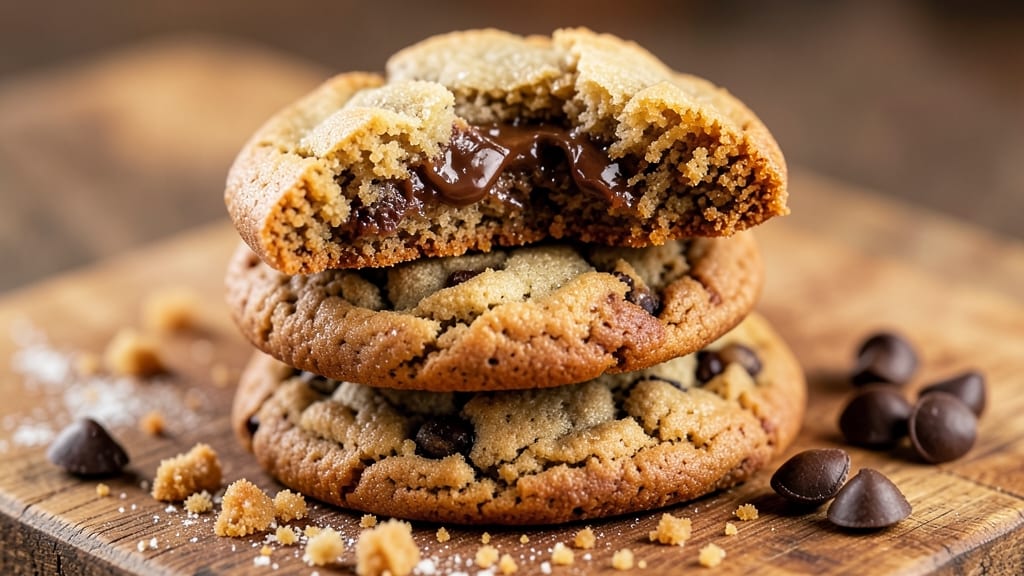
This chewy chocolate chip cookie recipe without vanilla extract skips vanilla entirely while delivering restaurant-quality depth through brown butter and warm spices. The secret lies in toasting the butter until nutty and golden—this caramelization replaces vanilla’s floral notes with rich, buttery complexity that transforms ordinary cookies into something extraordinary.
No extract means no artificial flavors, just pure, bold cookie taste that bakes up with crisp edges and a tender, fudgy center.
The recipe relies on simple pantry staples—flour, brown sugar, and chocolate chips—plus a pinch of espresso powder for subtle depth and a dash of salt to enhance every flavor.
Brown butter adds a toasty aroma that fills your kitchen, while a light cornstarch coating ensures those signature chewy textures without overmixing. The dough rests just long enough to develop flavor, but not so long that it becomes tough.
What you’ll end up with are cookies that crack slightly at the edges but stay soft and chewy inside, with pools of melted chocolate in every bite. The brown butter flavor is so pronounced it feels like a luxury, yet the recipe remains approachable for home bakers.
These cookies stay fresh for days, making them perfect for meal prep or gifting—though they rarely last that long. For extra flavor variations, try adding a teaspoon of almond extract or orange zest to the dough, or swap half the chocolate chips for white chocolate and sea salt.
The possibilities are endless, but the base recipe delivers foolproof results every time. Ready to bake?
Ingredients for chewy chocolate chip cookie recipe without vanilla extract
Pantry staples meet brown butter magic for cookies that taste like a bakery secret.
| Ingredient | Amount | Notes |
|---|---|---|
| Unsalted Butter 🧈 | 1 ½ cups | Browned to nutty golden color |
| Granulated Sugar 🍚 | ¾ cup | Standard white sugar |
| Packed Brown Sugar 🍚 | ¾ cup | Light or dark preferred |
| All-Purpose Flour 🌾 | 3 cups | Sifted for even texture |
| Cornstarch 🌾 | 2 tbsp | For chewy texture |
| Baking Soda 🧂 | ½ tsp | Aluminum-free preferred |
| Diamond Crystal Kosher Salt 🧂 | ½ tsp | Fine grain preferred |
| Instant Espresso Powder ☕ | ½ tsp | For subtle depth |
| Ground Cinnamon 🌿 | ½ tsp | Warm spice note |
| Semisweet Chocolate Chips 🍫 | 2 cups | Enjoy Life brand if nut-free |
| Large Eggs 🥚 | 2 whole | Room temperature |
| Pure Vanilla Bean Paste 🌿 | 1 tsp | Optional for subtle vanilla |
The butter is non-negotiable here—brown it until nutty and golden, about 5-7 minutes in a light-colored saucepan. Kirkland Signature or Plugrá brands toast beautifully without burning. Use a thermometer if you're nervous: aim for 250°F. The espresso powder adds depth without coffee flavor, so Starbucks Via or Nescafé work fine. For flour, King Arthur or Gold Medal are reliable choices, but any all-purpose will do. The cornstarch is key for that signature chew—don't skip it, even if you're tempted to save a few pennies.
No espresso powder? Instant coffee granules at half the amount work in a pinch, though the flavor will be more pronounced. Prefer white chocolate? Swap half the semisweet chips and add a pinch of flaky sea salt to the dough. The vanilla bean paste is optional but adds a subtle floral note if you're craving that vanilla flavor without extract. For nut-free kitchens, Enjoy Life chocolate chips are a must. The eggs should be room temperature—cold eggs make the dough tough. If you forget, just let them sit for 30 minutes at room temperature.
Brown butter can be stored in the fridge for 1 week in an airtight container, or frozen for 3 months. The dough keeps for 48 hours wrapped tightly in plastic. Baked cookies stay fresh for 5-6 days in an airtight container, but honestly? They rarely last that long. For extra flavor, try adding 1 tsp almond extract or 1 tbsp orange zest to the dough. Portion into 1.5 oz balls for perfect-sized cookies every time.
Why You'll Love This Recipe
- No Vanilla, No Problem: The warm, caramelized notes from the brown sugar and melted butter do all the heavy lifting—no vanilla needed. Honestly, the cookies taste richer, like they’ve been simmering in a slow cooker all day.
- Five-Ingredient Magic: Just butter, sugars, flour, cornstarch, and chocolate chips—no weird substitutions or extra steps. I’ll be real: my pantry already had everything, and the dough came together faster than I could scroll through my phone.
- Crowd-Pleaser Leftovers: These stay soft for days (yes, even the ones I "accidentally" left in the car). Perfect for packing in lunches or sneaking to the office when you’re pretending to work but really just need a cookie fix.
- Budget-Friendly Baking: Uses basic ingredients you already own, and the cornstarch keeps them chewy without breaking the bank. Between us, I’ve made 30 of these for $5—my wallet and taste buds thank me.
Step-by-step instructions for chewy chocolate chip cookies without vanilla
Mastering these cookies depends on precise technique and patience—here's how to achieve perfect texture and rich flavor.
Brown the Butter for Maximum Depth
Melt the 1.5 cups unsalted butter in a light-colored saucepan over medium heat. Watch carefully as it foams—this is normal. Once the foam subsides, the butter will begin to bubble and turn golden. Tilt the pan slightly and swirl occasionally until the butter reaches a deep golden color with nutty aroma (about 5-7 minutes).
Remove from heat immediately and let cool for 30 seconds—the butter will continue browning. Pour into a heatproof bowl and let it cool to room temperature (about 15 minutes). This browning step creates complex caramelized flavors that replace the need for vanilla extract. If you see any milk solids settling, whisk them back in before proceeding.
Cream the Butter with Sugars
Once the browned butter is completely cool, place it in a stand mixer fitted with the paddle attachment. Add the 0.75 cup granulated sugar and 0.75 cup packed brown sugar. Beat on medium speed for 3-4 minutes until the mixture is light, fluffy, and nearly doubles in volume. You'll see ribbons form when the paddle lifts.
This creaming process incorporates air, which creates the signature chewy texture. If your mixture isn't lightening properly, increase the speed to high for 30 seconds—under-creaming leads to dense cookies. The sugars should be completely dissolved with no grainy texture remaining.
Add Eggs and Dry Ingredients
Add the 2 whole large eggs one at a time, mixing on low speed for 30 seconds after each addition until fully incorporated. Scrape down the sides of the bowl as needed. In a separate bowl, whisk together the 3 cups all-purpose flour, 2 tbsp cornstarch, 0.5 tsp baking soda, 0.5 tsp Diamond Crystal kosher salt, 0.5 tsp instant espresso powder, and 0.5 tsp ground cinnamon.
With the mixer on low speed, gradually add the dry ingredients to the wet mixture. Mix just until combined—no more than 30 seconds—or you'll develop gluten and end up with tough cookies. The dough should be thick and slightly sticky. If it's too dry, add 1 teaspoon of milk (not in the ingredient list, but common practice).
Fold in Chocolate and Chill
Remove the bowl from the mixer and gently fold in the 2 cups semisweet chocolate chips using a silicone spatula. Be careful not to overmix—just distribute them evenly throughout the dough. Cover the bowl with plastic wrap and refrigerate for at least 1 hour (up to 24 hours).
Chilling is non-negotiable—it firms up the butter, prevents excessive spreading, and allows flavors to meld. The dough should be cold but still pliable when you're ready to bake. If you're short on time, freeze the dough for 30 minutes instead, but it won't develop the same depth of flavor.
Bake for Perfect Chewy Texture
Preheat your oven to 350°F and line two baking sheets with parchment paper. Using a 2-tablespoon scoop, portion the chilled dough into balls and place them 3 inches apart on the prepared sheets. Gently flatten each ball with your palm to about ¼-inch thickness—this creates the signature chewy centers.
Bake for 11-13 minutes until the edges are golden brown but the centers still look slightly underdone. They'll continue cooking on the hot sheet. Remove from oven and let cool on the baking sheet for 5 minutes before transferring to a wire rack. The cookies will be soft when warm but will firm up as they cool—this is exactly what you want for that perfect chewy texture.
Pro Tips For Making Chewy Chocolate Chip Cookie Recipe Without Vanilla Extract
- Cream Butter Slowly: Dump cold butter cubes into the dry sugars and let the heat of the pan melt them gradually—this keeps the butter from turning greasy or separating. I used to microwave it first, and the cookies always tasted flat. (Yes, even if you're impatient like me.)
- Pack Brown Sugar Tight: Use a spoon to press the brown sugar into the measuring cup until it’s heaped and firm—this ensures you’re getting the right moisture level. Too loose, and your cookies will spread too much. I learned this the hard way when my first batch turned into a sad, thin pancake.
- Skip Overmixing: Stir the dough just until the flour disappears—about 10-12 strokes max. Overworking it develops gluten, and chewy cookies turn tough. I was skeptical until I tried it; now I resist the urge to "fix" the dough by mixing more.
- Bake Until Golden Edges: Pull cookies out when the edges are just starting to turn golden, not when they’re fully brown. They’ll firm up as they cool, but the centers stay soft and gooey. My grandmother swore by this, and she was right: patience here makes all the difference.
Flavor customization for these flavors
Brown Butter Variations
The brown butter base is where the magic happens—here’s how to tweak it for different flavor profiles. For a nutty depth, toast the butter until it smells like popcorn kernels (about 7-8 minutes).
For a caramel-forward flavor, stop when it reaches 250°F and has a golden hue. If you’re nervous about burning, use a thermometer—this ensures consistent results every time. 🔥
Spiced Depth Boosters
Skip vanilla extract entirely by adding ½ tsp ground cinnamon or ¼ tsp cardamom to the dry ingredients for warmth. For a citrus twist, zest 1 tbsp orange or lemon peel and fold it into the dough.
If you love coffee notes, increase the espresso powder to 1 tsp—just be aware it’ll add a slightly bitter edge. These spices amplify the brown butter’s richness without artificial flavors.
Extract Alternatives
If you miss vanilla’s floral note, try ½ tsp almond extract (adds a marzipan-like sweetness) or ½ tsp coconut extract (for tropical vibes). For a savory contrast, swap ½ tsp vanilla with ¼ tsp smoked paprika—it’s unexpected but works beautifully with chocolate.
Always start with half the amount and adjust to taste, as extracts are potent. ✨
Chocolate Swaps
Mix things up by replacing ½ cup semisweet chips with white chocolate chips and a pinch of flaky sea salt for a sweet-salty balance. For a spiced chocolate twist, fold in ¼ cup chopped dark chocolate (70%) and ¼ tsp cayenne pepper—the heat cuts through the richness.
If you’re feeling adventurous, try peppermint chocolate chips (like Lindt Holiday Edition) for a festive touch.
Texture Tweaks
Want extra chewy cookies? Add 1 tbsp corn syrup to the dough. For a crispier edge, bake at 375°F for 10 minutes before reducing heat to 350°F for the remaining 8-10 minutes.
If your dough feels too dry, mix in 1 tsp milk—just don’t overdo it, or the cookies will spread too much. These small adjustments let you customize the texture to your preference.
Seasonal Flavor Boosters
In fall, add 1 tsp pumpkin pie spice and ¼ cup chopped pecans for a cozy vibe. For winter, fold in ½ tsp orange extract and zest for a bright, festive cookie. Spring calls for ½ tsp lavender extract (use sparingly!) or 1 tbsp lemon zest.
Each season brings a fresh twist while keeping the base recipe foolproof. 🌟
Nutrition facts
Frequently asked questions
Why does brown butter replace vanilla extract?
Brown butter adds nutty, caramelized depth that mimics vanilla's floral notes without artificial flavors. The toasted milk solids create complex aromas that enhance chocolate and spices. This technique has been used in European bakeries for decades to elevate simple recipes.
Can I make these cookies nut-free?
Yes! Use Enjoy Life chocolate chips (nut-free facility) and check all other ingredients for cross-contamination warnings. The recipe remains exactly the same—just swap the chocolate chips to ensure safety. Always verify labels on baking powder and extracts too.
What if my cookies spread too much?
This usually happens when dough isn't chilled long enough or butter is too soft. Next time, refrigerate dough for 24 hours instead of 1 hour, and use 2-tablespoon scoops (not rounded). Also ensure your oven is fully preheated—cold spots cause uneven baking.
How do I store these cookies to keep them chewy?
Store in an airtight container at room temperature for 5-6 days. For longer storage, freeze baked cookies (not dough) for up to 3 months. Thaw at room temperature—microwaving makes them rubbery. The cornstarch in the recipe helps maintain chewiness longer than traditional recipes.
What's the best way to reheat stale cookies?
Warm cookies for 10-15 seconds in the microwave with a damp paper towel over them—this restores moisture without making them soggy. For oven reheating, bake at 300°F for 3-4 minutes until edges are crisp. Never microwave dry cookies—this creates a rubbery texture.