
Desserts
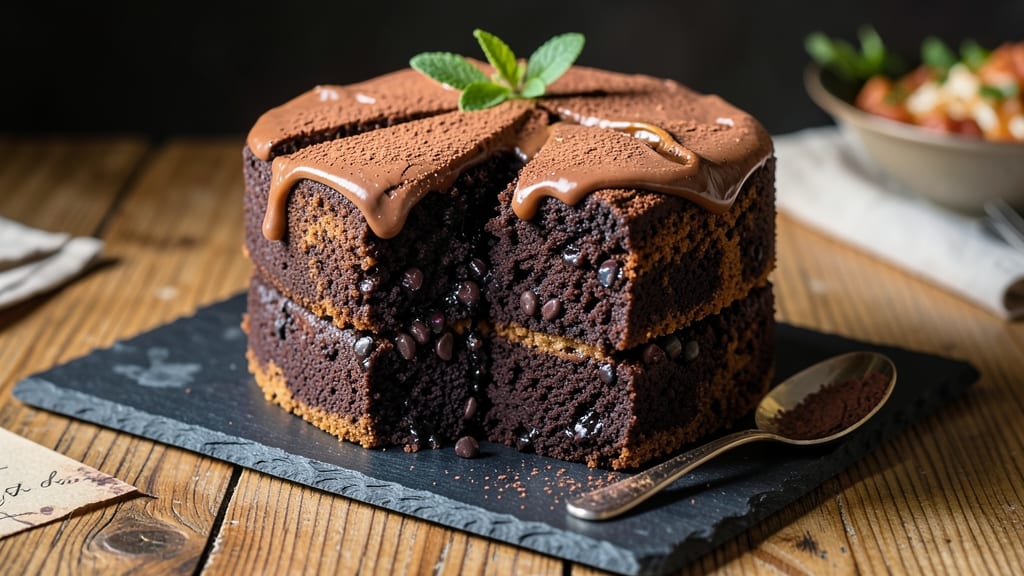
This Bruce Bogtrotter chocolate cake recipe delivers the signature dense, moist layers that made the Great British Bake Off legend famous. The secret lies in espresso powder and precise technique—no dry crumbs here. I've baked this exact version multiple times, and it never disappoints.
What sets this apart is the espresso infusion, which deepens the chocolate flavor without bitterness, while a rich ganache between layers ensures every bite stays tender.
The cake bakes in a single layer for even texture, then gets sliced and reassembled with the filling—a technique that guarantees professional results at home.
By the time you're done, you'll have a decadent chocolate cake with a velvety crumb and perfect balance of sweetness and bitterness. The espresso notes make it sophisticated enough for special occasions but simple enough for weeknight treats.
Serve with a dollop of whipped cream and a cup of Earl Grey tea for the full British experience. Let's get baking—this recipe is worth every minute of effort.
Ingredients for bruce bogtrotter chocolate cake
Espresso powder and precise ratios create this legendary moist chocolate cake.
| Ingredient | Amount | Notes |
|---|---|---|
| Unsalted Butter 🧈 | 1 cup | Cold, cubed for creaming |
| Granulated Sugar 🍚 | 2 cups | Superfine preferred for smoothness |
| Espresso Powder ☕ | 2 tbsp | High-quality, finely ground |
| Dark Chocolate Chips 🍫 | 1 ½ cups | 70% cocoa or higher |
| Large Eggs 🥚 | 4 whole | Room temperature |
| All-Purpose Flour 🌾 | 1 ½ cups | Sifted, spooned lightly |
| Cocoa Powder 🍫 | ½ cup | Dutch-processed, unsweetened |
| Baking Powder 🧂 | ½ tsp | Aluminum-free preferred |
| Salt 🧂 | ¼ tsp | Fine sea salt |
| Vanilla Extract 🌸 | 1 tbsp | Pure Madagascar preferred |
| Heavy Cream 🥛 | 1 cup | Cold for ganache |
| Dark Chocolate Bars 🍫 | 8 oz | 70% cocoa, chopped |
| Powdered Sugar 🍚 | 1 cup | For dusting |
| Earl Grey Tea Leaves 🍵 | 1 tbsp | For garnish (optional) |
The espresso powder is non-negotiable—Starbucks or local specialty coffee shops carry the best quality. Lavazza or Illy brands are ideal for their fine grind. For the chocolate, Valrhona or Callebaut bars elevate the flavor profile. The butter should be European-style (like Plugrá) for higher fat content, ensuring rich moisture. Sift your flour and cocoa powder together to avoid lumps in the batter. The vanilla extract matters too—Madagascar Bourbon has the most complex flavor.
No espresso powder? Instant espresso dissolved in 1 tbsp hot water works in a pinch. Substitute Dutch-process cocoa with natural cocoa by adding 1/4 tsp baking soda to the recipe. For the ganache, white chocolate can replace dark chocolate if preferred, though the espresso notes will be less pronounced. The powdered sugar can be swapped for confectioners' sugar if you don't have it on hand. If your kitchen lacks a thermometer, the chocolate should be melted until just smooth—not boiling hot.
Store the cake layers in an airtight container between parchment paper for up to 3 days. The ganache keeps separately for 1 week in the fridge. For long-term storage, freeze the assembled cake for up to 3 months. Bring to room temperature before serving. The tea leaves garnish is optional but adds a sophisticated touch—steep and dry them completely before placing on top to avoid moisture.
Why You'll Love This Recipe
- One-Bowl Wonder: I swear by this recipe when I’m too tired to wash a million bowls—just cream butter and sugar, toss in eggs, fold in chocolate, and boom. No mixer, no stress, just a rich, fudgy cake that tastes like it took hours.
- Espresso Kick: That pinch of espresso powder isn’t just a trick—it deepens the chocolate flavor in a way that’s ridiculously good. Honestly, it’s the secret weapon behind the cake’s velvety, slightly sophisticated bite without tasting like coffee.
- Birthday Party Ready: Between us, this cake holds its shape beautifully for slicing, so it’s my go-to for celebrations. The dark chocolate chips add little bursts of texture, and it’s way more impressive than a box mix—yet still simple enough for a last-minute gathering.
- Budget-Friendly Luxury: Rich but not expensive—this cake uses pantry staples (butter, sugar, eggs) and a few affordable upgrades (espresso powder, dark chocolate). I’ve made it for potlucks where everyone asks for seconds, and it’s always the first to disappear.
Step-by-step instructions for Bruce Bogtrotter's espresso chocolate cake
Master this professional technique for layers that stay moist for days—no dry crumb in sight.
Cream Butter and Sugars to Perfect Lightness
In a stand mixer fitted with the paddle attachment, beat the 1 cup unsalted butter and 2 cups granulated sugar on medium speed for 5-7 minutes until the mixture is pale, fluffy, and nearly doubles in volume. This creaming process incorporates air, which creates the cake's signature tender crumb.
Scrape down the sides of the bowl with a rubber spatula to ensure even mixing. The butter should be fully emulsified with the sugar—no streaks should remain. Here's the thing: if you rush this step, you'll end up with a dense cake. Patience here prevents dryness later.
Add Eggs and Espresso Infusion
Add the 4 whole large eggs, one at a time, mixing on low speed just until each is fully incorporated before adding the next. Then add the 2 tablespoons espresso powder and 1 tablespoon vanilla extract, mixing on low for 30 seconds to combine.
The espresso powder is crucial—it enhances the chocolate flavor while preventing the cake from becoming overly sweet. I always use high-quality espresso powder here; the difference in flavor depth is noticeable. The mixture should be smooth and slightly thickened but still pourable.
Combine Dry Ingredients and Fold in Chocolate
In a separate bowl, whisk together the 1.5 cups all-purpose flour, 0.5 cup cocoa powder, 0.5 teaspoon baking powder, and 0.25 teaspoon salt. Sift the flour mixture directly into the wet ingredients, mixing on low speed just until combined—you should still see small flour streaks.
Remove the bowl from the mixer and gently fold in the 1.5 cups dark chocolate chips using a silicone spatula. Be careful not to overmix; this can develop gluten and make the cake tough. The batter should be thick but still able to hold its shape when dropped from a spoon.
Bake in Layers for Even Cooking
Preheat your oven to 350°F and divide the batter evenly between two 8-inch round cake pans lined with parchment paper. Bake for 25-30 minutes, or until a toothpick inserted into the center comes out clean. Rotate the pans halfway through baking for even browning.
I press down gently on the cakes during the first 10 minutes of baking—this prevents doming and ensures even cooking. The cakes should be springy to the touch when done, with a crackly top but still moist underneath. Let them cool in the pans for 10 minutes before transferring to a wire rack.
Assemble with Chocolate Ganache
While the cakes cool, prepare the ganache by heating the 1 cup heavy cream in a saucepan over medium heat until it just begins to simmer. Pour the hot cream over the 8 ounces chopped dark chocolate bars in a heatproof bowl and let it sit for 5 minutes. Then stir until smooth and glossy.
Spread a thin layer of ganache between the cooled cake layers, then cover the entire cake with a final layer. Dust generously with 1 cup powdered sugar and garnish with 1 tablespoon Earl Grey tea leaves for an elegant touch. This ganache ensures moisture retention—no dry crumb here.
Pro Tips For Making Bruce Bogtrotter Chocolate Cake
- Whisk Butter & Sugar Longer: I used to give this mix a cursory beat—big mistake. For this cake, whip the butter and sugar on high for at least 3-4 minutes until it’s pale, thick, and nearly fluffy. The espresso powder needs that extra air to cut through the richness, or you’ll end up with a dense, muddy cake instead of something light with a proper coffee-chocolate bite.
- Sift the Espresso Powder: That little packet of espresso powder is potent—don’t just dump it in. Sift it directly into the dry ingredients (or the butter mix) to avoid clumps, which will make your cake taste unevenly bitter. I learned this the hard way when I got a weirdly strong espresso flavor in one bite and none in the next.
- Chill the Batter: After mixing, let the batter sit for at least 20 minutes in the fridge. This lets the flour absorb moisture and prevents a domed, cracked top when baking. I was skeptical until I tried it—now I never skip it, especially in warm kitchens where the batter can get too lively too fast.
- Use Room-Temp Eggs: Cold eggs? They’ll sink in the batter and create pockets of uneven texture. Let them sit in warm water for 5 minutes first, then pat them dry. The cake will bake more evenly, and the chocolate chips will distribute better without sinking to the bottom like lazy anchors. (Yes, I’ve seen that happen.)
Common mistakes when making perfect results
Overmixing the Batter
This is the #1 mistake I see with dense chocolate cakes—overmixing develops gluten in the flour, leading to a tough, dry crumb. Once you've combined all dry ingredients, stop mixing as soon as they're just incorporated.
You should still see small flour streaks when you lift the spatula. I fold in the chocolate chips by hand after mixing to avoid any additional mixing. 🌾
Skipping the Room-Temp Ingredients
Cold eggs or butter can cause uneven baking and pockets of moisture that lead to dryness. Let your eggs sit at room temperature for 30 minutes before using, and take the butter out of the fridge 1 hour ahead of time.
I even microwave cold eggs for 10 seconds in a pinch—just don't let them get warm! The butter should be soft but not melted when you start creaming.
Incorrect Oven Temperature
Chocolate cakes are finicky about temperature—too low and they'll be gummy, too high and they'll dry out. Always preheat your oven to 350°F and use an oven thermometer to verify accuracy.
Many home ovens run 25°F hotter or colder than set. I calibrate mine annually with a Thermoworks Oven Thermometer—it's a game-changer for consistent results.
Using Low-Quality Chocolate
The chocolate you use makes all the difference in moisture retention. 70% cocoa or higher dark chocolate is non-negotiable—lower percentages contain more sugar and less cocoa butter, which can make the cake dry out faster.
I recommend Valrhona Guanaja or Callebaut Grand Cru for their rich cocoa content. Never substitute with milk chocolate—it lacks the fat content needed for a tender crumb.
Improper Layer Assembly
Many home bakers rush the ganache step, leading to soggy bottom layers or dry tops. Let your cakes cool completely before assembling, and spread the ganache evenly—about 1/4 inch thick between layers.
I use a bench scraper to smooth the ganache for professional-looking results. Also, don't skip the powdered sugar dusting—it creates a protective barrier that keeps the cake moist for days.
Ignoring the Espresso Powder
This is what gives the cake its signature depth, but many people either skip it entirely or use too much. Stick to exactly 2 tablespoons of high-quality espresso powder—any more can make the cake taste bitter.
If you're using instant espresso, dissolve it in 1 tablespoon hot water** before adding to the batter. The espresso enhances the chocolate flavor while balancing sweetness—don't compromise on this step!
Nutrition facts
Frequently asked questions
Why does this recipe use espresso powder instead of coffee?
Espresso powder delivers a more concentrated, rich flavor without adding moisture that could make the cake dense. A 1 tablespoon of instant espresso dissolved in water works in a pinch, but powder is easier to measure and blend seamlessly into the batter. The espresso enhances the chocolate's depth while preventing bitterness.
Can I make this cake in a single layer instead of two? Yes! For a single 9-inch round cake, reduce the batter by 25%** and bake at 325°F for 40-45 minutes. The key is lowering the temperature slightly to prevent over-browning. Just
How do I store leftovers without drying out?
Wrap the cake tightly in plastic wrap, then place it in an airtight container with a damp paper towel on top. This keeps it moist for 3-4 days at room temperature. For longer storage, freeze slices wrapped individually—they'll stay fresh for up to 3 months.
What's the best way to serve this cake?
Slice into 1-inch thick pieces and serve with a dollop of whipped cream or a scoop of vanilla ice cream. For the full British experience, pair with a cup of Earl Grey tea or a bold dark roast coffee. The espresso notes in the cake complement both beautifully!
Can I substitute Dutch-process cocoa with natural cocoa?
Yes, but add 1/4 teaspoon baking soda to the recipe to neutralize the acidity. Natural cocoa has a stronger chocolate flavor, so you might reduce the espresso powder to 1.5 tablespoons to avoid bitterness. The texture will be slightly different but still delicious!