
Desserts
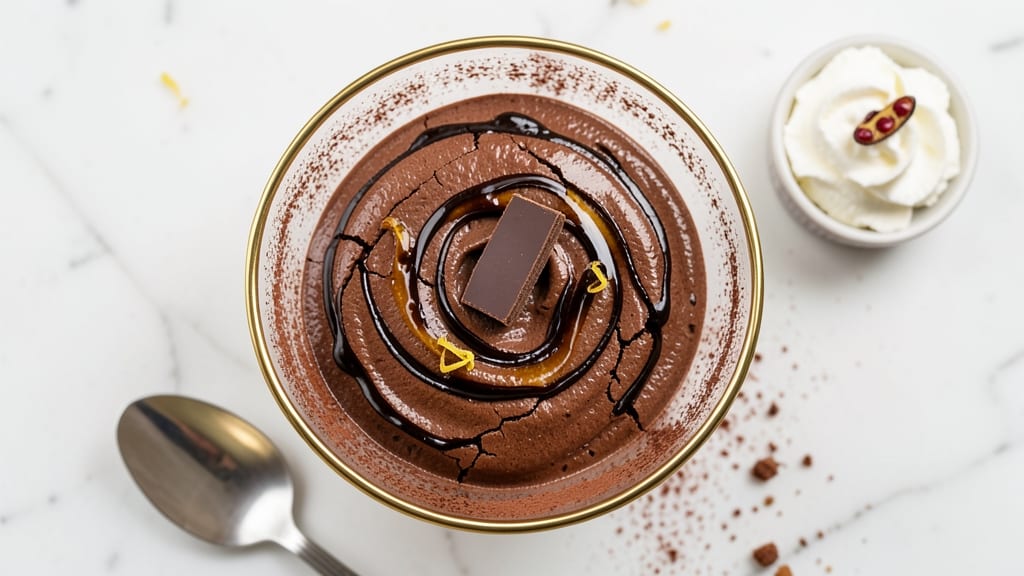
This bitter chocolate mousse recipe delivers restaurant-quality depth without overpowering bitterness—using 60-85% cocoa chocolate to create velvety, complex flavor. The secret lies in tempering the chocolate perfectly and folding it with whipped cream (or aquafaba for vegan versions) to achieve that signature silky, airy texture.
I've refined this recipe over years to balance richness with smoothness, so every bite feels luxurious yet approachable.
The process is simpler than it sounds: melt the chocolate gently, whip the cream (or egg whites) to stiff peaks, then fold everything together until just combined. Chilling for at least 4 hours—or overnight—lets the flavors meld into a decadent, fudgy-mousse hybrid with no graininess.
This isn't your childhood chocolate pudding; it's a sophisticated dessert that still feels like a home-cooked triumph.
What sets this apart is the technique, not the ingredients. High-quality chocolate is non-negotiable, but the real magic happens in the folding—too much mixing and you lose airiness; too little and the texture feels dense.
The result? A mousse so rich it feels indulgent, yet so smooth it disappears on your tongue. Garnish with cocoa powder, raspberries, or a pinch of flaky salt to elevate it further.
Perfect for holiday gatherings, date nights, or impressing guests, this recipe scales effortlessly. Whether you're using dark chocolate, vegan aquafaba, or a splash of espresso for depth, the method stays the same—foolproof, professional results every time. Let's get started.
Ingredients for bitter chocolate mousse
Six ingredients create restaurant-quality depth without overpowering bitterness—focus on quality chocolate and perfect technique.
| Ingredient | Amount | Notes |
|---|---|---|
| High-Quality Dark Chocolate (60-85% cocoa) 🍫 | 12 oz | Valrhona or Callebaut preferred |
| Heavy Whipping Cream 🥛 | 2 cups | 35% fat content minimum |
| Granulated Sugar 🍚 | ½ cup | Fine granulated preferred |
| Large Egg Yolks 🥚 | 4 whole | Room temperature preferred |
| Unsalted Butter 🧈 | ¼ cup | Cold, cubed for tempering |
| Vanilla Extract 🌿 | 1 tbsp | Pure Madagascar preferred |
| Pinch of Salt 🧂 | ¼ tsp | Fine sea salt preferred |
| Espresso Powder (optional) ☕ | ½ tsp | For enhanced depth |
| Cocoa Powder (for garnish) 🍫 | ⅛ cup | Dutch-processed preferred |
| Fresh Raspberries (for garnish) 🍓 | ½ cup | Maceraed in sugar |
| Flaky Sea Salt (for garnish) 🧂 | ⅛ tsp | Maldon preferred |
| Aquafaba (vegan option) 🥚 | ½ cup | Chilled, for whipped substitute |
The chocolate is non-negotiable—Valrhona or Callebaut in 60-85% cocoa delivers that complex, velvety depth without harsh bitterness. Gourmet grocery stores or high-end markets carry these brands, but even Whole Foods or Trader Joe's stock quality dark chocolate if you look for bars labeled 70% or higher. Avoid anything with added oils or emulsifiers; those cheap bars with 'natural flavors' are a red flag. The espresso powder, if using, should be instant, finely ground—Starbucks or local coffee shops often sell it in small containers. For the cream, 35% fat minimum is critical—anything lower risks breaking when folded. If you're making this ahead, store the chocolate and butter together in an airtight container to prevent moisture absorption.
No heavy cream? Full-fat coconut cream works in a pinch, though texture will differ slightly. Substituting egg yolks? Flax eggs (1 tbsp ground flaxseed + 3 tbsp water per yolk) mimic the fat content, though they won't whip like yolks. The vanilla extract should be pure Madagascar bourbon—imitation extracts taste artificial and ruin the delicate balance. For the sugar, fine granulated dissolves more smoothly than regular granulated, preventing graininess. If you're making this vegan, aquafaba must be chilled and whipped to stiff peaks—use a stand mixer and add a pinch of xanthan gum if you notice it's not holding shape. The cocoa powder for garnish should be Dutch-processed (natural cocoa tastes bitter even when dusted).
Chocolate and butter should be stored in a cool, dark place—not the fridge, as temperature fluctuations cause bloom. The whipped cream or aquafaba mixture holds best in the fridge for up to 2 days, but fold it just before serving to maintain airiness. For the raspberries, macerate them with a touch of sugar and lemon juice 30 minutes before serving to intensify their flavor. The final mousse keeps in the fridge for 3-4 days, though it's best within 48 hours. For freezing, portion into ramekins first—it won't reheat well after thawing. Garnishes like cocoa powder and flaky salt should be stored airtight at room temperature.
Why You'll Love This Recipe
- Four Ingredients, Big Payoff: I swear by this recipe because it’s that simple—just melt chocolate, whip cream, and fold. No fancy gadgets, no stress. The yolks and butter give it that velvety texture without overcomplicating things.
- Decadent Without Guilt: Honestly, the bitterness of that 70% cocoa melts into something luxurious. The sugar and butter balance it perfectly, so it’s rich but not cloying—like a hug from a dessert you actually deserve.
- Date Night or Dessert Party: Between us, this is my go-to for impressing guests. It’s fancy enough for a romantic dinner (pair with berries!) but unfussy enough to make for a crowd. No one will guess it took less than 20 minutes.
- Leftovers? Even Better: Here’s what sold me—this mousse actually improves overnight. The flavors meld, and the texture gets even smoother. Plus, it’s cheap to make ahead; just store it in jars and serve whenever. My secret weapon for lazy Sundays.
Step-by-step instructions for bitter chocolate mousse
Here's the technique that balances deep cocoa intensity with velvety smoothness—no bitterness overpowers.
Temper the Chocolate for Perfect Texture
Place the 12 oz high-quality dark chocolate in a heatproof bowl set over a saucepan of barely simmering water. Keep the water at a gentle simmer—never boiling—to avoid seizing the chocolate. Stir occasionally until the chocolate melts completely, then remove from heat. This gentle tempering process ensures a glossy, stable finish without graininess.
While the chocolate cools slightly to 100°F, whisk in the 0.5 cup granulated sugar and 0.25 tsp pinch of salt until fully dissolved. This step creates the perfect balance of sweetness to counteract any perceived bitterness from the dark chocolate. The sugar also helps stabilize the mousse's airy structure later. For an extra depth of flavor, whisk in the 0.5 tsp espresso powder if using—this enhances the chocolate's natural complexity without adding bitterness.
Infuse the Cream with Vanilla and Chill
In a separate bowl, combine the 2 cups heavy whipping cream with the 1 tbsp vanilla extract. Using a hand mixer or stand mixer, whip the cream on medium speed until it forms soft peaks. This stage is crucial—don't overwhip or you'll end up with butter instead of light, airy cream. Transfer the whipped cream to the refrigerator to chill while you prepare the chocolate base.
For the vegan option, chill the 0.5 cup aquafaba in the refrigerator until very cold. This step is essential for achieving the proper whipped texture that mimics traditional cream. If you're using aquafaba, you'll need to whip it separately to stiff peaks using an electric mixer, adding the 0.5 cup granulated sugar and 0.25 tsp pinch of salt during the whipping process to stabilize the structure.
Create the Chocolate Base with Egg Yolks
Return the tempered chocolate mixture to the saucepan of barely simmering water and gently warm it to 110°F. In a separate bowl, whisk the 4 whole large egg yolks until they're pale and slightly thickened. Slowly pour the warm chocolate into the egg yolks while whisking constantly to create a smooth, silky ganache. This tempering technique ensures the yolks don't scramble while incorporating the rich chocolate flavor.
Remove the bowl from the heat and whisk in the 0.25 cup cold unsalted butter, one cube at a time. The butter should melt completely into the mixture, creating a velvety texture. This step is where the magic happens—the butter adds richness and helps create that signature mousse consistency. Let the mixture cool to room temperature while you prepare the whipped cream.
Fold Together for Light, Airy Perfection
Once the chocolate mixture has cooled to 70°F, gently fold in the chilled whipped cream using a spatula. Work in two additions to maintain the airy texture—first fold in about half the cream, then the remaining amount. This folding technique incorporates air without deflating the whipped cream. For the vegan version, fold in the whipped aquafaba instead of the cream, using the same gentle folding method.
Divide the mousse among 6 serving glasses or ramekins. For presentation, dust the tops with the 0.125 cup cocoa powder and arrange the 0.5 cup fresh raspberries on top. Sprinkle with the 0.125 tsp flaky sea salt just before serving to enhance the flavors. The raspberries add a bright contrast to the deep chocolate, while the salt brings out the chocolate's natural sweetness and complexity.
Chill and Serve for Optimal Texture
Refrigerate the mousse for at least 4 hours, or until fully set. This chilling time is critical—it allows the flavors to meld and the texture to develop properly. The mousse should be firm but still silky when served. For best results, serve at 40°F or slightly colder to maintain its creamy yet stable texture.
To serve, run a knife around the edges of each glass to loosen the mousse, then invert onto plates if desired. The mousse should hold its shape slightly but still have that signature melt-in-your-mouth quality. Each bite should deliver a perfect balance of rich chocolate flavor with a smooth, velvety texture—no bitterness, just deep cocoa satisfaction.
Pro Tips For Making Bitter Chocolate Mousse
- Temper the Chocolate: I learned this the hard way—melting dark chocolate over direct heat turns it grainy and sad. Instead, chop it into small chunks and place the bowl over a pot of barely simmering water (no steam touching it), stirring every 10 seconds. The second the chocolate hits 110°F, remove it—this keeps it silky smooth without seizing.
- Whisk Yolks Cold: Skip the urge to warm the egg yolks first. Whisk them ice-cold with sugar until pale and thick (about 2 minutes), then temper them with the warm chocolate. Cold yolks emulsify better and prevent curdling—no one wants a grainy mousse, especially when you’re using 85% cocoa.
- Whip Cream to Stiff Peaks: This isn’t the time to eyeball it. Whip the heavy cream until it holds a peak that stays when you lift the whisk, then folds into the chocolate mixture. Under-whipped cream makes the mousse collapse; over-whipped makes it dense. Test it—if it’s not firm enough, keep going.
- Rest Before Serving: I know, you want to dig in immediately. But give it 4 hours (or overnight) in the fridge—this lets the flavors meld and the texture set properly. If you’re impatient, at least wait 2 hours, but don’t skip this step. The difference between a good mousse and a great one? Time.
Pro cooking tips for this recipe
Chocolate Tempering
Never melt chocolate directly over heat—it seizes and becomes grainy. Instead, use a double boiler by placing a heatproof bowl over a saucepan of barely simmering water (never boiling). Stir the 12 oz dark chocolate with a silicone spatula until it reaches 100°F, then remove from heat.
This gentle tempering process creates a glossy, stable finish without compromising the chocolate's rich flavor. 🍫
Cream Whipping
Cold cream whips better than room-temperature cream. Chill your 2 cups heavy whipping cream in the fridge for 15 minutes before whipping. Use a stand mixer on medium speed until soft peaks form—overwhipping turns cream into butter.
For vegan versions, chill 0.5 cup aquafaba until ice-cold before whipping to stiff peaks with an electric mixer. 🥛
Egg Yolk Technique
Whisk 4 large egg yolks until pale and slightly thickened before combining with warm chocolate. Slowly pour the 110°F chocolate into the yolks while whisking constantly to prevent scrambling.
The yolks add natural emulsifiers that create the mousse's signature silky texture. Work quickly to avoid heat buildup that could cook the yolks. 🥚
Folding Mastery
Fold the chilled whipped cream into the chocolate mixture gently using a spatula. Work in two additions—first half, then remaining—to maintain airiness. Overmixing deflates the cream, while underfolding leaves pockets of unmixed chocolate.
The goal is a marbled effect with no visible streaks. For vegan versions, fold in whipped aquafaba using the same method. ✨
Chilling Time
Never skip the 4-hour chill time—this is when flavors meld and texture sets properly. Place ramekins in the fridge uncovered for 1 hour to develop a slight skin, then cover and chill for the remaining time.
Serve at 40°F for the perfect balance of firmness and creaminess. The longer it chills (up to 24 hours), the deeper the flavor becomes. ❄️
Garnish Strategy
Dust with Dutch-processed cocoa powder just before serving to prevent clumping. Arrange raspberries in a circular pattern on top for visual appeal, and sprinkle flaky sea salt (like Maldon) to enhance chocolate's natural sweetness. The acidity of raspberries cuts through richness, while salt amplifies the chocolate's depth. 🍓
Nutrition facts
Frequently asked questions
Why does my bitter chocolate mousse taste too bitter?
The key is balancing rich cocoa with sweetness. Use 60-85% cocoa chocolate (not higher) and adjust the 0.5 cup granulated sugar to taste. For extra depth without bitterness, try 0.5 tsp espresso powder—it enhances chocolate flavor without adding bitterness. Always temper the chocolate gently to avoid over-extracting bitter compounds.
Can I make this mousse without eggs?
Yes! For a vegan version, replace the 4 egg yolks with 0.5 cup chilled aquafaba (whipped to stiff peaks) plus 1 tbsp cornstarch to stabilize. Use 0.5 cup full-fat coconut cream instead of dairy cream, and fold everything gently. The texture will be slightly denser but still luxurious.
How do I fix grainy chocolate mousse?
Graininess usually means the chocolate wasn't tempered properly or the mixture cooled too quickly. To fix it, gently reheat the mousse to 90°F (just until warm), then whisk vigorously for 1-2 minutes to redistribute fat molecules. Strain through a fine-mesh sieve if needed, then chill again. For prevention, always melt chocolate over barely simmering water (never direct heat) and work quickly during folding.
What's the best way to serve this mousse?
Serve in chilled ramekins or glasses at 40°F for optimal texture. Garnish with Dutch-processed cocoa powder (dusted just before serving), fresh raspberries (for acidity), and a pinch of flaky sea salt (like Maldon) to enhance chocolate flavor. For a dramatic presentation, invert onto plates lined with chocolate shavings.
Can I make this ahead of time?
Prepare the mousse up to 24 hours ahead—it actually tastes better after flavors meld. Store in airtight containers in the fridge. For serving, let it sit at room temperature for 10-15 minutes to soften slightly, then garnish fresh. The texture remains perfect when properly chilled, and the chocolate flavor deepens over time.