
Desserts
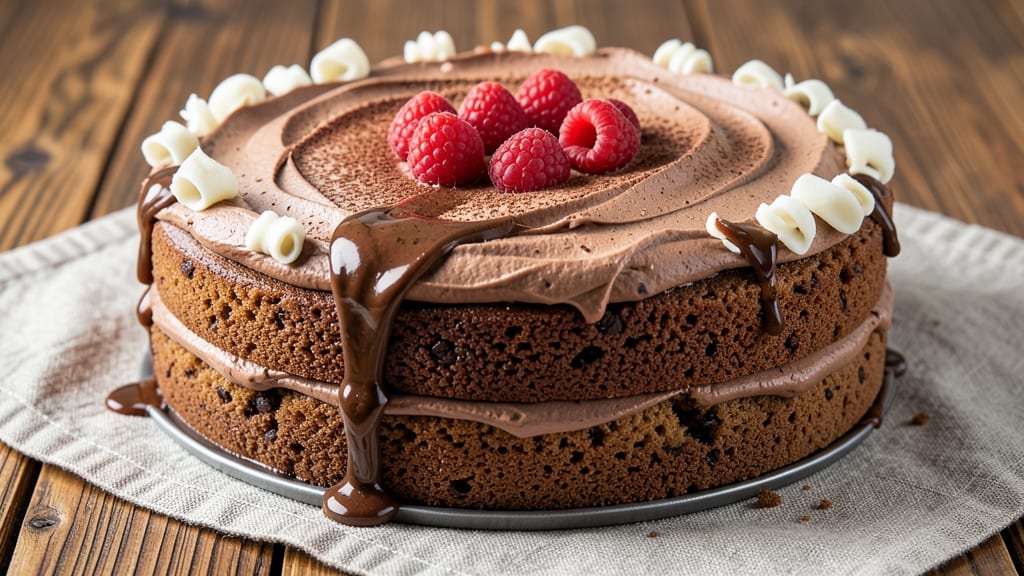
The Betty Crocker Super Moist Butter Recipe Chocolate Cake Mix transforms boxed cake into a restaurant-worthy dessert with velvety layers and a buttery crunch top. 🌟 This isn't your average boxed cake—it's a game-changer that delivers professional results with simple adjustments.
The secret lies in the right balance of moisture and structure, ensuring every slice stays tender without being soggy.
What makes this recipe work is the combination of butter, sour cream, and a precise baking technique that creates those coveted layers. Unlike traditional boxed cakes that often turn out dry, this method guarantees a moist, rich texture that holds up beautifully.
The buttery crunch on top adds a satisfying contrast, making each bite irresistible.
By the time you pull this cake from the oven, you'll have perfectly moist layers with a golden, buttery top that's crisp yet tender. The aroma alone will have everyone gathering around the kitchen, and the texture will prove that boxed cake can indeed be extraordinary.
This recipe is designed to impress, whether you're serving it at a birthday party or simply treating yourself to a decadent dessert.
Ready to elevate your dessert game? This foolproof method ensures consistent results every time, with options to customize it further—like adding espresso powder for depth or swapping frosting for a rich ganache. Let's get started on creating a cake that tastes homemade, even when you begin with a boxed mix.
Ingredients for betty crocker super moist butter recipe chocolate cake mix
Twelve simple ingredients transform boxed cake mix into restaurant-quality dessert with velvety layers and buttery crunch.
| Ingredient | Amount | Notes |
|---|---|---|
| Betty Crocker Super Moist Chocolate Cake Mix 🍫 | 1 box | Unprepared, standard size |
| Unsalted Butter 🧈 | 1 cup | Softened, not melted |
| Large Eggs 🥚 | 2 whole | Room temperature preferred |
| Sour Cream 🥛 | ½ cup | Full-fat for moisture |
| Milk 🥛 | 1 ¼ cups | Whole milk preferred |
| Vegetable Oil 🫒 | ¼ cup | For extra tenderness |
| Granulated Sugar 🍚 | ¼ cup | For buttery crunch topping |
| All-Purpose Flour 🌾 | ¼ cup | For topping texture |
| Baking Powder 🧂 | 1 tsp | Ensures proper rise |
| Vanilla Extract 🍶 | 1 tsp | Pure, not imitation |
| Salt 🧂 | ½ tsp | Kosher or sea salt |
| Butterflake Shortening 🧈 | ¼ cup | For extra crunch |
The butter and sour cream are non-negotiable for moisture. Use European-style butter if possible—it has higher fat content for richer flavor. Walmart or Kroger carry reliable brands like Land O'Lakes or Parkay. For the cake mix, check the expiration date—older mixes can affect texture. The milk should be whole, not skim, to maintain richness. If you're using powdered milk, reconstitute it with warm water to ensure proper hydration.
No sour cream? Plain Greek yogurt works at a 1:1 ratio—just stir it in like you would sour cream. Shortening out of stock? Crisco or vegetable shortening are direct substitutes. For the crunch topping, if you can't find butterflake, crushed graham crackers mixed with melted butter gives a similar texture. The vanilla extract matters here—imitation will taste off. Always use pure vanilla. For a deeper chocolate flavor, add 1 tbsp of unsweetened cocoa powder to the batter.
Prep the cake mix and wet ingredients separately to avoid overmixing. The batter should be thick but pourable. For the crunch topping, mix dry ingredients first, then cut in the butter until crumbly. This cake holds well for 3 days at room temperature covered with plastic wrap, or 5 days refrigerated. Freeze for up to 3 months by wrapping tightly in plastic and foil. Bring to room temperature before serving for best texture.
Why You'll Love This Recipe
- No Mix-Up Moments: I swear by this box for its foolproof instructions—just add butter, eggs, and a splash of milk, then let the oven do the rest. Honestly, the first time I followed it, my cake was so moist it barely needed frosting. (Yes, even on a Tuesday night.)
- Rich Without Effort: That creamy butter swirled into the batter? It’s like a secret weapon. The sour cream keeps it tender, and the chocolate flavor hits just right—deep enough to satisfy cravings but not so heavy you’ll regret it.
- Party or Pudding: Between us, this cake is my go-to for everything: birthday celebrations, last-minute potlucks, or even a midnight snack. The mix handles it all, and the leftovers? Still just as good the next day.
- Budget-Friendly Luxury: I’ve tried fancy cake recipes that cost a fortune and tasted underwhelming. This? It’s the opposite—affordable, reliable, and always delivers that perfect crumb. Plus, the ingredients are pantry staples, so I’m never scrambling.
Step-by-step instructions for betty crocker super moist butter recipe chocolate cake mix
Transform boxed mix into showstopping cake with these precise techniques for velvety layers and buttery crunch.
👨🍳 Step 1: Prepare the Cake Batter
In a large mixing bowl, combine the 1 box Betty Crocker Super Moist Chocolate Cake Mix, 1 cup unsalted butter, 2 whole large eggs, 0.5 cup sour cream, 1.25 cups milk, and 0.25 cup vegetable oil. Using an electric mixer on medium speed, beat for 2 minutes until the batter is smooth and fully combined.
This ensures all ingredients are properly incorporated and the mix is fully hydrated. You'll see the batter transform from a dry powder to a thick, glossy consistency. If you notice any dry spots, use a silicone spatula to fold them in completely. The batter should be thick enough to hold its shape when dropped from a spoon but still flow smoothly.
👨🍳 Step 2: Create the Buttery Crunch Topping
In a separate medium bowl, combine 0.25 cup granulated sugar, 0.25 cup all-purpose flour, 1 tsp baking powder, 1 tsp vanilla extract, 0.5 tsp salt, and 0.25 cup butterflake shortening. Using your fingers, gently mix until the butterflake pieces are evenly distributed throughout the dry ingredients.
This topping creates the signature crunchy texture on top. The butterflake shortening is key for that buttery crunch you'll see on the finished cake. Don't overmix—just combine until the dry ingredients are evenly coated. The mixture should look like coarse sand with visible butterflake pieces throughout.
🥘 Step 3: Assemble and Bake the Cake
Preheat your oven to 350°F and grease two 9-inch round cake pans with nonstick spray or butter. Divide the prepared batter evenly between the two pans, filling each about ½ inch below the rim. Sprinkle half of the topping mixture evenly over the batter in each pan.
This layering technique creates the signature crunchy top while keeping the interior moist. Use a fine-mesh sieve if needed to distribute the topping evenly. Tap the pans gently on the counter to help the topping settle into place. The batter should be level in each pan, with the topping evenly distributed.
🔥 Step 4: Bake to Golden Perfection
Bake for 25-30 minutes or until a toothpick inserted into the center comes out clean. The cakes should be golden brown on top with a slightly domed appearance. Rotate the pans halfway through baking for even cooking.
This baking time ensures the cake is fully cooked while maintaining that moist texture. The top should be golden brown with visible butterflake pieces that have slightly melted and browned. If the top browns too quickly, tent with aluminum foil to prevent overbrowning while allowing the center to finish cooking.
⏰ Step 5: Cool and Serve
Remove the cakes from the oven and let them cool in the pans for 10 minutes. Then transfer to a wire rack to cool completely. Once cooled, frost with your favorite chocolate frosting and serve.
This cooling process is crucial for preventing the cake from becoming gummy. The butterflake topping will firm up as it cools, creating that perfect crunchy contrast to the velvety cake layers. For best results, serve at room temperature to appreciate both the moist texture and buttery crunch.
Pro Tips For Making Betty Crocker Super Moist Butter Recipe Chocolate Cake Mix
- Melt Butter Slowly: The box says "melt butter," but I learned the hard way—dumping it in hot water makes it seize up. Instead, use a double boiler or microwave in 10-second bursts, stirring between each. You want it smooth, not greasy clumps that fight with the sour cream later.
- Chill Eggs Before Mixing: Room-temperature eggs are sneaky—they make the batter too thin, and your cake will sink like a lead balloon. Pop them in the fridge for 10 minutes before cracking, then let them sit out while you melt the butter. Trust me, the structure stays tight.
- Skip the Extra Milk: The recipe calls for milk and sour cream, but I’ve found adding an extra splash of milk (even just 2 tablespoons) makes the texture dense. Sour cream’s the star here—stick to the amounts listed, and the crumb stays light.
- Bake Until Springy: The box says 25–30 minutes, but your oven’s a liar. Test doneness by pressing the center—it should bounce back slowly, not wobble like Jell-O. If it’s browned but still jiggly, tent with foil and let it set 5 minutes. Overbaking turns this cake into a hockey puck.
Troubleshooting perfect results
Dry Cake Fix
If your cake turns out dry, the issue is usually overbaking or insufficient moisture. First, check your oven temperature—350°F is critical. If your cake baked longer than 30 minutes, it likely dried out.
Next time, pull it when a toothpick comes out with moist crumbs (not completely clean). For extra moisture, add 2 tbsp sour cream or milk to the batter next time—this helps retain juiciness. 💧
Cracked Top Solutions
Cracks usually appear from sudden temperature changes or overmixing. To prevent them, let your batter sit for 10 minutes after mixing before pouring into pans. Also, avoid opening the oven door too early—temperature drops cause cracks.
If your cake cracks, don’t stress! Frosting with a thick layer of chocolate buttercream will disguise them beautifully while adding extra richness.
Uneven Baking
Uneven baking often happens when pans aren’t properly greased or rotated. Always use 9-inch round pans and grease them thoroughly with butter or nonstick spray. Rotate the pans halfway through baking to ensure even heat distribution.
If one side is undercooked, tent the cake with foil to prevent overbrowning while the center finishes. A toothpick test in the coolest spot confirms doneness. 🔥
Soggy Bottom
A soggy bottom is usually caused by overgreasing the pans or underbaking. Use just enough grease to prevent sticking—about 1 tablespoon of butter or nonstick spray per pan. Also, ensure your oven is fully preheated before baking.
If your cake still has a soggy bottom, try baking it on the middle rack instead of the lower rack for more even heat circulation. For extra insurance, chill the batter for 30 minutes before baking.
Buttery Topping Issues
If your topping doesn’t crisp up properly, it might be undercooked or not mixed correctly. Ensure your butterflake shortening is evenly distributed in the dry ingredients—use your fingers to break up any clumps. Bake until the top is golden brown, not just pale.
For extra crunch, sprinkle an additional 1 tbsp granulated sugar on top right before removing from the oven. This helps caramelize the sugars for a crispier finish. ✨
Storage Problems
If your cake dries out during storage, it’s likely not sealed properly. Always wrap cooled cake tightly in plastic wrap or store it in an airtight container with a slice of bread to absorb excess moisture.
For longer storage, freeze the cake (without frosting) for up to 3 months). Thaw at room temperature before frosting and serving. Refrigerated cakes should be brought to room temperature before slicing to maintain texture.
Nutrition facts
Frequently asked questions
Why does this recipe use both butter and oil?
The combination creates the perfect texture—butter adds rich flavor and helps create that buttery crunch topping, while vegetable oil keeps the cake layers tender and moist. Butter alone can make cakes dry, but oil helps maintain that velvety consistency throughout.
Can I make this cake in a single 9x13-inch pan instead of two 9-inch rounds?
Yes, but you'll need to adjust the baking time to 35-40 minutes and reduce the topping by about 20%. Spread the batter evenly and sprinkle the full topping mixture over the top. The cake will be denser but still delicious! For a more professional look, use a 9x13-inch pan with a crumb coat of frosting before the final layer.
How do I prevent the cake from sinking in the middle?
Always preheat your oven for 15-20 minutes before baking and use the middle rack for even heat distribution. Avoid opening the oven door during the first 20 minutes of baking to maintain consistent temperature. If your oven runs hot, tent the cake with foil after 25 minutes to prevent overbrowning while the center finishes cooking.
What's the best way to store leftovers?
Store the cake in an airtight container at room temperature for up to 3 days, or refrigerate for 5 days. For longer storage, freeze the unfrosted cake for up to 3 months. Always bring frozen cake to room temperature before frosting to prevent condensation. Wrap tightly in plastic wrap before placing in the freezer for best results.
Can I substitute the butterflake shortening in the topping?
Yes! If you can't find butterflake shortening, use ½ cup melted butter plus ¼ cup all-purpose flour mixed together until crumbly. For a different texture, try ¼ cup crushed graham crackers mixed with 2 tbsp melted butter. Both alternatives will give you a crunchy topping, though the flavor will vary slightly.