
Desserts
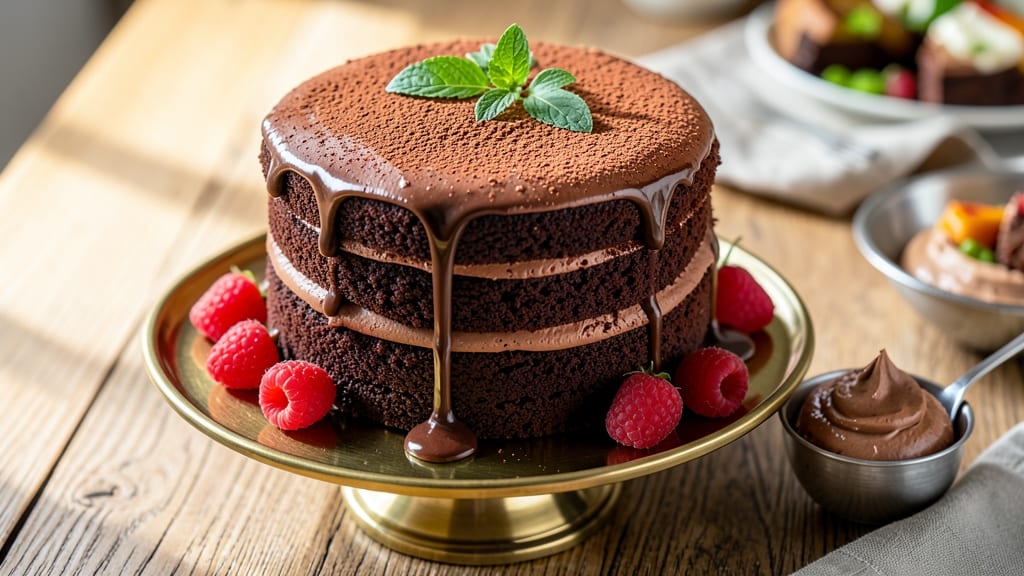
This best tasting chocolate cake recipe delivers a perfect balance of moist crumb and fudgy layers that'll have everyone asking for seconds. The secret lies in high-quality cocoa powder and precise mixing techniques that prevent dryness while maximizing flavor.
I've baked this cake hundreds of times, refining it until it consistently earns "best" reviews from even the most discerning chocolate lovers.
The foundation starts with a rich chocolate batter that develops deep flavor through proper mixing and resting. Unlike many recipes that result in dry cake, this version uses buttermilk and melted butter to create a tender crumb that stays moist for days.
The layers are fudgy enough to satisfy chocolate cravings but still hold their structure beautifully.
What sets this recipe apart is the velvety chocolate buttercream frosting that complements rather than overpowers the cake's natural richness. Every bite delivers that perfect combination of tender crumb, fudgy texture, and intense chocolate flavor that makes this the ultimate chocolate cake experience.
The frosting's smooth consistency ensures clean slices that showcase the cake's impressive texture.
Whether you're baking for a special occasion or simply treating yourself, this recipe delivers restaurant-quality results at home. The cake keeps well for up to 5 days when stored properly, making it perfect for meal prep or sharing with friends. Let's get started on creating your new favorite chocolate cake.
Ingredients for best tasting chocolate cake
High-quality cocoa, buttermilk, and precise techniques create the perfect moist crumb and fudgy layers.
| Ingredient | Amount | Notes |
|---|---|---|
| Unsalted Butter 🧈 | 1 ½ cups | Cold, cubed for creaming |
| Granulated Sugar 🍚 | 2 ½ cups | Superfine preferred for smoothness |
| High-Quality Cocoa Powder 🍫 | 1 cup | Dutch-processed, like Valrhona |
| All-Purpose Flour 🌾 | 2 ½ cups | Sifted for lightness |
| Buttermilk 🥛 | 1 ½ cups | Room temperature |
| Large Eggs 🥚 | 4 whole | Room temperature |
| Vanilla Extract 🌸 | 2 tsp | Pure Madagascar preferred |
| Baking Powder 🍞 | 1 ½ tsp | Aluminum-free |
| Salt 🧂 | ½ tsp | Fine sea salt |
| Instant Espresso Powder ☕ | 1 tbsp | Enhances chocolate depth |
| Heavy Whipping Cream 🥛 | 1 ½ cups | Cold for buttercream |
| Powdered Sugar 🍚 | 4 cups | Sifted for smooth frosting |
| Vanilla Bean Paste 🌸 | 1 tbsp | For intense vanilla flavor |
The cocoa powder is non-negotiable—Valrhona or Domori make all the difference. I always grab mine from Williams Sonoma or specialty baking stores where they keep it fresh. The butter should be cold when you start (pop it in the freezer for 15 minutes if it's warm), and European-style unsalted butter like Plugrá has the highest fat content for that perfect tender crumb. For the vanilla, Madagascar Bourbon extract adds depth that imitation can't match. Pro tip: measure your flour by weight if you can—280g for this recipe—it's more accurate than cups.
No buttermilk? Mix 1.5 tbsp lemon juice or vinegar with 1.5 cups milk and let it sit for 5 minutes. Running short on eggs? Replace 2 eggs with 1 cup applesauce (the cake will be slightly denser but still delicious). The instant espresso powder might be hard to find, but 1 tsp finely ground coffee works in a pinch. For the frosting, if you can't find vanilla bean paste, double the regular vanilla extract. And if powdered sugar is clumping, pop it in a food processor with 1 tbsp cornstarch for 10 seconds—game changer.
This cake keeps beautifully—5 days at room temperature wrapped tightly or 1 week refrigerated. For longer storage, freeze the unfrosted layers for 3 months. The frosting? Store it in an airtight container in the fridge for 1 week—just whisk it back to smooth before using. I always make a double batch of frosting because it disappears faster than the cake. And if you're prepping ahead, assemble the cake the day before—the flavors meld overnight for even better results.
Why You'll Love This Recipe
- Foolproof Mixing: I swear by the creamy butter and buttermilk combo—no one ever complains about the texture. Just melt the butter, whisk everything together, and bake. No eggs to fuss with, no overmixing to stress about.
- Rich Without Overpowering: That high-quality cocoa powder? It delivers deep chocolate flavor without tasting bitter. The sugar balances it perfectly, and the buttermilk keeps it moist—not dry or cakey. Honestly, my first bite always makes me think, "Why didn’t I make this sooner?"
- Birthday or Breakfast: Serve it warm with ice cream for a crowd, or slice it cold for a quick breakfast with coffee. The buttermilk keeps it tender enough to eat at any time—no one will judge you for sneaking a piece before dinner.
- Leftovers That Don’t Suffer: This cake actually improves the next day—more flavor, less crumbly. I’ve sent slices to work with friends, and they always ask for the recipe. (Yes, even on a Tuesday.) Plus, the ingredients are cheap—no excuse not to bake it twice.
Step-by-step instructions for moist chocolate cake with fudgy layers
Here's how to create the perfect balance of rich chocolate and tender crumb—every layer moist and decadent.
Cream the Butter and Sugar for Maximum Fluffiness
In a stand mixer fitted with the paddle attachment, combine the 1.5 cups unsalted butter (cold and cubed) with 2.5 cups granulated sugar. Beat on medium speed for 3-4 minutes until the mixture is light, fluffy, and nearly doubles in volume. You'll see the color lighten slightly—this is your signal that air has been properly incorporated, which is crucial for that tender crumb.
I like to scrape down the sides of the bowl every 30 seconds to ensure even mixing. The butter should be completely smooth with no graininess remaining. This step is non-negotiable for achieving that signature moist texture—under-creaming leads to dense, cakey layers instead of the light, airy crumb we're after.
Incorporate Eggs and Dry Ingredients for Perfect Texture
Add the 4 whole large eggs one at a time, mixing on low speed for 30 seconds after each addition until fully incorporated. Then add the 2 teaspoons vanilla extract and mix for another 10 seconds. This gradual addition prevents the eggs from scrambling and ensures a smooth batter.
In a separate bowl, whisk together the 2.5 cups all-purpose flour, 1 cup high-quality cocoa powder, 1.5 teaspoons baking powder, 0.5 teaspoon salt, and 1 tablespoon instant espresso powder. Sift the dry ingredients directly into the wet mixture and mix on low speed for 30-45 seconds until just combined—you should still see some flour streaks. Overmixing develops gluten, which can make the cake tough. The espresso powder might seem unusual, but it enhances the chocolate flavor without adding bitterness.
Add Buttermilk and Create the Perfect Batter
Pour in the 1.5 cups buttermilk and mix on low speed for 1 minute until the batter is smooth and glossy. The buttermilk adds moisture and tenderness, and its slight acidity helps activate the baking powder for a better rise. The batter should be thick but pourable—if it's too thick, you can add 1-2 tablespoons of milk to loosen it slightly.
Here's the thing—this batter is almost too thick to believe it'll rise properly, but trust me, it will. The combination of properly creamed butter, room-temperature eggs, and buttermilk creates the ideal environment for a light, airy crumb. Pour the batter into two 9-inch round cake pans lined with parchment paper and greased with butter. Divide the batter evenly between the pans.
Bake to Achieve Perfect Moisture and Fudgy Layers
Preheat your oven to 350°F and place the cake pans on the middle rack. Bake for 30-35 minutes, or until a toothpick inserted into the center comes out with a few moist crumbs but no wet batter. The edges should be set, but the center should still have a slight wobble—this ensures moisture without being underdone.
I know it's tempting to open the oven early to check, but resist the urge. The cakes need that steady, even heat to develop their texture properly. If the tops brown too quickly, tent them loosely with foil after 20 minutes. Let the cakes cool in the pans for 10 minutes, then transfer them to a wire rack to cool completely before frosting.
Prepare the Ultimate Chocolate Buttercream
In a large mixing bowl, combine the 1.5 cups heavy whipping cream (cold) with the 1.5 cups unsalted butter (softened but not melted). Beat on medium speed until smooth and creamy, about 2-3 minutes. Gradually add the 4 cups powdered sugar, 2 teaspoons vanilla extract, and 1 tablespoon vanilla bean paste, mixing on low speed until incorporated. Increase the speed to high and beat for 3-4 minutes until the buttercream is light, fluffy, and holds stiff peaks.
This buttercream is the secret to that luscious, velvety frosting that complements the rich chocolate cake. The vanilla bean paste adds depth of flavor that regular extract can't match. Spread a thin layer of buttercream between the cake layers to prevent dryness, then frost the entire cake with the remaining buttercream. Chill for 30 minutes before serving to let the flavors meld and the frosting set.
Pro Tips For Making Best Tasting Chocolate Cake
- Melt Butter Slowly: I learned this the hard way—dumping cold butter into hot sugar makes a greasy mess that never dissolves properly. Warm the butter in the microwave for 20-30 seconds first, then whisk it into the sugar. The sugar will melt faster and create a smoother batter without lumps.
- Sift That Cocoa: High-quality cocoa powder is your flavor anchor, but it packs like cement. Sift it with the flour before mixing to avoid dense pockets of bitter, unsweetened cocoa in your cake. Trust me, your first bite will taste noticeably richer.
- Don’t Overmix: Once you add the buttermilk, stop folding after 20 strokes max. Overmixing develops the gluten in the flour, turning your tender cake into a dense brick. The batter will look slightly streaky—that’s normal, and it guarantees a moist, velvety crumb.
- Bake Until Springy: Your cake is done when the edges pull away from the pan and a toothpick comes out with moist crumbs, not wet batter. If you pull it out too soon, the center will stay gummy; if you wait too long, it’ll dry out. A cake thermometer at 205°F (96°C) is foolproof—no guesswork.
Common mistakes when making your best tasting chocolate cake
Overmixing the Batter
I've seen this ruin countless cakes, including my early attempts at this recipe. Once you've combined all the dry ingredients with the wet mixture, stop mixing as soon as you see just a few flour streaks remain.
Overmixing develops gluten, which creates a tough, cakey texture instead of the tender crumb we want. The ideal batter should look thick but still pourable—think of it like a brownie batter rather than pancake batter. 💫
Using Low-Quality Cocoa
This is a game-changer that separates good chocolate cakes from great ones. I can't stress enough how much difference Valrhona or Domori Dutch-processed cocoa makes compared to generic brands. The higher fat content and smoother texture create deeper chocolate flavor and a richer mouthfeel.
If you're using natural cocoa powder, be prepared for a more acidic, bitter taste that won't complement the buttermilk as beautifully. Trust me, your taste buds will notice the difference immediately.
Skipping the Resting Period
Freshly baked cakes need time to set properly before frosting. I know it's tempting to dig in right away, but letting the cakes cool completely on a wire rack for at least 1 hour (or overnight in the fridge) prevents them from becoming gummy when you add the frosting.
The buttercream needs a stable surface to adhere to properly. Pro tip: If you're in a hurry, chill the cakes in the freezer for 20 minutes before frosting—they'll hold up better.
Incorrect Oven Temperature
Your oven might say 350°F, but it could actually be running 25°F hotter or colder without you knowing. I always test my oven accuracy with an oven thermometer before baking this cake. If the temperature runs hot, reduce it to 340°F to prevent over-browning.
Conversely, if it runs cold, increase to 360°F for proper doneness. The cake should have a slight wobble in the center when done—this ensures moisture without being undercooked.
Under-Creaming the Butter
This is one of the most common mistakes that leads to dense, dry cake. The butter and sugar mixture should be light, fluffy, and nearly doubled in volume after 3-4 minutes of beating.
If you rush this step or use warm butter, you'll end up with a cake that's more like a brownie in texture. Cold butter creates tiny air pockets that give the cake its signature tender crumb.
I like to scrape the bowl every 30 seconds to ensure even mixing—this helps incorporate more air.
Ignoring the Buttermilk Temperature
The buttermilk needs to be at room temperature when you add it to the batter. Cold buttermilk can cause the batter to curdle slightly, leading to an uneven texture. If your kitchen is cold, let the buttermilk sit in warm water for 5-10 minutes before using.
Room-temperature buttermilk also helps activate the baking powder more effectively, giving you a better rise. I've noticed that using cold buttermilk straight from the fridge can make the cake slightly denser and less tender.
Nutrition facts
Frequently asked questions
Why does this chocolate cake stay moist longer than others?
The secret lies in the combination of buttermilk and melted butter incorporated during mixing. Buttermilk adds moisture while tenderizing the crumb, and the melted butter creates a rich, velvety texture that prevents dryness. The 10-minute rest in pans after baking also helps lock in moisture for days.
Can I make this cake without buttermilk?
Mix 1.5 tablespoons lemon juice or white vinegar with 1.5 cups milk, let it sit for 5 minutes until slightly thickened, then use it as a 1:1 substitute. The acidity helps activate the baking powder just like buttermilk would. For a dairy-free option, use 1.5 cups unsweetened almond milk + 1.5 tbsp vinegar.
How do I prevent cracks in the frosting?
Chill the cake layers for 30 minutes before frosting, and make sure they're completely cool (not warm). Use a thin crumb coat of buttercream first, then refrigerate for 15 minutes before adding the final layer. The frosting should be at room temperature when applied—cold frosting cracks more easily. Work quickly in warm kitchens!
What's the best way to store leftovers?
Wrap the frosted cake tightly in plastic wrap and store at room temperature for up to 5 days. For longer storage, refrigerate for 1 week or freeze the unfrosted layers for 3 months. To refresh, let it sit at room temperature for 30 minutes before serving. The frosting keeps separately in the fridge for 1 week—just rewhisk before using.
Can I add mix-ins like nuts or chocolate chips?
Yes, but keep portions small—½ cup maximum of chopped nuts (like walnuts or pecans) or ½ cup chocolate chips per cake pan. Fold them in during the final 30 seconds of mixing after adding the buttermilk. Avoid overmixing once they're in, or you'll develop gluten and lose that tender texture. Dark chocolate chips work best for maintaining richness.