
Desserts
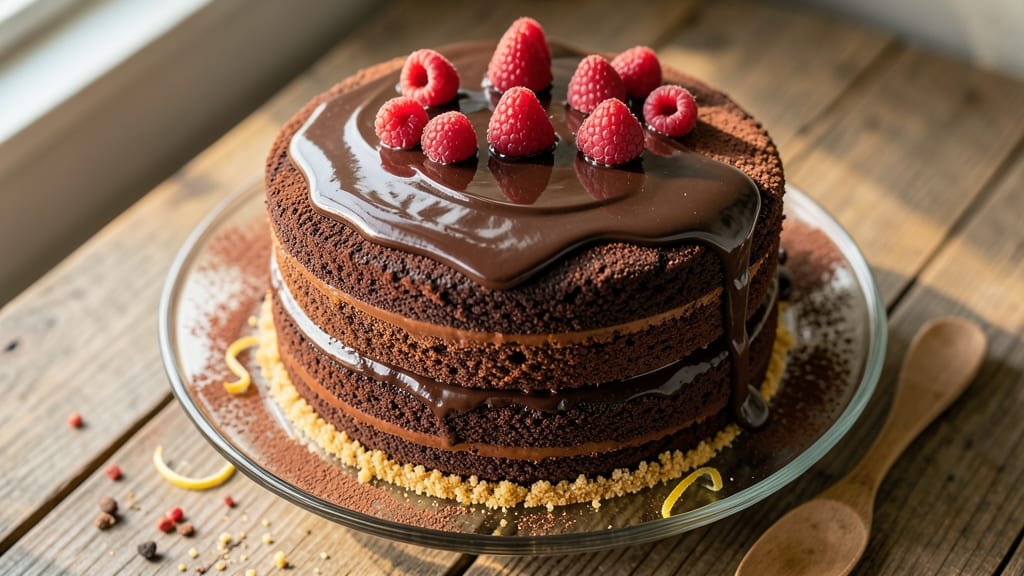
The secret to the best moist chocolate birthday cake lies in a simple but game-changing ingredient: buttermilk. This isn't just any cake—it's the one that stays wonderfully tender for days, with layers so rich and fluffy they'll have your guests asking for seconds.
I've perfected this recipe through years of baking, and the buttermilk trick makes all the difference in achieving that ideal texture without compromising flavor.
What sets this recipe apart is the balance of ingredients and technique. You'll use a combination of all-purpose flour, cocoa powder, and eggs to create a batter that's both rich and light.
The buttermilk adds moisture while keeping the cake tender, and a touch of oil ensures that richness without making it dense. Baking at the right temperature and for the perfect amount of time guarantees layers that are perfectly set but still moist.
By the time you pull this cake from the oven, you'll be greeted with a rich, deep chocolate aroma that fills your kitchen. The layers will be evenly moist, with a subtle crumb that's neither too fine nor too coarse.
This is the kind of cake that holds up beautifully with frosting—whether you choose a classic buttercream or a lighter whipped cream option—and stays delicious even after a few days.
Whether you're celebrating a birthday, anniversary, or just treating yourself, this cake delivers on every promise of being the best moist chocolate cake you've ever made. The buttermilk boost ensures that each slice is as tender as it is flavorful, making it the perfect centerpiece for any celebration.
Ingredients for best moist chocolate birthday cake
Twelve simple ingredients transform into the richest, moistest chocolate cake you'll ever bake.
| Ingredient | Amount | Notes |
|---|---|---|
| All-Purpose Flour 🌾 | 2 ½ cups | Sifted for light texture |
| Granulated Sugar 🍚 | 2 cups | White or light brown |
| Unsweetened Cocoa Powder 🍫 | ¾ cup | High-quality Dutch-processed |
| Buttermilk 🥛 | 1 cup | Homemade or store-bought |
| Large Eggs 🥚 | 2 whole | Room temperature preferred |
| Vegetable Oil 🫒 | ¾ cup | Light or canola preferred |
| Baking Soda 🧂 | 1 tsp | Pure baking soda |
| Salt 🧂 | ½ tsp | Fine sea salt preferred |
| Vanilla Extract 🌿 | 2 tsp | Pure vanilla extract |
| Hot Water 💧 | ½ cup | For dissolving cocoa |
| Instant Espresso Powder ☕ | 1 tbsp | Optional for depth |
| Dark Chocolate Chips 🍫 | 1 ½ cups | Semi-sweet 60% cacao |
The buttermilk is non-negotiable here—it’s the secret weapon for that ultra-tender crumb. Homemade is best (just mix milk and vinegar), but store-bought works in a pinch. For the cocoa, Dutch-processed (like Hershey’s Special Dark) gives a smoother finish, while natural cocoa adds more depth. I always grab Ghirardelli chocolate chips—they melt beautifully and add pockets of fudgy goodness. The flour? King Arthur or Gold Medal are my go-tos for consistent results. Sift it first to avoid dense layers, and don’t skip the espresso powder if you want that professional bakery flavor.
No buttermilk? Substitute with 1 cup plain yogurt or 1 cup milk + 1 tbsp vinegar. Out of vanilla? Almond extract at half the amount works, but the flavor will differ slightly. For a lighter cake, swap half the oil for unsalted butter—it adds richness but can make the texture denser. The cocoa powder can be tricky: if your recipe calls for natural cocoa, Dutch-processed won’t work as a 1:1 sub—adjust the baking soda accordingly. And if you’re feeling fancy, fold in toasted walnuts or orange zest for extra layers of flavor. Just don’t overmix the batter—stir until just combined for that perfect tender crumb.
This cake keeps beautifully—3-4 days wrapped at room temp or up to 2 weeks refrigerated. For longer storage, freeze the layers (unfrosted) for up to 3 months. I like to wrap each layer in parchment and store in a ziplock bag. The frosting? Buttercream or ganache both work—just let the cake cool completely first. Pro tip: Brush warm layers with simple syrup (equal parts sugar and water, heated) before frosting for extra moisture. And if you’re serving it ahead? Assemble the cake a day in advance—the flavors meld even better overnight.
Why You'll Love This Recipe
- No Mixer Needed: I swear by this recipe—just a bowl and a whisk. The buttermilk keeps it tender without overworking, and the cocoa powder dissolves smoothly into the sugar first, so no lumps. My lazy Sunday mornings have never been better.
- Fudgy Yet Light: That cocoa-sugar combo? It’s the secret to a cake that’s rich but not dense, with just enough moisture from the eggs to stay velvety. Honestly, it’s the kind of slice that disappears in three bites—no guilt, just pure chocolate joy.
- Birthday or Brunch: This isn’t just for cakes—halve the batter, bake in a loaf pan, and you’ve got a decadent breakfast treat. Or keep it classic for a party, but trust me, it’s the crowd-pleaser that even picky eaters will devour. (Yes, even on a Tuesday night.)
- Leftovers? Better Than New: The best part? This cake actually improves the next day. The buttermilk’s tang mellows, the flavors deepen, and it’s still moist enough to slice without crumbling. I make a double batch just so I can enjoy it twice—no one will judge.
Step-by-step instructions for moist chocolate birthday cake
This buttermilk-infused method guarantees layers that stay moist for days—no dry crumbs in sight!
Dissolve Cocoa for Maximum Moisture
In a medium bowl, whisk together the 0.75 cup unsweetened cocoa powder and 0.5 cup hot water until completely smooth. This creates a rich cocoa paste that distributes evenly and prevents dry spots in your cake. Let it cool slightly while you prepare the remaining ingredients—this step is non-negotiable for that signature moist texture.
The reason we use hot water here is simple: it helps dissolve the cocoa powder thoroughly, creating a silky base for your batter. If you skip this, you'll end up with pockets of undissolved cocoa that make your cake dense rather than light. Trust me, this small step makes all the difference in the final result.
Whisk Dry Ingredients for Light Layers
In a separate large bowl, sift together the 2.5 cups all-purpose flour, 1 tsp baking soda, 0.5 tsp salt, and 1 tbsp instant espresso powder. Whisk gently to combine—don't overmix or you'll develop gluten and end up with tough cake. The espresso powder might seem unusual, but it enhances the chocolate flavor without adding bitterness.
I always sift the flour first because it aerates the mixture and prevents dense layers. This is especially important for chocolate cakes, which can be prone to heaviness. Keep this bowl ready—you'll be adding it to the wet ingredients in just a moment. The key here is to work quickly once you combine everything to maintain that light, airy texture.
Combine Wet Ingredients for Ultimate Fluffiness
In a separate large mixing bowl, beat the 2 cups granulated sugar and 0.75 cup vegetable oil together until fully combined. Add the 2 whole large eggs, one at a time, beating well after each addition. Then stir in the 1 cup buttermilk and 2 tsp vanilla extract. Finally, pour in the dissolved cocoa mixture and mix until just combined.
Here's where the buttermilk magic happens—the acidity in buttermilk reacts with the baking soda to create tiny air pockets, giving your cake that signature fluffy texture. Don't worry if the mixture looks slightly curdled after adding the buttermilk; it will smooth out when you add the dry ingredients. This is the secret to that perfect moist crumb we're after.
Fold in Dry Ingredients Gently
Gradually add the dry ingredient mixture to the wet ingredients, mixing just until combined. Be careful not to overmix—stop as soon as you see no more flour streaks. Fold in the 1.5 cups dark chocolate chips by hand using a spatula. The goal is to maintain as much air as possible in the batter for that light, tender crumb.
I always use a gentle folding motion here to preserve the air bubbles created by the buttermilk and baking soda. If you overmix, you'll end up with a dense cake instead of the light, fluffy layers we want. This is where patience pays off—take your time to get it just right. The batter should be thick but pourable, with no visible flour streaks.
Bake for Perfectly Moist Layers
Preheat your oven to 350°F and grease two 9-inch round cake pans. Divide the batter evenly between the pans and smooth the tops. Bake for 30-35 minutes or until a toothpick inserted into the center comes out clean. The edges should be set but the center should still be slightly jiggly—this ensures maximum moisture.
Don't overbake! The cake will continue cooking as it cools. I always check for doneness at the lower end of the time range because chocolate cakes can dry out quickly if left in the oven too long. As soon as that toothpick comes out clean, remove the cakes from the oven and let them cool in the pans for 10 minutes before transferring to a wire rack to cool completely.
Pro Tips For Making Best Moist Chocolate Birthday Cake
- MEASURE COCOA FIRST: I learned this the hard way—dumping cocoa powder into dry ingredients first makes the batter thick and gloopy. Instead, whisk the cocoa with the buttermilk and melted butter first. This breaks up clumps and keeps the texture light and smooth.
- WHISK EGGS UNTIL THICK: Skip the lazy mix-and-pour method. Beat the eggs and sugar together until the mixture is thick, pale, and ribbon-like (about 3–4 minutes). This traps air, which means a lighter cake that stays moist longer—no one wants a dense brick.
- BAKE UNTIL SPRINGY: The cake’s done when it pulls away from the edges but still has a slight jiggle in the center. If you wait for a perfectly flat top, you’ll dry it out. After baking, tent it with foil for 5 minutes—this keeps the moisture locked in while it finishes setting.
- SWAP BUTTERMILK FOR SOUR CREAM: Short on buttermilk? Mix ¾ cup sour cream with ¼ cup milk to replace the full 1 cup. The extra fat makes the cake richer and even more tender—just don’t skip the extra 1 teaspoon of baking powder to balance the acidity.
Regional styles of this recipe
Southern Comfort Style
In the South, this cake becomes a showstopper with a boozy twist—add 2 tbsp bourbon (like Maker's Mark) to the wet ingredients for deep caramel notes.
Top with a whiskey buttercream made by whipping 1 cup softened butter, 3 cups powdered sugar, and 2 tbsp bourbon—it’s a crowd-pleaser at birthday parties. 🥃
New York-Style Density
For a denser, richer texture (like classic NYC delis), swap the buttermilk for 1 cup whole milk and reduce the oil to 0.5 cup. Add 1 tbsp instant coffee granules (instead of espresso powder) and fold in 1 cup chopped walnuts for crunch.
This version holds up better to heavy frostings like chocolate ganache.
German Chocolate Twist
Take it to German Chocolate Cake territory by adding ½ cup chopped pecans and a coconut-pecan filling between layers. Mix ½ cup melted butter, 1 cup brown sugar, 1 egg, and 2 cups shredded coconut—spread between cooled layers before frosting.
Use a coconut whipped cream for the finishing touch. 🥥
Italian Espresso Boost
For an Italian café vibe, increase the espresso powder to 2 tbsp and add 1 tsp orange zest to the batter. Top with a dark chocolate espresso glaze (melt 1 cup dark chocolate with ½ cup heavy cream and 1 tbsp instant espresso).
This version pairs perfectly with a dolce latte for dessert. ☕
French Moisture Secret
French bakers swear by folding in whipped egg whites for extra lift. After combining wet and dry ingredients, beat 3 egg whites to stiff peaks and gently fold them in last.
This creates a lighter, almost soufflé-like texture while keeping the chocolate richness. Dust with powdered sugar before serving for a Parisian touch. 🇫🇷
Mexican Spiced Version
Add warmth with 1 tsp cinnamon, ½ tsp chili powder, and ¼ tsp cayenne to the dry ingredients. Top with a chocolate-habanero cream cheese frosting (mix 8 oz cream cheese, ½ cup butter, 2 cups powdered sugar, and 1 tbsp habanero paste).
Garnish with lime zest for a fiesta-worthy cake. 🌶️
Nutrition facts
Frequently asked questions
Why does buttermilk make this cake so moist?
The buttermilk's acidity reacts with baking soda to create tiny air pockets while adding moisture. This keeps the cake tender for days without drying out. The secret is in that chemical reaction—it's what gives this cake its signature fluffy yet dense texture!
Can I substitute buttermilk if I don't have any?
Mix 1 cup milk + 1 tbsp vinegar (or lemon juice) and let it sit for 5 minutes. For extra richness, use plain yogurt instead. Just don't skip it—the moisture is key for that perfect crumb.
How do I prevent my cake from cracking?
Cracking usually happens from overmixing or opening the oven too soon. Mix just until combined and avoid overbaking. Let the cake cool in the pan for 10 minutes before removing—this helps set the structure. A toothpick test at 30-35 minutes is your best friend!
What's the best frosting for this cake?
Buttercream or ganache work perfectly! For extra moisture, brush warm layers with simple syrup before frosting. A chocolate cream cheese frosting adds richness, while whipped cream keeps it light. The key is letting the cake cool completely first—this prevents melting.
Can I make this cake ahead of time?
Yes! Bake the layers 1-2 days ahead and store wrapped at room temperature. For longer storage, freeze unfrosted layers (up to 3 months). Assemble the cake a day before serving—this lets flavors meld beautifully. The buttermilk trick makes it stay moist even after days!