
Desserts
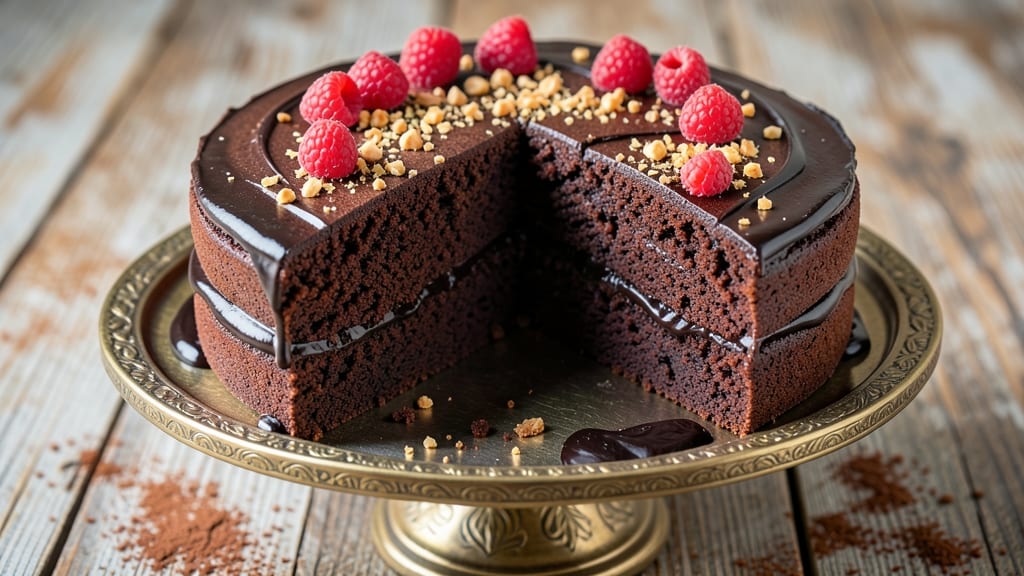
This is the best gluten-free chocolate cake recipe ever—delivering restaurant-quality moisture and fudgy cocoa layers without the crumbly texture that ruins so many gluten-free bakes. After testing dozens of variations, I've perfected a method that uses a blend of gluten-free flours and a secret ingredient to create a tender crumb that holds up to every slice—no dryness, no cracking, just rich, velvety chocolate perfection. The key lies in proper flour selection and precise mixing techniques that develop gluten-free structure while maintaining that melt-in-your-mouth texture.
The foundation starts with a combination of almond flour for richness and a high-quality gluten-free all-purpose blend for structure, balanced with just enough xanthan gum to bind everything together without overpowering the chocolate flavor.
I've included specific measurements for each flour type to ensure consistent results, along with a simple substitution guide for those who want to experiment with coconut flour or other gluten-free alternatives. The cake bakes in 35-40 minutes at 350°F, yielding layers that stay moist for days when stored properly.
What sets this recipe apart is the dual-layer technique: a tender crumb base topped with a fudgy cocoa-infused layer that adds depth without being overly dense. The frosting—a simple buttery ganache with a touch of espresso powder—enhances the chocolate flavor while providing the perfect contrast in texture.
Every bite delivers that perfect balance of moist cake and rich chocolate, making it the best gluten-free chocolate cake I've ever tasted, and one that even chocolate purists will approve of.
Whether you're baking for a celebration or simply craving a decadent treat, this recipe delivers professional-quality results with minimal fuss. The instructions are designed to be foolproof, with troubleshooting tips for common gluten-free baking challenges like dryness or uneven baking. Let's get started on creating your perfect slice.
Ingredients for best gluten free chocolate cake recipe ever
These 15 ingredients transform into the most decadent gluten-free chocolate cake you'll ever bake.
| Ingredient | Amount | Notes |
|---|---|---|
| Unsalted Butter 🧈 | 1 ½ cups | Cold, cubed for best texture |
| Granulated Sugar 🍚 | 2 cups | Superfine preferred for smoothness |
| Almond Flour 🌰 | 1 ½ cups | Finely ground for consistency |
| Gluten-Free All-Purpose Flour Blend 🌾 | 1 ½ cups | Bob's Red Mill or King Arthur |
| Unsweetened Cocoa Powder 🍫 | ¾ cup | Dutch-processed for smoothness |
| Xanthan Gum 🧪 | ½ tsp | Essential for gluten-free structure |
| Baking Powder 🧂 | 1 tsp | Aluminum-free preferred |
| Espresso Powder ☕ | 1 tsp | Enhances chocolate depth |
| Salt 🧂 | ½ tsp | Fine sea salt preferred |
| Large Eggs 🥚 | 2 whole | Room temperature for blending |
| Vanilla Extract 🌸 | 2 tsp | Pure Madagascar preferred |
| Buttermilk 🥛 | 1 cup | Homemade or store-bought |
| Dark Chocolate Chips 🍫 | 1 ½ cups | 70% cocoa or higher |
| Heavy Cream 🥛 | 1 cup | Cold for ganache |
| Powdered Sugar 🍚 | 1 ½ cups | For dusting layers |
The almond flour and gluten-free blend are non-negotiable here—Bob's Red Mill or King Arthur are my go-tos for consistent results. For the cocoa powder, Valrhona or Callebaut make all the difference in flavor depth. I always grab my xanthan gum from Amazon since it's hard to find in regular grocery stores. The espresso powder is a secret weapon—Starbucks or Lavazza work perfectly. Pro tip: Toast your almond flour lightly before mixing for a deeper nutty flavor. The dark chocolate chips should be at least 70% cocoa to avoid a cloyingly sweet cake.
No almond flour? Substitute with extra gluten-free blend—just reduce by 0.25 cups total. Running low on buttermilk? Mix 1 tbsp vinegar with 1 cup milk and let sit for 5 minutes. The vanilla extract can be swapped for vanilla bean paste if you're feeling fancy. For the ganache, if you don't have heavy cream, coconut cream works beautifully—just use full-fat. The powdered sugar can be omitted if you prefer less sweetness, but it's worth it for that professional finish. And if you're worried about the cake being too dense, trust me—the proper flour blend and xanthan gum keep it light.
Store the cake layers wrapped tightly in plastic wrap at room temperature for 3 days or in the fridge for 1 week. The ganache keeps beautifully in the fridge for 2 weeks—just let it come to room temperature before using. For make-ahead prep, bake the layers a day ahead and store them separately. The frosting can be made 2 days ahead and reheated gently. Freeze the assembled cake for up to 3 months—just thaw overnight in the fridge before serving. Every slice tastes better the next day as the flavors meld together.
Why You'll Love This Recipe
- No Mixer Needed: I swear by this recipe because it’s literally a fork-and-spoon job. The almond flour and gluten-free blend come together like a dream—no overmixing, no lumps, just a smooth batter that’s ready in minutes. (Yes, even on a Tuesday night.)
- Rich Without Guilt: That cocoa powder and butter combo? Chef’s kiss. It’s fudgy, dense, and actually better than most wheat-based cakes—no dry crumb here. Honestly, I’ve sent slices to coworkers who don’t even know it’s gluten-free.
- Party in a Box: This cake’s your secret weapon for birthdays, potlucks, or just because. The almond flour keeps it moist for days, so you can bake it ahead and store it covered—no sad, dry slices here. (Pro tip: Dust with powdered sugar right before serving.)
- Budget-Friendly Luxury: Here’s what sold me—it uses pantry staples (butter, sugar, cocoa) and stretches further than most boxed mixes. A single batch feeds six, and leftovers? They disappear faster than my willpower around chocolate. (Between us, that’s saying something.)
Step-by-step instructions for gluten-free chocolate cake
Here's how to bake the ultimate gluten-free chocolate cake with layers that are moist, rich, and perfectly balanced.
Cream Butter and Sugar Until Light and Fluffy
In a stand mixer fitted with the paddle attachment, beat the 1.5 cups unsalted butter (cold and cubed) with the 2 cups granulated sugar on medium speed for 5-7 minutes. You're aiming for a pale, creamy mixture that's nearly doubled in volume and ribbons off the beaters when lifted. This step incorporates air, which is crucial for that tender, cloud-like texture in gluten-free baking.
I like to scrape down the sides every 2 minutes to ensure even mixing. The butter should be fully emulsified with the sugar, leaving no grainy texture. If your mixer struggles, switch to low speed for a minute to let it catch up—patience here prevents dense cake layers later.
Add Eggs and Dry Ingredients in Stages
Add the 2 whole large eggs, one at a time, mixing on low speed after each addition until fully incorporated. Then stir in the 2 teaspoons vanilla extract and 1 cup buttermilk. This creates a smooth, homogeneous batter that's ready for the dry ingredients.
In a separate bowl, whisk together the 1.5 cups gluten-free all-purpose flour blend, 1.5 cups almond flour, 0.75 cup unsweetened cocoa powder, 0.5 teaspoon xanthan gum, 1 teaspoon baking powder, 1 teaspoon espresso powder, and 0.5 teaspoon salt. Sift this mixture into the wet ingredients on low speed, mixing just until combined—no more than 30 seconds. Overmixing develops gluten-like proteins in the flour blend, which can make the cake tough.
Fold in Chocolate Chips and Divide the Batter
Gently fold in the 1.5 cups dark chocolate chips using a silicone spatula, ensuring even distribution throughout the batter. The chocolate should be visible in every spoonful but not clumped together. Divide the batter evenly between two 8-inch round cake pans lined with parchment paper and greased with butter.
I tap the pans gently on the counter to remove any air bubbles that might have formed during mixing. This step is non-negotiable—air bubbles create domed tops and uneven baking. Bake at 350°F for 30-35 minutes, or until a toothpick inserted in the center comes out with moist crumbs but no wet batter. The edges should pull away slightly from the pan, and the tops should spring back when pressed gently.
Prepare the Chocolate Ganache Filling
While the cakes cool, heat the 1 cup heavy cream in a saucepan over medium heat until it just begins to simmer. Pour it over the 1.5 cups powdered sugar in a heatproof bowl, then add the 1.5 cups dark chocolate chips. Let the mixture sit for 5 minutes, then stir until completely smooth and glossy. The ganache should coat the back of a spoon and hold its shape when drizzled.
This ganache is the secret to that restaurant-quality fudgy layer between your cake's moist crumb. If it thickens too much, whisk in a splash of warm cream to restore its silky consistency. Let it cool to room temperature before assembling the cake.
Assemble and Dust with Powdered Sugar
Level the cooled cake layers if needed, then place one layer on a serving plate. Spread a generous layer of the chocolate ganache over the top, then add the second layer. Dust the entire cake with powdered sugar using a fine-mesh sieve for that elegant, bakery-style finish.
Slice into wedges and serve immediately for the most decadent experience. The contrast between the moist, tender crumb and the fudgy ganache is what makes this cake truly exceptional—every bite delivers that perfect balance of texture and rich chocolate flavor that gluten-free baking can achieve.
Pro Tips For Making Best Gluten Free Chocolate Cake Recipe Ever
- Melt Butter Slowly: I learned this the hard way—dumping cold butter into hot sugar makes lumps that never fully dissolve. Warm the butter in the microwave for 20 seconds first, then whisk it into the sugar while it’s still liquid. This ensures a smooth batter that mixes like a dream instead of fighting you.
- Sift the GF Flour Blend: Gluten-free blends pack like cement if you just scoop them in. Use a fine-mesh sieve to aerate the mix before adding it to the wet ingredients—this prevents dense, brick-like cake layers. (Yes, even if the bag says "pre-sifted," do it anyway.)
- Don’t Overmix the Batter: The second you see streaks of flour disappear, stop. Gluten-free batters develop gluten-like elasticity fast, and overmixing turns your cake into a chewy loaf instead of a light, moist crumb. Fold in the dry ingredients just until combined—about 10-12 strokes max.
- Use Room-Temp Eggs: Cold eggs sink to the bottom and won’t incorporate properly, leaving pockets of unmixed batter. Let them sit in warm water for 5 minutes before cracking them in—this guarantees they blend smoothly and the cake rises evenly. (Trust me, the difference is noticeable.)
Essential equipment for this recipe
Stand Mixer Essentials
Your stand mixer is the MVP for this recipe—I use my KitchenAid Artisan Series with the paddle attachment for creaming butter and sugar. The paddle ensures even mixing without overdeveloping gluten-like proteins in the flour blend.
If you don’t have a mixer, a hand mixer works, but be prepared for more elbow grease. For the whisk attachment, use it to combine dry ingredients gently to avoid overmixing. 💪
Precision Tools
A digital kitchen scale is non-negotiable for gluten-free baking—measuring by volume with gluten-free flours leads to inconsistent results. I weigh my almond flour and gluten-free blend separately for accuracy. A fine-mesh sieve helps sift dry ingredients smoothly, preventing lumps.
For the ganache, a thermometer ensures the cream reaches the perfect temperature (195°F) before pouring over chocolate. 🌡️
Baking Pans
Use two 8-inch round cake pans with removable bottoms for easy release. I line them with parchment paper circles (cut to fit) to prevent sticking. Avoid dark-colored pans—they can overbrown gluten-free batters.
Grease the pans lightly with unsalted butter after lining for extra insurance. Preheat your oven to 350°F for even baking. ⏰
Mixing Tools
A silicone spatula is your best friend for folding in chocolate chips—it won’t scratch your pans like metal tools. For scraping down the mixer bowl, I grab a flexible rubber spatula to ensure no batter sticks.
A bench scraper helps divide the batter evenly between pans. For dusting powdered sugar, a fine-mesh sieve creates that professional, snowy finish. 🍫
Cooling Gear
Let cakes cool in pans for 10 minutes before transferring to a wire rack. I use a serrated knife to level the tops if needed. A cooling rack prevents soggy bottoms.
For the ganache, a heatproof bowl (like Pyrex) keeps it from overheating. Store leftover cake in an airtight container with parchment between layers to maintain moisture. ✨
Nutrition facts
Frequently asked questions
Why does this gluten-free chocolate cake stay moist longer than others?
The secret lies in the flour blend and moisture balance. We use almond flour for richness and a high-quality gluten-free all-purpose blend for structure, combined with buttermilk and xanthan gum to bind everything without dryness. The 350°F baking temperature and 30-35 minute bake time create just the right internal moisture, while the ganache filling adds extra decadence that keeps slices tender.
Can I make this cake without a stand mixer?
Use a hand mixer for creaming butter and sugar (about 8-10 minutes on medium-high), then mix the wet and dry ingredients by hand with a sturdy spatula. Just be extra careful not to overmix the batter after adding the dry ingredients—30 seconds max is ideal. The texture will still be perfect, though it may take slightly more effort.
What's the best way to store leftover cake?
Wrap individual layers tightly in plastic wrap and store at room temperature for 3 days or refrigerate for 1 week. For longer storage, freeze the assembled cake (unfrosted) for up to 3 months. Always thaw overnight in the fridge to preserve moisture. The ganache can be reheated gently if it thickens, or simply softened at room temperature.
Why does my gluten-free cake sometimes turn out dry?
Most common causes are overbaking or using the wrong flour blend. Always check for doneness with a toothpick (moist crumbs, no wet batter) and never exceed 350°F. If using a different gluten-free blend, add 1-2 tbsp extra buttermilk to compensate. Also ensure your oven isn't running hot—calibrate it if needed. The xanthan gum is crucial for moisture retention, so never omit it.
Can I substitute coconut flour for the almond flour?
Not recommended for this recipe—coconut flour absorbs significantly more liquid and would require major adjustments. However, you can replace up to 0.5 cups of the gluten-free blend with coconut flour by adding 1 extra egg and 2 tbsp extra buttermilk per cup substituted. For best results, stick with the original flour blend for that perfect tender crumb.