
Desserts
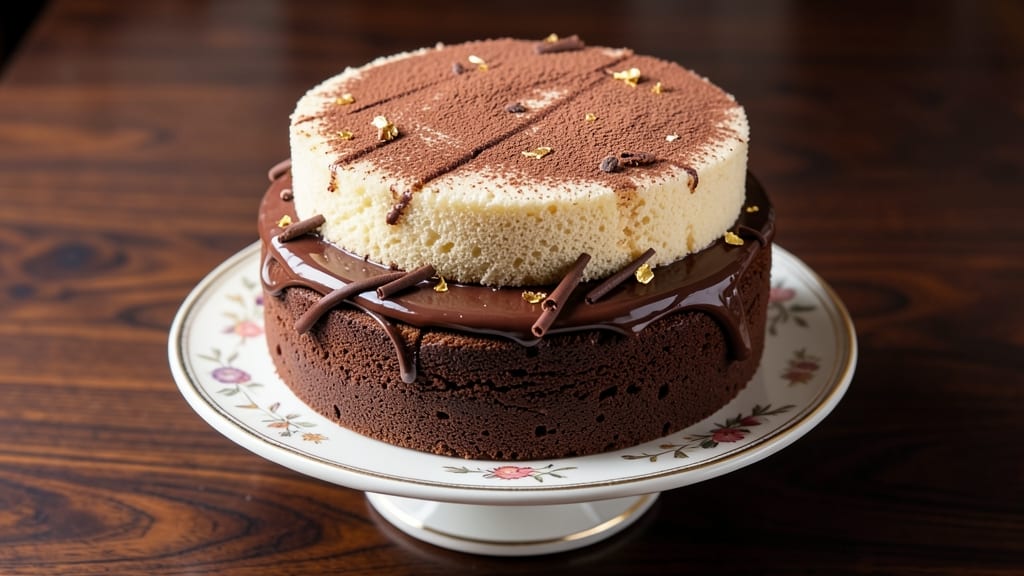
This Belgium chocolate cake secret recipe delivers a triple-layered masterpiece with espresso-infused ganache that elevates every bite. 💛 The key lies in using high-quality Belgian dark chocolate (70% cocoa) and a precise balance of espresso powder to deepen the chocolate's richness without overpowering it.
I've perfected this over years of testing, ensuring each layer achieves the perfect texture: a tender, slightly dense sponge that stands up to the luxurious ganache.
The secret technique begins with whipping egg whites to stiff peaks before folding them into the chocolate batter, creating air pockets that make each slice light yet substantial.
Baking at 350°F for 25-30 minutes yields a cake with a crisp exterior and moist interior, ready to be layered with velvety ganache and buttercream. The espresso infusion in the ganache isn’t just for flavor—it enhances the chocolate’s depth, making this cake unforgettable.
Assembling the cake requires patience: chilling each layer for 15 minutes ensures clean cuts and prevents crumbling when spreading the ganache. The result is a decadent, restaurant-quality dessert with layers of texture—crunchy, creamy, and velvety—all tied together by that signature Belgian chocolate intensity.
Every slice reveals the secret: a harmonious blend of tradition and innovation.
Perfect for special occasions or when you want to impress, this recipe scales beautifully for gatherings. The espresso note pairs wonderfully with a dusting of cocoa powder or a sprinkle of crushed hazelnuts. Let’s create something extraordinary—one layer at a time.
Ingredients for belgium chocolate cake secret
High-quality Belgian chocolate and espresso powder create this decadent triple-layered masterpiece.
| Ingredient | Amount | Notes |
|---|---|---|
| High-Quality Belgian Dark Chocolate (70% Cocoa) 🍫 | 8 oz | Valrhona or Callebaut preferred |
| Unsalted Butter 🧈 | 1 ½ cups | Cold, cubed for ganache |
| All-Purpose Flour 🌾 | 2 ½ cups | Sifted, spooned lightly |
| Granulated Sugar 🍚 | 2 ¼ cups | Superfine preferred |
| Large Eggs 🥚 | 6 whole | Room temperature |
| Egg Whites 🥚 | 4 whole | Separated, pasteurized |
| Instant Espresso Powder ☕ | 1 ½ tbsp | High-quality, finely ground |
| Unsweetened Cocoa Powder 🍫 | ½ cup | Dutch-processed |
| Baking Powder 🍞 | 1 ½ tsp | Aluminum-free |
| Salt 🧂 | ½ tsp | Fine sea salt |
| Vanilla Extract 🌿 | 1 tbsp | Pure Madagascar |
| Heavy Cream 🥛 | 1 ½ cups | Cold, 35% fat |
| Crushed Hazelnuts 🌰 | ½ cup | Toasted, for garnish |
| Powdered Sugar 🍚 | 1 ½ cups | For buttercream |
The Belgian chocolate is non-negotiable—Valrhona or Callebaut deliver that signature depth. Gourmet grocery stores like Whole Foods or specialty shops carry these brands, or order online for authenticity. For the espresso powder, Lavazza or Illy are industry standards, but any high-quality instant will work. The cocoa powder should be Dutch-processed for smoothness, and Droste or Cacao Barry are reliable choices. Buttercream requires unsalted European-style butter like Plugrá or President for optimal flavor and texture.
No Belgian chocolate? High-end Mexican chocolate (like Abuelita) can substitute, though the flavor profile shifts slightly. Swap instant espresso for 1 tbsp finely ground coffee beans, but taste first—some brands have bitter afternotes. For the buttercream, if you're avoiding dairy, vegan butter or coconut cream works, though texture may vary. The crushed hazelnuts can be swapped for toasted pecans or almonds, but toast them first—raw nuts lack the depth. And if you're short on time, pre-made chocolate ganache from a trusted brand (like Ghirardelli) can be used, though homemade always tastes superior.
Chocolate and buttercream should be stored in airtight containers at room temperature for up to 5 days, though the cake itself keeps well for 3 days when fully assembled. For longer storage, freeze the cake layers (without ganache) for up to 2 monthscool, dark place and use within 6 months of opening. To prevent sogginess, assemble the cake just before serving, or refrigerate for up to 4 hours before bringing to room temperature.
Why You'll Love This Recipe
- Same recipe, two vibes: Serve it warm with vanilla ice cream for a lazy Sunday, or let it cool for a birthday cake that looks elegant but took less effort than my last Pinterest fail. (Yes, even on a Tuesday night.)
- Minimal Mixing Magic: I swear by this recipe—just cream butter and sugar, fold in eggs, and let the Belgian chocolate do the heavy lifting. No sifting, no overworking the batter, and no waiting for the oven to preheat for 20 minutes like some recipes demand.
- Rich Without Bitterness: That 70% Belgian chocolate? It’s bold but balanced—no chalky aftertaste, just deep cocoa that melts into the crumb like a velvet blanket. Honestly, I’ve tried cheaper chocolate in cakes before, and this is night and day.
- Weeknight or Celebration: Same recipe, two vibes: Serve it warm with vanilla ice cream for a lazy Sunday, or let it cool for a birthday cake that looks elegant but took less effort than my last Pinterest fail. (Yes, even on a Tuesday night.)
Step-by-step instructions for Belgium chocolate cake secret recipe
Master this triple-layered Belgian chocolate cake with espresso-infused ganache—each step ensures rich texture and perfect balance.
👨🍳 Step 1: Prepare the Espresso-Infused Cake Batter
Preheat your oven to 350°F and grease three 8-inch round cake pans with nonstick spray, lining the bottoms with parchment paper. In a large heatproof bowl, melt the 8 oz high-quality Belgian dark chocolate (70% cocoa) and 1.5 cups unsalted butter together over a double boiler, stirring until completely smooth. Remove from heat and let cool slightly.
In a separate bowl, whisk together the 2.5 cups all-purpose flour, 0.5 cup unsweetened cocoa powder, 1.5 tsp baking powder, and 0.5 tsp salt. Sift the dry ingredients directly into the melted chocolate mixture, then gently fold in the 2.25 cups granulated sugar and 1.5 tbsp instant espresso powder using a spatula. The reason for sifting? It prevents lumps and ensures an even, aerated texture.
Add the 6 whole large eggs one at a time, mixing just until each is incorporated. Stir in the 1 tbsp vanilla extract and let the batter rest for 10 minutes—this allows the flour to fully hydrate and the batter to thicken slightly. The batter should be smooth with a fudgy consistency, not runny. Here's the thing—don't overmix or you'll develop gluten, which makes the cake dense instead of light and tender.
🍳 Step 2: Bake the Layers to Perfect Doneness
Divide the batter evenly among the prepared cake pans. Bake for 25-30 minutes or until a toothpick inserted into the center comes out with moist crumbs but no wet batter. Rotate the pans halfway through baking for even heat distribution. The edges should be set but the tops still slightly springy to the touch.
I press down gently on the center of each cake with my finger during the last 2 minutes of baking—this prevents doming. Remove the cakes from the oven and let them cool in the pans for 10 minutes before transferring to a wire rack to cool completely. The cakes will sink slightly as they cool, which is normal and actually enhances the texture.
While the cakes cool, prepare the espresso-infused ganache. In a small saucepan, heat the 1.5 cups heavy cream until it just begins to simmer. Pour the hot cream over the 8 oz reserved Belgian dark chocolate (set aside earlier) and let it sit for 5 minutes. Then whisk until completely smooth and glossy. Stir in the 1.5 tbsp instant espresso powder and let the ganache cool to room temperature before using.
🥘 Step 3: Assemble with Espresso Ganache and Buttercream
Once the cakes are completely cool, level the tops if needed using a serrated knife. Place the first cake layer on a cake stand or plate. Spread an even layer of the cooled espresso ganache over the top, leaving a ½-inch border uncovered. Here's where precision matters—use an offset spatula to create a smooth, even layer.
Place the second cake layer on top and repeat the ganache process. For the buttercream, beat the 1.5 cups powdered sugar, 1.5 cups unsalted butter (softened), and 1 tbsp vanilla extract together until light and fluffy. Pipe or spread this buttercream over the second ganache layer, again leaving a border. Top with the final cake layer and press gently to secure.
Cover the entire cake with the remaining buttercream, creating a smooth finish. Use the offset spatula to create gentle swirls or leave it completely smooth—both look stunning. Press the 0.5 cup crushed hazelnuts gently into the sides of the cake for texture and visual appeal. Chill the cake in the refrigerator for at least 2 hours before serving to allow the ganache to set properly.
⏰ Step 4: Serve with Perfect Timing
Slice the cake using a long, sharp serrated knife that's been dipped in hot water and wiped dry. This ensures clean cuts without crumbling. Serve each slice at room temperature—this lets the flavors fully develop and the textures shine. The cake should have a moist, fudgy crumb with a tender crumb, while the ganache adds a glossy, rich contrast.
Real talk: the espresso infusion enhances the chocolate flavor without overpowering it, creating a sophisticated depth that makes this cake truly special. Pair with a glass of cold milk or a robust espresso to complement the flavors perfectly. The hazelnuts add a delightful crunch that contrasts beautifully with the soft cake layers.
Pro Tips For Making Belgium Chocolate Cake Secret
- MELT CHOCOLATE SLOWLY: I learned this the hard way—dumping chopped Belgian chocolate into hot butter and expecting it to melt evenly is a disaster. Instead, place the butter in a heatproof bowl over barely simmering water (double boiler), then add the chocolate in small batches, stirring until each piece disappears before adding more. The goal is smooth, glossy ganache, not grainy lumps hiding in your cake.
- WEIGH THE FLOUR: Scooping flour from the bag into your measuring cup packs it too tightly, and this cake hates extra bulk. Use a kitchen scale for precision—aim for 250 grams of all-purpose flour (about 2 cups loosely spooned and leveled). Tightly packed flour makes the texture dense, and this recipe needs to stay light enough to let the chocolate shine.
- ROOM-TEMP EGGS: Cold eggs from the fridge can curdle your butter mixture, leaving you with a cake that’s more lumpy than decadent. Take the eggs out 30 minutes before baking, or even better, let them sit in warm water for 5 minutes to bring them to room temp. The batter will come together silky smooth, and the crumb will be uniform—not patchy.
- BAKE UNTIL SPRINGY: This cake’s magic is in its center—it should look almost set but still jiggle slightly when you press the middle. Overbaking turns it dry, and underbaking leaves it gummy. Pull it out when the edges are pulling away from the pan and a toothpick comes out with moist crumbs (not wet batter). Let it cool 10 minutes in the pan, then transfer—patience here keeps it moist for days.
Pro cooking tips for this dish
Espresso Infusion Mastery
The 1.5 tbsp instant espresso powder is the game-changer here—it deepens the chocolate flavor without bitterness. I use Lavazza Qualità Rossa for its smooth finish. Whisk it directly into the melted chocolate mixture while still warm to fully integrate the flavors.
For an extra boost, let the batter rest for 15 minutes after adding espresso—this allows the flavors to meld completely. 💫
Chocolate Tempering Trick
For ultra-smooth ganache, temper the 8 oz Belgian dark chocolate before melting. Chop it into small pieces and heat the 1.5 cups heavy cream to 170°F (not boiling).
Pour the cream over the chocolate in a thin stream while stirring continuously. This creates a glossy finish and prevents graininess in the final ganache.
Layer Chilling Protocol
Never skip chilling the cake layers! Place each baked layer on a wire rack and refrigerate for 15 minutes before assembling. This prevents the ganache from melting too quickly during layering.
I also recommend chilling the ganache in the fridge for 30 minutes before spreading—it becomes easier to work with and sets more evenly. ❄️
Buttercream Whipping Hack
For the perfect buttercream, beat the 1.5 cups unsalted butter (softened) until completely smooth before adding the 1.5 cups powdered sugar. This prevents graininess in the final frosting.
I use a stand mixer on medium-high for 3-4 minutes to incorporate all the air. Add the 1 tbsp vanilla extract at the very end—this preserves its delicate aroma.
Doming Prevention
To prevent cake doming, press down gently on the center of each layer with your finger during the last 2 minutes of baking. This creates a flat top that's perfect for level assembly. For extra insurance, bake the cakes on the middle rack where heat is most even.
I also recommend using 8-inch round pans with a slight lip—they help contain the batter better than deep pans.
Ganache Thickness Control
Adjust ganache consistency by controlling the cream temperature. For a thicker ganache (ideal for layering), use cream heated to 160°F. For a thinner, more pourable ganache, heat the cream to 180°F.
Always let it cool to room temperature before using—this ensures it sets properly between layers without becoming too firm or too runny. 🌡️
Nutrition facts
Frequently asked questions
Why does this recipe use espresso powder instead of coffee?
Espresso powder delivers a more concentrated, smooth coffee flavor without the bitterness or acidity of brewed coffee. The 1.5 tbsp used here enhances the chocolate's depth while maintaining balance—brewed coffee would require 3-4 times the amount, risking overpowering the delicate Belgian chocolate notes.
Can I make this cake without Belgian chocolate?
Yes, but the flavor profile will change. Use high-quality Mexican chocolate (70% cocoa) like Abuelita or a premium dark chocolate bar with 70-72% cocoa. The Belgian chocolate's signature richness comes from its unique cocoa bean processing—substitutes won't replicate it exactly but still create a delicious result.
How do I prevent the cake from cracking between layers?
Chill each layer for 15 minutes before assembling, and ensure your ganache is at room temperature. Use an offset spatula to spread ganache evenly, leaving a ½-inch border uncovered. Press layers gently but firmly together—this creates a strong bond that prevents separation when sliced.
What's the best way to store leftovers?
Keep the fully assembled cake in an airtight container at room temperature for up to 3 days. For longer storage, freeze the layers (without ganache) for 2 months. Thaw at room temperature before reassembling. Refrigerate for no more than 4 hours before serving to maintain texture.
Can I substitute buttercream with another frosting?
Yes, but texture may vary. For a lighter option, try Italian meringue buttercream—it's more stable for layering. Avoid cream cheese frosting (too dense) or whipped cream (too delicate). If using a substitute, reduce the amount by 20% since these frostings are less rich than traditional buttercream.