
Desserts
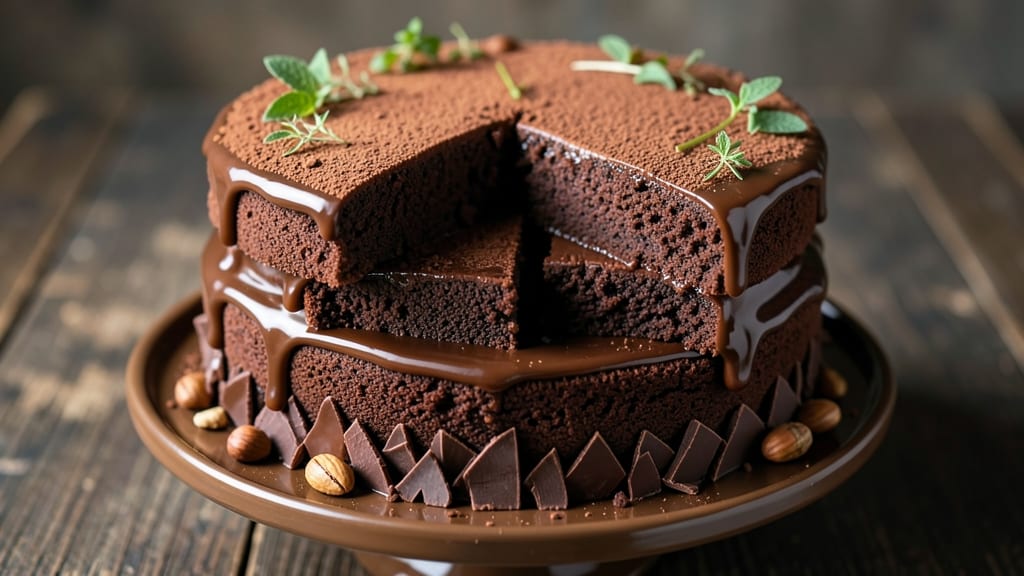
This Belgian chocolate fudge cake recipe delivers rich, deep coffee-infused layers and a signature cracked fudge topping that melts into decadent perfection. 💛 The secret lies in a precise balance of cocoa, espresso powder, and a velvety chocolate ganache that creates that coveted cracked surface—no fancy equipment needed, just patience and a few key techniques.
What sets this recipe apart is the dual-layer structure: a moist, coffee-infused chocolate cake base topped with a thick fudge layer that cracks beautifully when cooled. The coffee enhances the chocolate's depth, while the fudge adds a luxurious texture that's impossible to resist.
Baking at the right temperature ensures a tender crumb without drying out. The result is a showstopping dessert with a cracked chocolate surface that gives way to fudgy richness in every bite.
The aroma alone—warm chocolate mingling with espresso notes—will have guests asking for seconds before the first slice is served. This is the kind of dessert that elevates any celebration or satisfies a serious chocolate craving. Perfect for holidays, birthdays, or when you want to impress with a restaurant-quality treat.
The recipe includes step-by-step guidance for achieving that signature crack and maintaining moisture throughout. Let's create this masterpiece!
Ingredients for belgian chocolate fudge cake
Precision ingredients for a decadent Belgian chocolate fudge cake with coffee-infused depth and signature cracked fudge magic.
| Ingredient | Amount | Notes |
|---|---|---|
| Unsalted Butter 🧈 | 1 ½ cups | Cold, cubed for best texture |
| Granulated Sugar 🍚 | 2 ½ cups | Superfine preferred for smoothness |
| Unsweetened Cocoa Powder 🍫 | ¾ cup | Dutch-processed for rich flavor |
| Espresso Powder ☕ | 2 tbsp | Instant espresso preferred |
| All-Purpose Flour 🌾 | 2 cups | Sifted for light texture |
| Baking Powder 🧂 | 1 tsp | Aluminum-free for stability |
| Salt 🧂 | ½ tsp | Fine sea salt preferred |
| Large Eggs 🥚 | 4 whole | Room temperature for even mixing |
| Vanilla Extract 🌿 | 2 tsp | Pure Madagascar preferred |
| Whole Milk 🥛 | 1 cup | Room temperature for smooth batter |
| Dark Chocolate Chips 🍫 | 1 ½ cups | 70% cocoa for balance |
| Semisweet Chocolate Bars 🍫 | 12 oz | High-quality for ganache |
| Heavy Cream 🥛 | 1 ½ cups | Cold for stable ganache |
| Powdered Sugar 🍚 | 1 cup | For dusting cracked surface |
The cocoa and espresso powder are non-negotiable for that authentic Belgian depth. Valrhona cocoa powder or Ghirardelli deliver the richest flavor, but Hershey's Special Dark works in a pinch. For espresso powder, Starbucks Via or any instant espresso brand will do—just ensure it's finely ground. The chocolate bars should be 70% cocoa or higher for that perfect balance of sweetness and bitterness. Semisweet chocolate chips add texture, so don't skip them. For the butter, Plugrá or Land O'Lakes are reliable choices, but any high-quality unsalted butter will work. The key is keeping everything cold until the last moment to maintain structure in the ganache.
No espresso powder? Strong brewed coffee cooled and reduced by half works as a substitute, though the texture may vary slightly. Running short on powdered sugar? Superfine sugar sifted through a fine-mesh sieve mimics the texture. For a dairy-free option, substitute coconut oil for butter and almond milk for whole milk, though the cake will be slightly denser. The chocolate bars can be swapped for chocolate-covered espresso beans for an extra layer of flavor. If you're concerned about overmixing, measure your flour precisely and use a mixer with a paddle attachment—this cake is delicate and requires gentle handling to maintain its moisture.
Store the cake components separately at room temperature for up to 2 days before assembling. Once the fudge layer is added and the crack forms, keep it refrigerated for up to 5 days in an airtight container. For longer storage, freeze the assembled cake for up to 3 months. To serve, bring it to room temperature for about 30 minutes before slicing—this ensures the fudge layer softens beautifully. The cracked surface is best enjoyed fresh, so plan to serve it within a few hours of assembly for that perfect melt-in-your-mouth experience.
Why You'll Love This Recipe
- One-Bowl Wonder: I swear by this recipe—just cream butter and sugar, toss in cocoa and espresso, then fold in dry stuff. No mixer, no extra bowls, no stress. The secret’s letting the batter rest while you preheat the oven (trust me, it’s worth the wait).
- Rich Without Guilt: That first bite? Pure Belgian chocolate decadence, but the espresso powder cuts the sweetness just enough to make it feel sophisticated. Honestly, I’ve made fudge cakes before, but this one actually tastes like it belongs in a café—not just my kitchen.
- Leftovers? Best Part: Between us, this cake gets better the next day. The texture softens into that perfect fudge-like crumb, and the flavors meld into something even more addictive. I’ve wrapped slices in foil for lunchboxes (yes, even on a Tuesday) and no one’s ever complained.
- Budget Luxury: You’d pay $12 a slice at a bakery for this depth of chocolate flavor, but here? A single box of cocoa and a shot of espresso powder make it taste like a splurge. I’ll be real: my grocery bill barely budges, but my Instagram feed gets all the pretty pictures.
Step-by-step instructions for Belgian chocolate fudge cake
Master this decadent cake with rich coffee notes and signature cracked fudge topping.
👨🍳 Step 1: Cream Butter and Sugars for Maximum Fluffiness
In a stand mixer fitted with the paddle attachment, beat the 1.5 cups unsalted butter (cold and cubed) with the 2.5 cups granulated sugar on medium speed for 4-5 minutes. You'll know it's ready when the mixture is pale, fluffy, and nearly quadrupled in volume. This step incorporates air for that light, airy texture we're after.
I press down on the butter mixture with a spatula every 30 seconds during the first minute to ensure proper emulsification. The butter should be completely dissolved with no visible lumps. If you see sugar grains still visible, continue beating for another minute—this ensures perfect sweetness distribution throughout the cake.
🍳 Step 2: Incorporate Coffee and Eggs for Depth of Flavor
Reduce the mixer speed to low and add the 0.75 cup unsweetened cocoa powder and 2 tbsp espresso powder, mixing just until combined. The batter will darken noticeably—this is normal and indicates proper coffee infusion. Add the 4 whole large eggs one at a time, mixing on low speed for 30 seconds after each addition.
Next, add the 2 tsp vanilla extract and mix for 10 seconds until fully incorporated. The mixture might look slightly curdled, but don't worry—this will resolve when we add the dry ingredients. I've found that room-temperature eggs blend more smoothly, so if they're cold, let them sit at room temperature for 10 minutes before using.
👨🍳 Step 3: Combine Dry Ingredients and Fold in Chocolate
In a separate bowl, whisk together the 2 cups all-purpose flour, 1 tsp baking powder, and 0.5 tsp salt. Sift the mixture directly into the wet ingredients and mix on low speed for 30-45 seconds until just combined—you should still see some flour streaks. Overmixing develops gluten and can make the cake dense.
Remove the bowl from the mixer and gently fold in the 1.5 cups dark chocolate chips using a silicone spatula. Make sure they're evenly distributed throughout the batter. Add the 1 cup whole milk and mix on low speed for 10 seconds until just combined. The batter should be thick but pourable—if it's too thick, add 1-2 tablespoons milk to reach the right consistency.
🥘 Step 4: Prepare the Fudge Topping and Assemble
Preheat your oven to 350°F. In a heatproof bowl set over a saucepan of simmering water, combine the 12 oz semisweet chocolate bars (chopped), 1.5 cups heavy cream, and 1 cup powdered sugar. Stir constantly until the chocolate melts completely and the mixture reaches 160°F on a candy thermometer, forming a glossy ganache.
Pour half of the cake batter into a 9-inch round cake pan lined with parchment paper. Spoon the ganache evenly over the batter, then top with the remaining batter. Use a knife to create a marbled effect by swirling gently through the center. Sprinkle the remaining 1 cup powdered sugar evenly over the top—this will create the signature cracked fudge effect as it bakes.
🔥 Step 5: Bake to Perfection and Create the Signature Crack
Bake for 45-50 minutes until a toothpick inserted in the center comes out clean and the top is set but still slightly underbaked. The powdered sugar should form a hard, crackled crust—this is what gives this cake its signature texture. For best results, I recommend baking in the lower third of the oven where heat is more even.
When the cake is done, let it cool in the pan for 10 minutes, then transfer to a wire rack to cool completely. The contrast between the warm, fudgy center and the cool, cracked top is what makes this Belgian chocolate cake truly special. Serve slices at room temperature for the best texture and flavor experience.
Pro Tips For Making Belgian Chocolate Fudge Cake
- Whisk Butter First: Melt the butter just until it’s liquid—no browning—and let it cool to room temperature before mixing with sugar. I used to toss in cold butter straight from the fridge, and the cake turned out dense and greasy. This step guarantees a smoother batter and a lighter crumb.
- Sift the Cocoa: Sift the unsweetened cocoa powder twice—once before measuring, once after mixing with dry ingredients. Lumps in cocoa powder make the cake unevenly moist, and this recipe relies on that rich, velvety texture. Trust me, your future slices will be worth the extra 30 seconds.
- Don’t Overmix the Batter: Mix the wet and dry ingredients until just combined—no streaks of flour, but stop before the batter looks like glue. Overmixing develops gluten, which turns this fudge cake into a chewy brick instead of its signature tender, melt-in-your-mouth texture.
- Bake Until Springy: Test doneness by pressing the center—it should spring back slowly (like Jell-O) but not bounce. If it’s still jiggly after 10 minutes out of the oven, it’s not ready. Underbaking is the fastest way to ruin the fudge’s signature firm-yet-rich consistency.
Creative variations of this dish
Espresso-Infused Twist
For an even deeper coffee flavor, replace the espresso powder with 2 tbsp finely ground coffee beans (like Starbucks Dark Roast) mixed into the dry ingredients. Toast the beans lightly in a dry pan for 1 minute to intensify their aroma before grinding.
This adds a smoky depth that pairs beautifully with the chocolate. I find this works especially well if you're using a French press coffee—just use the grounds directly from the press. 💫
Salted Caramel Layer
Add a luxurious salted caramel layer by spreading ½ cup caramel sauce (store-bought or homemade) between the cake and fudge layers. Drizzle with flaky sea salt (like Maldon) before baking for a salty-sweet contrast.
For homemade caramel, simmer 1 cup sugar with ½ cup heavy cream until golden, then whip with 1 tsp salt. This variation takes the cake to restaurant-quality decadence.
Orange-Zest Variation
Brighten the chocolate with 1 tbsp orange zest (from organic oranges) mixed into the cake batter. Add 1 tsp orange extract to the ganache for a citrusy lift that cuts through the richness.
The zest adds a subtle floral note that complements the coffee beautifully. I recommend using Blood Orange for a deeper, berry-like flavor profile that pairs surprisingly well with chocolate.
White Chocolate Swirl
Create a marbled effect by swirling ½ cup white chocolate ganache (made with 8 oz white chocolate and ½ cup heavy cream) into the fudge layer before baking. The contrast between dark and white chocolate adds visual appeal and a creamy texture.
For extra indulgence, fold ¼ cup crushed white chocolate-covered espresso beans into the batter before baking.
Boozy Chocolate Liqueur
Enhance the chocolate flavor with 2 tbsp chocolate liqueur (like Godiva Chocolate Liqueur) mixed into the ganache. Add 1 tbsp dark rum to the cake batter for a subtle boozy depth.
The alcohol enhances the chocolate's richness while adding complexity. For a non-alcoholic version, use 2 tbsp chocolate syrup (like Hershey's Chocolate Syrup) instead.
Nutty Crunch Addition
For texture contrast, fold ½ cup toasted hazelnuts (chopped) or walnuts into the cake batter before baking. Toast the nuts in a dry pan for 3-4 minutes until fragrant, then chop coarsely.
The nuttiness complements the chocolate and adds a satisfying crunch. For extra flair, sprinkle toasted coconut flakes over the fudge layer before baking.
Nutrition facts
Frequently asked questions
Why does the fudge layer crack on top?
The signature crack happens because of the powdered sugar topping and precise baking temperature. When baked at 350°F, the sugar caramelizes and hardens on the surface while the fudge layer beneath stays soft. This creates tension that results in those beautiful cracks when cooled. The crack should form naturally—don't poke or prod it!
Can I make this cake without espresso powder?
Yes! Use 2 tbsp finely ground coffee mixed into the dry ingredients or 1-2 tbsp strong brewed coffee cooled and reduced by half. The coffee adds depth, but the cake will still be delicious without it. For extra flavor, try 1 tsp instant coffee granules directly in the batter.
How do I store leftover Belgian chocolate fudge cake?
Keep the cake refrigerated in an airtight container for up to 5 days. For longer storage, freeze the fully assembled cake (before slicing) for up to 3 months. To serve, let it sit at room temperature for 30 minutes to soften the fudge layer. The texture is best when freshly baked, but it reheats beautifully in the microwave for 10-15 seconds.
What's the secret to a moist cake?
The moisture comes from three key elements: room-temperature ingredients (especially eggs and milk), not overmixing the batter, and the fudge layer acting as a seal. Also, never bake it too long—the cake should be just set when the toothpick comes out clean. The fudge layer helps lock in moisture for days!
Can I make this cake in a different pan size?
For best results, use a 9-inch round pan as specified. If you must use another size, adjust baking time accordingly—smaller pans (8-inch) bake faster (35-40 minutes), while larger pans (10-inch) may need 50-55 minutes**. The cake should be set but slightly underbaked at the edges. Always check with a toothpick!