
Desserts
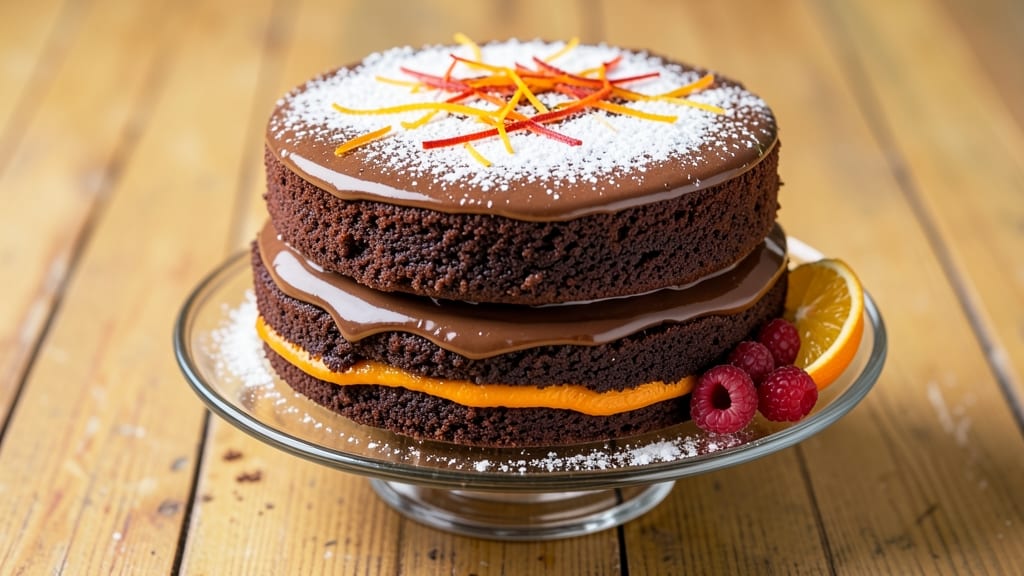
This basic chocolate orange cake recipe balances deep cocoa richness with bright citrus notes for a dessert that's both comforting and refreshing. The secret lies in the orange zest and juice, which cut through the chocolate's intensity while adding layers of aromatic sweetness.
I've perfected this recipe to ensure a moist crumb and even baking every time.
The cake's magic comes from combining melted butter with cocoa powder for maximum moisture, while the orange zest infuses the batter with vibrant flavor. A simple buttercream frosting ties everything together, creating a dessert that's elegant enough for special occasions but easy enough for weeknight treats.
The result? A tender, flavorful cake with just the right balance of sweet and tart.
What makes this recipe stand out is its foolproof technique—no fancy equipment needed, just a few simple ingredients and careful layering of flavors. The orange's natural oils keep the cake moist, while the cocoa ensures that rich chocolate taste we all love.
Whether you're baking for a celebration or just craving something indulgent, this cake delivers.
Ready in about 1 hour (including cooling time), this recipe is perfect for beginners and experienced bakers alike. The frosting can be adjusted to your preference—keep it simple with powdered sugar or go all out with a cream cheese glaze.
Each slice offers a perfect harmony of chocolate and citrus, making it a crowd-pleaser every time.
Ingredients for basic chocolate orange cake
Twelve essential ingredients create a perfectly balanced chocolate orange cake with vibrant citrus and rich cocoa depth.
| Ingredient | Amount | Notes |
|---|---|---|
| Unsalted Butter 🧈 | 1 cup | Melted, cooled to room temperature |
| Granulated Sugar 🍚 | 2 cups | Light brown preferred for moisture |
| Natural Cocoa Powder 🍫 | ¾ cup | Dutch-processed for smoother texture |
| All-Purpose Flour 🌾 | 2 cups | Sifted, spooned lightly |
| Baking Powder 🧂 | 2 tsp | Aluminum-free for best results |
| Salt 🧂 | ½ tsp | Fine sea salt preferred |
| Large Eggs 🥚 | 2 whole | Room temperature for even mixing |
| Fresh Orange Zest 🍊 | 2 tbsp | From 1 large organic orange |
| Fresh Orange Juice 🍊 | ½ cup | Strained, no pulp |
| Vanilla Extract 🌿 | 1 tsp | Pure Madagascar preferred |
| Powdered Sugar 🍚 | 3 cups | For buttercream frosting |
| Heavy Whipping Cream 🥛 | 1 cup | Cold, whipped to stiff peaks |
| Milk 🥛 | ¼ cup | For buttercream consistency |
The cocoa powder and butter form the cake's foundation—Dutch-processed cocoa ensures a smoother texture while melted butter guarantees moisture. For the orange components, organic Navel or Valencia oranges yield the brightest zest and juice. I always grab my oranges from Whole Foods or a local farmers market during peak season (winter through spring) for maximum freshness. The flour should be sifted before measuring to prevent dense layers, and Bob's Red Mill all-purpose flour is my go-to for consistent results. Pre-sifted flour works in a pinch but often contains anti-caking agents that can slightly alter texture.
No Dutch-processed cocoa? Natural cocoa powder at the same weight works but may yield a slightly denser crumb. Substituting orange juice with bottled orange juice concentrate (thawed and strained) is acceptable, though fresh is ideal. For a dairy-free option, replace the butter with vegan butter and the heavy cream with coconut cream, though texture may vary slightly. The vanilla extract can be swapped for vanilla bean paste at double the amount for added depth. If you're short on powdered sugar for the frosting, confectioners sugar works identically—just ensure it's sifted to avoid graininess.
Store cake layers wrapped in plastic wrap at room temperature for up to 3 days or refrigerate for 5 days. The frosting can be made 1 day ahead and stored in an airtight container in the fridge. To prevent drying, place a slice of bread or apple on top of the cake layers before sealing. For longer storage, freeze fully frosted cakes for up to 3 months**—thaw at room temperature before serving. The orange zest loses potency over time, so zest fresh oranges just before baking for optimal flavor.
Why You'll Love This Recipe
- No Mixer Needed: I swear by this—just cream butter and sugar with a wooden spoon until it’s light and fluffy. No stand mixer, no fuss, and the cocoa powder melts right into the butter without clumping. Honestly, it’s the kind of recipe that makes me feel like a baking pro without the effort.
- Orange-Zest Magic: That bright citrus punch from the orange zest (even if you skip the juice) cuts through the richness of the butter and sugar. Between us, it’s the secret weapon—every slice tastes like a little burst of sunshine, and it’s not too sweet. My kids fight over the last piece, and I don’t even bake for them.
- Leftovers? No Problem: This cake keeps beautifully for days, and it’s even better the next day—if that’s possible. I’ll slice it thin for breakfast toast or cube it for a quick dessert. The texture holds up, and the flavor deepens. (Yes, even on a Tuesday night when I’m too tired to bake.)
- Pantry Staples Only: Five ingredients, zero specialty items. Butter, sugar, cocoa, flour, and baking powder—that’s it. I’ve made this a dozen times, and I’ve never had to run to the store mid-recipe. It’s my go-to when I need something reliable, fast, and still feels like a treat. Budget-friendly? Absolutely.
Step-by-step instructions for chocolate orange cake
This method delivers a perfectly moist cake with vibrant orange flavor and rich chocolate depth.
Prepare the Cake Batter
Preheat your oven to 350°F and grease two 9-inch round cake pans, lining the bottoms with parchment paper. In a medium saucepan, melt the 1 cup unsalted butter over low heat until completely liquid, then remove from heat and let cool to room temperature. This prevents scrambling the eggs later.
In a large mixing bowl, whisk together the 2 cups granulated sugar, 0.75 cup natural cocoa powder, 2 cups all-purpose flour, 2 teaspoons baking powder, and 0.5 teaspoon salt until fully combined. In a separate bowl, beat the 2 large eggs until frothy, then whisk in the 2 tablespoons fresh orange zest, 0.5 cup fresh orange juice, and 1 teaspoon vanilla extract.
Gradually pour the melted butter into the egg mixture while whisking continuously. Then, alternately add the dry ingredients and the wet ingredients in three parts, beginning and ending with the dry mixture. Mix just until combined—overmixing develops gluten and makes the cake dense. The batter should be thick but smooth, with no visible streaks of flour.
Bake the Cake Layers
Divide the batter evenly between the prepared cake pans. Tap each pan gently on the counter to remove any air bubbles. Bake for 30-35 minutes or until a toothpick inserted into the center comes out clean. Rotate the pans halfway through baking for even browning.
The cake should spring back slightly when pressed in the center and have a slightly domed top. If the edges brown too quickly, cover them loosely with aluminum foil after 20 minutes. Let the cakes cool in the pans for 10 minutes, then transfer to a wire rack to cool completely before frosting.
Make the Orange Buttercream Frosting
In a medium bowl, beat the 1 cup heavy whipping cream with an electric mixer until stiff peaks form. In a separate large bowl, combine the 3 cups powdered sugar, 0.25 cup milk, and 1 teaspoon vanilla extract. Beat the mixture on medium speed until smooth and creamy.
Gradually add the whipped cream to the powdered sugar mixture, beating continuously until fully incorporated and fluffy. The frosting should be light and airy, with a bright orange hue from the zest infused in the cake layers. Taste and adjust sweetness if needed by adding a pinch more powdered sugar.
Assemble and Frost the Cake
Place one cake layer on a serving plate and spread a thin layer of frosting over the top. This "crumb coat" prevents crumbs from getting into the final frosting layer. Place the second layer on top and repeat the process on the sides of the cake, smoothing with a spatula.
Chill the cake in the refrigerator for 15 minutes to firm up the frosting. Once set, apply the final layer of frosting, smoothing the top and sides with a bench scraper for a professional finish. Use the back of a spoon to create decorative swirls or pipe additional frosting for a more elaborate look.
Pro Tips For Making Basic Chocolate Orange Cake
- MELT BUTTER SLOWLY: If you dump cold butter straight into the sugar, you’ll end up with a greasy, uneven batter that fights you the whole time. Warm the butter to room temp first—press it between your fingers, and if it gives slightly but holds shape, it’s ready. This ensures smooth creaming and a lighter crumb.
- SIFT THE COCOA: Natural cocoa powder is dense and clumpy, and if you just scoop it in, your cake will turn out dense or streaky. Sift it directly into your dry ingredients with the flour and baking powder—this also aerates the batter for a finer texture. (Yes, even if you’re impatient, this makes a real difference.)
- CHECK OVEN TEMP EARLY: Preheat your oven for at least 15 minutes before baking, but don’t trust the gauge—stick an oven thermometer in there. Chocolate cakes can go from perfect to burnt in 5 minutes if the oven runs hot, and you don’t want to be stuck with a dry, cracked top. Aim for 350°F (±5°F).
- ADD ORANGE ZEST LAST: The citrus oils in orange zest evaporate quickly, so mix it in after combining all other ingredients—just fold it in gently at the end. This keeps the bright, fresh flavor intact instead of letting it cook off into nothingness. (And skip the juice until after baking—it’ll make your batter too wet.)
Make-ahead tips for basic chocolate orange cake
Batter Prep Ahead
Mix the cake batter up to 24 hours in advance and store it in an airtight container in the refrigerator. The flavors meld beautifully overnight, and the citrus notes become even more pronounced.
When ready to bake, let the batter sit at room temperature for 30 minutes before dividing into pans to ensure even baking. This step is especially helpful if you're short on time—just whisk briefly to recombine before pouring. 🌟
Layer Storage Tricks
Bake the cake layers a day ahead and store them wrapped tightly in plastic wrap at room temperature. Place a slice of bread or a paper towel between layers to absorb excess moisture.
When ready to frost, let the layers sit at room temperature for 1 hour to bring them back to a comfortable temperature. This prevents condensation and keeps the frosting smooth. 💫
Frosting Make-Ahead
Prepare the buttercream frosting 1-2 days ahead and store it in an airtight container in the fridge. Before using, let it sit at room temperature for 15-20 minutes and rewhip briefly to restore fluffiness.
For extra flavor, add 1 tsp fresh orange zest to the frosting when reassembling the cake. This boosts the citrus brightness without overpowering the chocolate. ✨
Fully Assembled Cake
For special occasions, assemble and frost the cake completely up to 4 hours ahead. Cover it with a dome or cake carrier and refrigerate. Bring it to room temperature for 30 minutes before serving to let the frosting soften slightly.
If storing longer than 4 hours, freeze the fully frosted cake for up to 3 months—thaw overnight in the fridge before serving. 🍊
Flavor Boost Shortcut
If you're short on time, zest an extra orange and store the zest in the freezer. Use it fresh when making the batter or frosting later—it retains its bright flavor for up to 3 months.
This is a game-changer for busy weeks when you still want that fresh citrus punch. Just add 1 tbsp zest directly to the frosting for a quick upgrade. 💡
Serving Prep
Slice the cake into portions and arrange them on a platter 30 minutes before serving. This allows the frosting to soften slightly and makes slicing easier. For a restaurant-style presentation, dust the top with a pinch of cocoa powder or garnish with thin orange slices.
Serve with a side of whipped cream or a scoop of vanilla ice cream for extra indulgence. 🍰
Nutrition facts
Frequently asked questions
Can I substitute orange juice with bottled orange juice?
Fresh orange juice yields the best flavor, but you can use bottled orange juice in a pinch. For the most authentic taste, choose a high-quality brand without added sugars or preservatives. If using concentrate, thaw it completely and strain out any pulp before measuring. The acidity in fresh juice helps balance the richness of the chocolate better than bottled versions.
Why did my cake turn out dense instead of light and fluffy?
Overmixing the batter is the most common cause of dense cake. Mix just until combined—stop as soon as you see no visible flour streaks. Another culprit could be overbaking; check for doneness using a toothpick at 30 minutes rather than waiting for 35 minutes. Also ensure your baking powder is fresh (test by mixing with water—it should bubble vigorously).
How can I make this cake gluten-free?
Replace the all-purpose flour with a 1:1 gluten-free baking flour blend (like Bob's Red Mill or King Arthur) plus 1 teaspoon xanthan gum. For best results, also substitute the baking powder with 2 teaspoons gluten-free baking powder. The cake may be slightly denser but will still have great flavor. Always measure carefully—gluten-free flours absorb liquids differently.
Can I bake this cake in a different pan size?
Yes, but adjust the baking time accordingly. For an 8-inch pan, bake for 25-30 minutes (the cake will rise higher). For a 10-inch pan, reduce baking time to 25-28 minutes. Always check with a toothpick at the lower end of the time range. The cake should spring back gently when pressed in the center. Never use non-stick pans without lining them with parchment paper.
What's the best way to enhance the orange flavor?
For maximum citrus impact, add 1 teaspoon extra orange zest directly to the frosting when assembling. You can also infuse the buttercream with 1 tablespoon fresh orange liqueur (like Cointreau) for a sophisticated touch. Another trick: brush the cooled cake layers with a simple syrup made from 0.25 cup sugar + 0.25 cup water + 1 teaspoon orange zest before frosting.