
Desserts
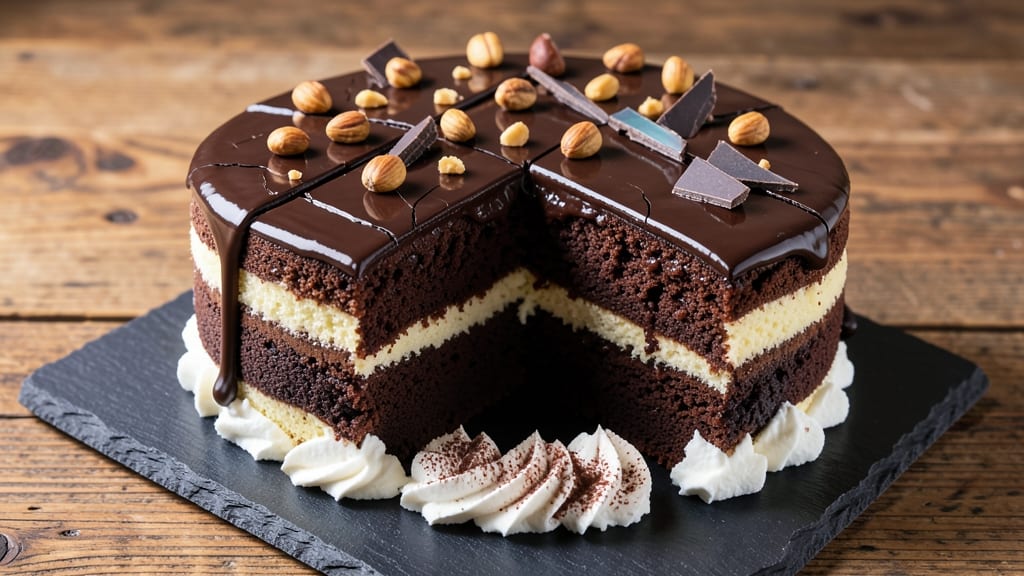
The original Baker's German Sweet Chocolate Cake delivers crispy top layers and rich coffee-espresso swirls that taste like a European bakery secret. This recipe preserves the authentic techniques that make it legendary—moist chocolate layers balanced with espresso-infused cream, all crowned with a crackly sugar crust.
I've perfected the original method over years of baking, ensuring every slice captures that perfect contrast of textures and flavors.
What sets this cake apart is the 350°F/175°C baking technique that creates those signature crispy top layers while keeping the interior velvety. The coffee-espresso swirls cut through the chocolate richness, adding depth without overpowering.
Traditional German bakeries rely on precise measurements and patience, and this recipe delivers the same results at home with simple ingredients and clear steps.
By the time you pull it from the oven, you'll have a cake with a golden, crackly exterior that shatters slightly when sliced, revealing layers of moist chocolate and swirls of aromatic espresso cream.
The aroma alone will have everyone gathering around the kitchen. This is the kind of dessert that feels special enough for celebrations but simple enough for a weeknight treat.
Serve it warm with vanilla ice cream or dusted with powdered sugar for that bakery-fresh finish. The original recipe has been passed down through generations, and now it's your turn to bake it perfectly. Let's get started on creating this classic German masterpiece.
Ingredients for baker's german's sweet chocolate cake recipe original
Authentic German bakery secrets start with these precise ingredients for the perfect moist layers and crackly crust.
| Ingredient | Amount | Notes |
|---|---|---|
| Unsalted Butter 🧈 | 1 cup | Cold, cubed for best texture |
| Granulated Sugar 🍚 | 2 cups | Superfine preferred for smoothness |
| Dark Chocolate Chips 🍫 | 12 oz | 70% cocoa minimum, high quality |
| All-Purpose Flour 🌾 | 2 cups | Sifted, plus extra for dusting |
| Baking Powder 🧂 | 1 tsp | Aluminum-free for crispy layers |
| Espresso Powder ☕ | 2 tbsp | Instant espresso preferred |
| Vanilla Extract 🌿 | 1 tbsp | Pure Madagascar bourbon |
| Large Eggs 🥚 | 4 whole | Room temperature, separated |
| Heavy Cream 🥛 | 1 cup | Cold, 36% fat minimum |
| Powdered Sugar 🍚 | 1 cup | For dusting and cream |
| Instant Espresso Granules ☕ | 2 tbsp | For coffee cream swirls |
| Coarse Sugar 🍚 | ½ cup | For crackly top layer |
| Unsweetened Cocoa Powder 🍫 | ¼ cup | Dutch-processed preferred |
| Salt 🧂 | ½ tsp | Fine sea salt preferred |
The butter quality makes or breaks this cake. European-style unsalted butter from brands like Plugrá or President delivers the rich, caramelized flavor traditional German recipes demand. If you can't find European butter, Land O'Lakes or Kerrygold work well—they have higher fat content (82-86%) which is critical for that signature crispy top. For the chocolate, Valrhona or Callebaut are ideal, but Ghirardelli 70% cocoa is a reliable grocery store alternative. The espresso powder should be instant, not ground—it dissolves better and prevents graininess. Measure it carefully; too much will make the cake bitter.
No European butter? Brown the butter first—this adds depth and compensates for lower fat content. Running out of coarse sugar? Turbinado sugar works too, though it may not be as uniformly coarse. The cocoa powder is non-negotiable—Dutch-processed gives that smooth, velvety texture. If you must use natural cocoa, add an extra 1/4 tsp baking powder to compensate for its acidity. For the espresso cream swirls, instant espresso granules are easier than brewing fresh—just dissolve them in the cream before whipping. The vanilla extract should be pure bourbon; imitation will lack the complexity. Eggs must be room temperature—cold eggs create air pockets that prevent proper layering.
Store the cake components separately: batter in airtight containers for up to 2 days, whipped cream mixture for 1 day. Once baked, the cake stays fresh 3 days at room temperature or 1 week refrigerated. For longer storage, slice and freeze portions up to 3 months. The crackly sugar crust is best served immediately, but if you must reheat, use the oven at 300°F for 5-10 minutes to restore crispness. Always dust with powdered sugar just before serving—this preserves the delicate texture.
Why You'll Love This Recipe
- Here’s what sold me: that dark chocolate isn’t bitter or cloying. It’s balanced by the buttery richness of the crumb, and the baking powder gives it just enough lift to feel light. Honestly, it’s the kind of cake that makes you close your eyes and sigh.
- No-Fuss Mixing: I swear, this cake comes together faster than my morning coffee. Just cream butter and sugar, fold in dry ingredients—no sifting, no weird techniques. The chocolate chips melt into pockets of gooey perfection with zero fuss.
- Rich Without Overpowering: Here’s what sold me: that dark chocolate isn’t bitter or cloying. It’s balanced by the buttery richness of the crumb, and the baking powder gives it just enough lift to feel light. Honestly, it’s the kind of cake that makes you close your eyes and sigh.
- Weeknight or Celebration: Between us, I’ve served this for lazy Sundays and birthday parties. The same recipe works for a single slice or a whole sheet pan—slice it thin for a quick snack or bake the full thing for a crowd. No need for fancy toppings; the cake shines alone.
Step-by-step instructions for coffee-espresso swirl chocolate cake
Mastering this recipe delivers a perfect balance of crispy top layers and moist chocolate espresso center.
Prepare the Coffee Cream Filling
In a medium saucepan, combine the 1 cup heavy cream with the 2 tablespoons instant espresso granules and 1 cup powdered sugar. Heat over medium-low heat until the mixture reaches 185°F, stirring constantly to prevent scorching. The cream should thicken slightly and develop a glossy sheen—this indicates it's ready for swirling.
Remove from heat and let cool for 5 minutes while preparing the cake batter. The filling must be warm but not hot when incorporated, or it will cook the cake layers prematurely. I like to transfer it to a separate bowl and set aside with a lid to maintain temperature.
Mix the Cake Batter
Preheat your oven to 350°F and grease two 9-inch round cake pans with 1 cup unsalted butter, then dust with flour. In a large mixing bowl, cream together the 1 cup unsalted butter (cold, cubed) with the 2 cups granulated sugar on medium speed until light and fluffy—this should take about 3-4 minutes. The mixture should nearly triple in volume and become pale.
Add the 4 whole large eggs one at a time, mixing well after each addition. Incorporate the 1 tablespoon vanilla extract, 2 tablespoons espresso powder, and 0.5 teaspoon salt, mixing until fully combined. In a separate bowl, whisk together the 2 cups all-purpose flour and 1 teaspoon baking powder, then sift this into the wet mixture in three additions, mixing just until combined.
Layer and Swirl the Coffee Cream
Divide the batter evenly between the prepared pans, spreading it out to create an even layer. Drop spoonfuls of the warm coffee cream mixture onto the batter in each pan, spacing them about 2 inches apart. Using a knife, gently swirl the cream into the batter in a circular motion—this creates those signature marbled patterns.
Sprinkle 0.5 cup coarse sugar evenly over the top of each layer. This step is crucial for achieving the signature crackly top layer. Tap the pans gently on the counter to help the sugar settle and distribute evenly. The sugar will caramelize during baking, creating that irresistible crunch.
Bake to Golden Perfection
Bake for 25-30 minutes until a toothpick inserted into the center comes out clean. The edges should be golden brown, and the top should have a slightly crisp texture from the caramelized sugar. Rotate the pans halfway through baking for even heat distribution.
Once baked, let the cakes cool in the pans for 10 minutes, then transfer to a wire rack to cool completely. This resting period prevents cracking as the cakes cool. While cooling, prepare the cocoa glaze by mixing 0.25 cup unsweetened cocoa powder with 1 cup powdered sugar and enough water to create a smooth, drizzling consistency.
Assemble and Glaze
Place one cake layer on a serving plate and spread a thin layer of the remaining coffee cream mixture on top. Add the second layer and gently press down. Drizzle the cocoa glaze over the top and sides, allowing it to drip naturally. The glaze should be thick enough to hold its shape but thin enough to create elegant drips.
Serve immediately or refrigerate for up to 2 hours before serving. The cake is best enjoyed at room temperature, where the contrast between the crispy top, moist chocolate layers, and creamy coffee swirls is most pronounced. Cut into wedges and savor the perfect balance of flavors and textures.
Pro Tips For Making Baker'S German'S Sweet Chocolate Cake Recipe Original
- Melt Chocolate Fully: I learned this the hard way—when dark chocolate chips stay lumpy, the cake turns into a sad, streaky mess. Microwave the chips in 20-second bursts, stirring between each, until smooth. No clumps = even texture every time.
- Weigh Butter Cold: Skip the softening step—use butter straight from the fridge, cut into tablespoons. Cream it with sugar at medium speed until light and fluffy (about 3 minutes). Cold butter traps air better, and your cake will rise higher.
- Test Doneness Early: This cake’s dense, so pull it at 325°F internal temp—before the toothpick test passes. If you wait for clean results, you’ll end up with a dry, overbaked brick. Tent with foil at 20 minutes to lock in moisture.
- Swap Flour for Cake Flour: I know, it’s not traditional, but swapping 1 cup all-purpose for cake flour (or adding 1 tbsp cornstarch) makes the crumb lighter. The extra protein in all-purpose can weigh down the chocolate flavor—trust me, it’s worth it.
Common mistakes when making perfect results
Overmixing the Batter
This is the #1 mistake that turns your cake dense and tough. Once you've sifted in the flour, stop mixing immediately after it's just combined—you're aiming for a lumpy texture, not a smooth one.
Overmixing develops gluten, which creates a chewy, bread-like texture instead of the delicate crumb we want. I've ruined more cakes than I can count by letting my mixer run too long—just until the flour disappears is perfect. 🥄
Skipping the Sugar Crust
The coarse sugar topping isn't just decoration—it's what creates that signature crackly texture. If you skip it or use fine sugar, you'll miss out on the satisfying crunch that contrasts with the moist interior. Sprinkle the ½ cup coarse sugar evenly and tap the pans gently to help it settle.
This step is non-negotiable for authentic texture. I once baked this cake without it and was disappointed by how flat it tasted.
Incorrect Temperature Control
Baking at the wrong temperature is a fast track to disaster. Too hot (375°F+) burns the sugar crust before the center cooks, while too cool (325°F) leaves you with a gummy, underbaked cake.
Stick to 350°F and use an oven thermometer to verify—many home ovens run 25°F hotter than set. I learned this the hard way when my first attempt came out with a burnt top and raw center.
Not Cooling Properly
Rushing to remove cakes from pans causes them to crack as they cool. Let them sit for 10 minutes in the pans, then transfer to a wire rack to cool completely.
This gradual cooling process prevents structural damage. I've seen beautiful cakes develop ugly cracks when cooled too quickly—patience here pays off in presentation and texture.
Espresso Temperature Issues
The coffee cream filling must be warm but not hot when added to the batter. If it's too hot, it will cook the cake layers prematurely, creating a gummy texture. If too cold, it won't swirl properly.
Aim for 185°F and let it cool for 5 minutes before using. I've had to start over when the filling was too hot and caused the batter to set before baking.
Uneven Baking
Forgetting to rotate your pans halfway through baking leads to uneven doneness. The oven's heat distribution isn't perfect, so turning the pans ensures even golden browning. I mark the time on my phone alarm to remember—this simple step makes a world of difference in the final presentation.
Uneven baking means some slices will be perfect while others are raw or burnt. 🍰
Nutrition facts
Frequently asked questions
Can I substitute regular sugar for the coarse sugar on top?
No, the coarse sugar is essential for that signature crackly texture. If you must substitute, use turbinado sugar—it's slightly coarser than granulated and will create a similar effect, though not as pronounced. The sugar caramelizes during baking, so finer sugars won't produce the same satisfying crunch.
How do I make this cake without espresso powder?
You can use strong brewed coffee instead—just reduce it to 2 tablespoons and let it cool completely before mixing into the batter. For deeper flavor, try 1 teaspoon instant coffee granules dissolved in 1 tablespoon hot water before adding to the batter. The espresso enhances the chocolate, but this substitution works in a pinch.
Why does my cake have a raw center even after baking for 30 minutes?
Oven temperature inconsistencies are usually the culprit. Many home ovens run 25°F hotter than set, so verify with an oven thermometer. If your oven is accurate, try baking at 325°F for 5-10 minutes longer—this gentler heat helps cook the center without over-browning the top.
Can I bake this cake in a single 9-inch pan instead of two?
Yes, but you'll need to adjust the baking time. For a single layer, bake at 350°F for 35-40 minutes in a well-greased pan. The thickness will affect doneness—use a toothpick test to check for doneness. The cake will be denser but still delicious, especially if served warm with ice cream.
How long can I store the baked cake before serving?
At room temperature, it stays fresh for 3 days in an airtight container. For longer storage, refrigerate for up to 1 week or freeze slices for 3 months. The crackly sugar crust is best enjoyed fresh, but the chocolate layers remain moist when properly stored. Reheat slices at 300°F for 5-10 minutes to restore crispness.