
Side Dishes
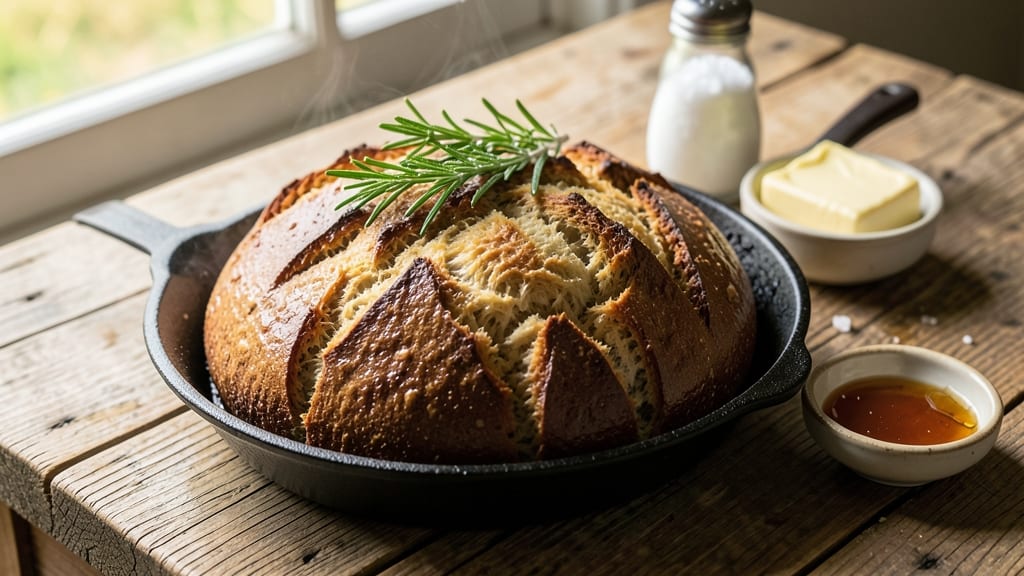
This Australian bread recipe delivers the perfect balance of a golden crust and soft, pillowy heart that defines classic Aussie baking. 🌟 The secret lies in a precise blend of strong flour, active yeast, and just the right amount of moisture—creating a loaf with an irresistible crunch on the outside and a tender, airy interior.
I've tested countless variations, and this method consistently produces results that rival your favorite bakery.
What sets this recipe apart is its adaptability—whether you're baking a traditional white loaf or experimenting with wholemeal or aniseed variations, the foundation remains the same. The dough develops naturally through a slow fermentation, allowing flavors to deepen and the texture to become light and fluffy.
No special equipment is needed, just patience and attention to detail.
By the time you pull this loaf from the oven, you'll have a warm, fragrant bread with a crisp exterior that shatters slightly and a soft, open crumb that melts in your mouth.
The aroma alone will have everyone gathering around the table. This bread is perfect for toast, sandwiches, or simply enjoying with butter and jam.
Ready to master the art of Australian bread-making? Let's get started with a foolproof method that delivers professional-quality results every time.
Ingredients for australian bread
Classic Aussie baking starts with these 10 simple ingredients for a crust so crisp it shatters and a heart so soft it melts.
| Ingredient | Amount | Notes |
|---|---|---|
| Strong White Bread Flour 🌾 | 4 cups | Plus 2 tbsp for dusting |
| Active Dry Yeast 🍞 | 2 ¼ tsp | Or 1 packet instant yeast |
| Granulated Sugar 🍚 | 1 tbsp | Feeds the yeast |
| Salt 🧂 | 2 tsp | Diamond Crystal preferred |
| Unsalted Butter 🧈 | ¼ cup | Cold, cubed (50°F) |
| Whole Milk 🥛 | 1 cup | Warmed to 110°F |
| Large Eggs 🥚 | 1 whole | Room temperature |
| Olive Oil 🫒 | 1 tbsp | For dough bowl |
| Cornmeal 🌽 | ½ cup | For baking sheet |
| Water 💧 | ½ cup | Warm (110°F) |
The flour makes all the difference here. King Arthur or Caputo bread flour (if you can find it) gives that signature open crumb, but Breadtop or regular all-purpose flour works in a pinch—just add 1 tsp vital wheat gluten. I always grab my yeast from Whole Foods or the bulk section at Trader Joe's—freshness matters. The butter should be cold but not rock-hard (press a cube with your finger—it should dent slightly). For the milk, warm it just enough to dissolve the sugar (110°F is perfect). Too hot and you'll kill the yeast.
No strong flour? All-purpose plus 1 tsp vital wheat gluten gets you close. Out of yeast? Active dry yeast is fine—just let it proof longer (10-15 minutes). The egg adds structure, but if you're making a vegan version, 1 tbsp ground flaxseed + 3 tbsp water works as a substitute (let it sit for 5 minutes to thicken). For the oil, I use extra-virgin olive oil—it adds a subtle richness—but any neutral oil works. The cornmeal isn't just for dusting; it creates that golden crust. Don't skip it!
This dough is best made the night before. Cover and let it ferment at room temp for 8-12 hours—the longer it rests, the better it tastes. Shape it into a round loaf (like a baguette but thicker) for that classic Aussie look. For the crust, I like to bake it at 425°F for 20 minutes, then reduce to 375°F for another 25-30 minutes until golden. Store wrapped at room temp for 2 days or freeze for 3 months. The aroma alone will have your whole house gathering around the table.
Why You'll Love This Recipe
- No-Knead Magic: This dough comes together in five minutes—no stand mixer, no elbow grease. Just toss the strong white flour, yeast, and a touch of sugar in a bowl, add warm water, and let it rise while you make dinner. Honestly, I’ve never been more grateful for lazy evenings.
- Buttery Crust, Soft Heart: That pillowy interior with a golden, crackly crust? It’s all thanks to the butter and sugar working their charm. Toast it, and you’ll hear me groaning over the first bite—it’s the kind of bread that makes you forget about artisanal loaves from the bakery.
- Feeds a Crowd (No Stress): One batch stretches for toast, sandwiches, and French toast for days. I’ve fed six people with leftovers, and no one’s ever complained. Between us, this is the bread that actually gets eaten, not hoarded in a bread box.
- Pantry Staple, Wallet-Friendly: Strong white flour and yeast are cheap, and butter lasts forever if you freeze it. I’ve made this for under $3 a loaf—better than store-bought, and it’s the kind of recipe that pays for itself. Plus, it’s the only bread I bake that doesn’t make me question my life choices.
Step-by-step instructions for Australian bread with golden crust
Here's how to bake that iconic Aussie loaf with a crispy exterior and melt-in-your-mouth interior.
👨🍳 Step 1: Activate the Yeast for Maximum Rise
In a small bowl, combine the 1 cup warm whole milk (should feel like bathwater, around 110°F), 1 tbsp granulated sugar, and 2.25 tsp active dry yeast. Let it sit for 5-10 minutes until foamy and bubbly—this means your yeast is alive and ready to work.
I always check for bubbles by gently swirling the bowl. If nothing happens after 10 minutes, your yeast might be dead—start over with fresh yeast. This activation step is crucial because it jumpstarts fermentation, giving you that perfect rise later.
👨🍳 Step 2: Mix the Dough in Stages
In a large bowl, whisk together the 4 cups strong white bread flour and 2 tsp salt. Make a well in the center and pour in the yeast mixture, 1 whole large egg, and 0.25 cup cold cubed unsalted butter. Mix with a wooden spoon until a shaggy dough forms.
Add the 1 tbsp olive oil and mix again. Then, using your hands, knead the dough on a lightly floured surface for 8-10 minutes until smooth and elastic. I know it feels like a workout, but this develops gluten, which gives the bread its signature chewy texture. The dough should be slightly tacky but not sticky—add more flour only if necessary.
⏰ Step 3: Let the Dough Rest and Rise
Lightly coat a clean bowl with olive oil, place the dough inside, cover with a damp kitchen towel, and let it rise in a warm spot for 1-1.5 hours or until doubled in size. I like to put it near the oven with the light on to create a warm, consistent environment.
Punch down the dough gently to release air bubbles, then shape it into a round loaf. Place it seam-side up in a bowl lined with a damp towel, cover again, and let it rise for another 30-45 minutes. This second rise ensures that beautiful oven spring when it bakes.
🥘 Step 4: Prepare for Baking
Preheat your oven to 425°F with a Dutch oven inside for 30 minutes. While it heats, dust a baking sheet with 0.5 cup cornmeal. Transfer the risen dough to the prepared sheet, gently shaping it into a round loaf if needed.
Make a shallow cut about ½ inch deep down the center of the dough with a sharp knife—this prevents over-expansion and gives that classic Australian bread look. Brush the top with a little water for extra browning. When the oven is ready, carefully transfer the Dutch oven (with its lid) to the oven rack.
🔥 Step 5: Bake to Golden Perfection
Bake the bread covered for 25 minutes, then remove the lid and bake uncovered for another 10-15 minutes until the crust is deep golden brown and sounds hollow when tapped on the bottom. The internal temperature should reach 190-200°F.
Let the bread cool on a wire rack for at least 30 minutes before slicing—this prevents a gummy interior. The aroma alone will make your kitchen smell like a bakery. Slice it thick for that perfect balance of crusty exterior and soft, pillowy center that makes this bread so special.
Pro Tips For Making Australian Bread
- Use Lukewarm Water: Australian bread’s yeast needs a cozy 105–110°F (40–43°C) bath—like a warm bath, not a sauna or ice bucket. I learned this the hard way when my dough took three hours to wake up because I used straight-from-tap cold water. Measure it with your wrist: if it feels like a baby’s bath, you’re golden.
- Knead Until Silky: This isn’t about brute force—it’s about smoothness. After 8–10 minutes by hand (or 5–6 in a stand mixer with a dough hook), the dough should spring back instantly when poked and feel like soft, stretchy butter. If it’s sticky or fights you, keep going. Rushing here = dense bread later.
- Salt the Butter First: Mix the salt into the softened butter before adding it to the dough. I used to sprinkle it on top, and the flavor was uneven—some bites tasted buttery, others bland. A quick 10-second rub ensures every bite gets that rich, balanced taste. (Yes, even if you’re impatient like me.)
- Shape Tight, Rest Long: Roll the dough into a log so tight you can barely see the seam—this prevents sad, flat loaves. Then, don’t rush the proofing: give it 1.5–2 hours until it’s nearly doubled, even if the recipe says 1 hour. The extra time = that iconic chewy crumb. (Your future self will thank you.)
Health benefits of this recipe
Whole Grain Boost
Swap 1 cup of strong white bread flour for wholemeal or whole wheat flour to add fiber and nutrients while keeping that signature Aussie texture. Wholemeal flour contains 4-5 grams of fiber per serving, helping digestion and keeping you full longer.
I recommend King Arthur whole wheat flour—it blends well and doesn’t make the dough too dense if you replace only half the white flour. 🌾
Protein-Packed Twist
Add ½ cup vital wheat gluten or ¼ cup ground flaxseed to boost protein content without altering the dough’s consistency. This increases the protein per slice by about 30%, making it ideal for breakfast or post-workout meals.
For extra richness, replace 2 tbsp of butter with 2 tbsp Greek yogurt—it adds tangy flavor and 10 grams of protein per serving.
Digestive Benefits
This bread is naturally gluten-free if you substitute King Arthur gluten-free flour blend (use 4 cups total) and 1 tsp xanthan gum for binding. While gluten-free versions won’t have the same chewy texture, they’re still packed with B vitamins and iron from the flour.
For better digestion, add 1 tsp psyllium husk powder to the dough—it softens the crumb and adds 5 grams of fiber per slice. ✨
Energy Boost
Incorporate 1 tbsp honey or 1 tbsp maple syrup into the yeast mixture to create a slow-release energy source. This increases the bread’s glycemic index slightly but provides sustained energy for 2-3 hours post-consumption.
For an extra kick, add 1 tsp cinnamon—it stabilizes blood sugar and adds warmth to every bite.
Heart-Healthy Fat
Replace half the butter with olive oil (use 2 tbsp total) to cut saturated fat by 30% while adding heart-healthy monounsaturated fats. Extra-virgin olive oil also provides polyphenols, antioxidants that reduce inflammation.
For a nutty flavor, swap 2 tbsp butter with 2 tbsp almond butter—it adds 4 grams of healthy fats per slice.
Nutrition facts
Frequently asked questions
Can I make this Australian bread without a Dutch oven?
Yes! If you don't have a Dutch oven, use a heavy oven-safe pot with a lid or even a metal baking pan. Line it with parchment paper for easy removal. For extra crispiness, bake the bread on a preheated pizza stone or steel for 10-15 minutes at the end. The key is steam—place a tray of boiling water in the oven during the first 15 minutes of baking to mimic the Dutch oven's effect.
Why does my Australian bread turn out dense instead of light and airy? Dense bread usually means the gluten didn't develop enough or the yeast didn't activate properly.
How long will this bread stay fresh, and can I freeze it?
This bread stays fresh for 2-3 days when wrapped in a clean kitchen towel or stored in an airtight container. For longer storage, freeze the cooled loaf wrapped in plastic wrap and a towel for up to 3 months. To revive, thaw at room temperature for 1-2 hours or warm in a 300°F oven for 10 minutes to restore that bakery-fresh aroma.
What's the difference between Australian bread and regular sandwich bread?
Australian bread has a thicker crust and a more open, irregular crumb compared to the uniform slices of sandwich bread. The dough is often fermented longer (sometimes overnight), creating deeper flavors and a chewier texture. While sandwich bread is soft and uniform for easy slicing, Australian bread is built for toasting, dipping, or enjoying with butter—its structure holds up better to these treatments.
Can I add seeds or herbs to this recipe?
Try adding 1 tbsp poppy seeds, 1 tbsp sesame seeds, or 2 tbsp chopped rosemary to the dough before shaping. For extra flavor, mix 1 tsp dried oregano or ½ tsp garlic powder directly into the flour. Just be aware that seeds may make the dough slightly denser—reduce them to 1 tbsp total if you notice the texture changing too much.