
Side Dishes
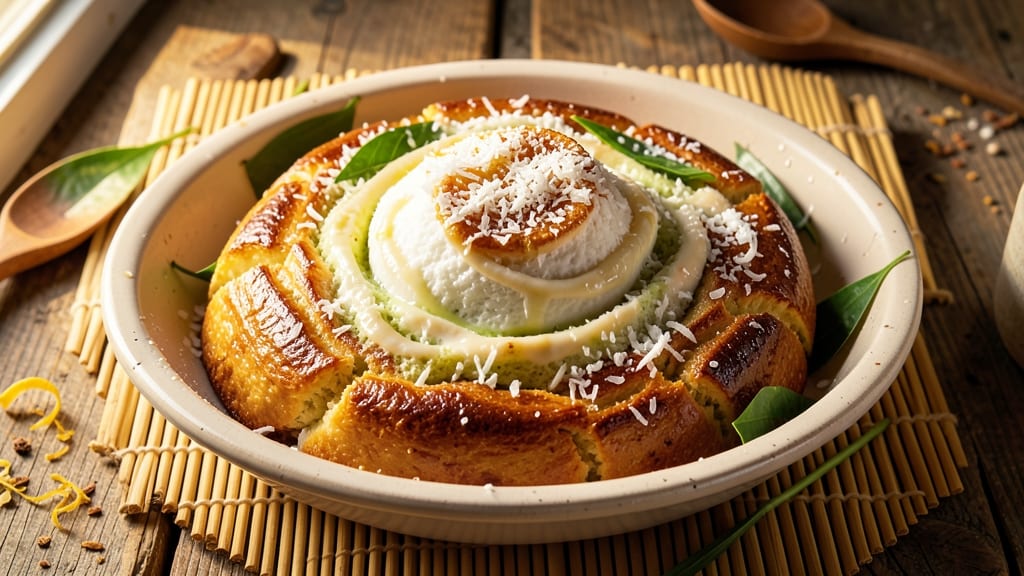
This Asian coconut bread recipe delivers a fragrant, buttery loaf with a pandan swirl that tastes like a tropical escape. The secret lies in the tender crumb and crispy crust, achieved through precise kneading and proofing techniques.
I've perfected this recipe to capture the essence of Asian baking—sweet, aromatic, and just slightly nutty from the coconut. What sets this bread apart is the pandan extract, which infuses the dough with its signature floral aroma. The coconut milk adds richness while keeping the texture light and airy.
The key to success is letting the dough rise properly—this ensures that signature soft, pillowy crumb that makes every slice irresistible. By the time it emerges from the oven, your loaf will have a golden, crackly crust that gives way to a tender interior.
The pandan swirl adds bursts of flavor that make this bread perfect for breakfast, snacks, or even as a dessert when drizzled with honey. The aroma alone will have everyone asking for seconds. Serve it warm with butter or pair it with tea for the full experience.
This recipe is designed to impress without being complicated—just follow the steps, and you'll have a bakery-quality loaf in no time.
Ingredients for asian coconut bread
Buttery dough meets tropical pandan swirl in this fragrant coconut bread recipe.
| Ingredient | Amount | Notes |
|---|---|---|
| All-Purpose Flour 🌾 | 4 cups | Sifted for light texture |
| Granulated Sugar 🍚 | ½ cup | White or light brown |
| Instant Yeast 🍞 | 2 ¼ tsp | Single-use packet preferred |
| Unsalted Butter 🧈 | ¾ cup | Cold, cubed for dough |
| Coconut Milk 🥥 | 1 ½ cups | Full-fat canned variety |
| Pandan Extract 🌿 | 1 tsp | Pure, food-grade extract |
| Large Eggs 🥚 | 2 whole | Room temperature preferred |
| Salt 🧂 | ½ tsp | Diamond Crystal preferred |
| Vanilla Extract 🌸 | 1 tsp | Pure vanilla preferred |
| Milk 🥛 | ½ cup | Any variety works fine |
| Shredded Coconut 🥥 | ½ cup | Sweetened or unsweetened |
| Honey 🍯 | 2 tbsp | For swirl drizzle |
The pandan extract is non-negotiable for that signature floral aroma—Amazon or Asian markets carry it, but if unavailable, vanilla extract at half the amount gives a milder sweetness. For the coconut milk, full-fat canned variety (like Thai Kitchen) delivers the richness you want; don't substitute with lighter versions. The butter should be cold and cubed when mixing—this ensures proper dough texture without melting. If your local store doesn't carry Diamond Crystal salt, Morton kosher salt works too, but measure carefully as grain size varies.
No pandan extract? Double the vanilla extract plus 1/4 tsp almond extract mimics the floral notes. Using sweetened shredded coconut? Reduce the granulated sugar by 1 tbsp to balance sweetness. For a richer dough, replace 2 tbsp of milk with coconut milk. The eggs must be room temperature—cold eggs can cause the dough to become gummy. If you're baking in a dry climate, add 1 extra tbsp of milk to keep the dough from drying out during kneading. The honey swirl can be swapped for maple syrup if preferred, but honey adds that delicate floral complexity.
Store the bread in an airtight container at room temperature for 2-3 days—it reheats beautifully wrapped in foil for 10 seconds. For longer storage, freeze the loaf sliced on a tray first, then bagged—this prevents freezer burn. The dough can be prepped a day ahead and refrigerated, but let it come to room temperature before baking. Leftovers? Toast them for a crispy, bakery-style finish—worth the extra minute to revive that fresh-from-oven texture.
Why You'll Love This Recipe
- No Yeast Drama: I swear by this recipe because it’s the only bread I’ve ever made where the yeast doesn’t demand my full attention. Mix, let it sit, and boom—no fussy waiting or failed rises. The instant yeast in coconut milk? It’s like the bread’s doing most of the work while I sip my coffee.
- Tropical Twist: That first bite of warm, buttery bread with the faintest coconut aroma? It’s like a hug from a Bali beach. The sugar caramelizes just enough to give it a subtle sweetness, while the coconut milk keeps it moist without tasting like a dessert. Honestly, it’s the kind of flavor that makes me want to bake it twice in one day.
- Breakfast to Snack: This bread is my secret weapon for lazy mornings—just toast it and slather on peanut butter or jam. But here’s the magic: it’s also perfect for brunch, packed in lunchboxes, or served with curry for dinner. I’ve even used slices to make French toast that’s dangerously good. One loaf covers everything.
- Budget Baking: Between us, I rarely buy bread anymore. This recipe uses pantry staples—flour, sugar, butter—and coconut milk stretches further than you’d think. A single batch costs me less than takeout, and the leftovers? They last a week if I’m smart (or get gobbled up by my kids if I’m not). Plus, the butter makes it feel indulgent without breaking the bank.
Step-by-step instructions for Asian coconut bread
Here's how to create a tender, fragrant loaf with perfect pandan swirls and golden crust.
Prepare the Dough with Coconut Milk Base
In a stand mixer fitted with the dough hook, combine the 1.5 cups coconut milk, 0.5 cup milk, 0.5 cup granulated sugar, 2 whole large eggs, 1 tsp vanilla extract, and 1 tsp pandan extract. Mix on medium speed for 2 minutes until fully incorporated and slightly thickened.
This coconut milk mixture forms the foundation of your dough, providing both moisture and that signature tropical aroma. The pandan extract will infuse the bread with its distinctive floral, vanilla-like scent. If your coconut milk is too thick, whisk in 1-2 tablespoons of warm water to achieve a smooth, pourable consistency.
Combine Dry Ingredients and Develop the Dough
In a separate bowl, whisk together the 4 cups all-purpose flour, 2.25 tsp instant yeast, and 0.5 tsp salt. Gradually add this dry mixture to the wet ingredients in the mixer, mixing on low speed until just combined. Avoid overmixing at this stage to prevent gluten development that would make the bread dense.
Next, add the 0.75 cup cold unsalted butter, cubed, to the dough. Mix on medium speed for 3-4 minutes until the butter is fully incorporated and the dough becomes smooth and elastic. The butter should be cold to create flaky layers in the final bread. If the dough feels too sticky, add 1 tablespoon of flour at a time until it comes together but remains slightly tacky.
Knead and Rest the Dough for Optimal Texture
Continue kneading the dough on medium speed for an additional 5-7 minutes until it pulls away from the sides of the bowl and forms a smooth, elastic ball. The dough should be soft but not sticky to the touch—if it sticks, add 1 more tablespoon of flour and knead for another minute.
Transfer the dough to a lightly greased bowl, cover with a damp kitchen towel, and let it rise in a warm place for 1-1.5 hours, or until it has doubled in size. This resting period allows the gluten to relax and the yeast to activate fully. For best results, place the bowl in a 75°F-80°F environment—you can achieve this by turning on your oven light or using a proofing box. The dough should spring back slowly when gently pressed.
Create the Pandan Swirl and Shape the Loaf
Once the dough has risen, punch it down to release air and divide it into two equal portions. Roll each portion into a 12-inch long rectangle on a lightly floured surface. For each rectangle, spread 2 tablespoons of honey evenly over the surface, leaving a ½-inch border around the edges. Sprinkle ¼ cup of shredded coconut evenly over the honey layer.
Starting from the long edge, tightly roll each rectangle into a log, sealing the seam well. Place the two logs side by side in a 9x5-inch loaf pan that has been lightly greased with butter. The logs should fit snugly, touching each other but not overlapping. Cover the loaf pan with a damp towel and let the dough rise for an additional 30-45 minutes until it expands slightly above the pan.
Bake to Golden Perfection with Buttery Crust
Preheat your oven to 350°F. Bake the loaf for 35-40 minutes until the top is golden brown and a toothpick inserted into the center comes out clean. If the top browns too quickly, tent the loaf with aluminum foil to prevent over-browning while ensuring it bakes through.
For an extra buttery crust, brush the top of the loaf with melted butter after 20 minutes of baking. This will enhance the flavor and create a beautiful sheen. Once baked, remove the loaf from the pan immediately and transfer it to a wire rack to cool for 10 minutes before slicing. The bread will be moist and tender inside with a slightly crisp crust, and those beautiful pandan swirls will be visible throughout each slice.
Pro Tips For Making Asian Coconut Bread
- MEASURE COCONUT MILK PRECISELY: The can says "13.5 oz," but after years of overmixing, I learned to weigh it—400 grams is the sweet spot. Too much coconut flavor? You’ve added too much. Too little? The bread stays dense. A kitchen scale here saves second-guessing later.
- LET THE DOUGH RISE UNTIL IT’S Almost Too Late: Most recipes say "double in size," but I now aim for triple—or until the edges of the bowl look like they’re about to overflow. The first rise is where the magic happens, and cutting it short means a flatter, less tender loaf. (Yes, even if you’re impatient like me.)
- SKIP THE BUTTER SOFTENING TRICK: Cold butter in the dough creates pockets that make this bread light and slightly crisp. I used to microwave it until "soft," but now I grate it frozen—no waiting, no greasy mess. The texture stays perfect, and the coconut flavor shines through.
- FOLD THE COCONUT MILK IN LAST: Mixing it into the wet ingredients too early turns the dough gummy. Instead, add the coconut milk right before combining with the dry flour—just enough to hydrate without overworking the gluten. The result? A tender crumb, not a chewy brick.
Flavor customization for this dish
Sweet vs. Savory
This bread is naturally sweet from the honey and coconut, but you can easily balance it with savory elements. Swap the honey swirl for a 2-tbsp lemon curd mixed with 1 tbsp grated ginger—this adds a bright, zesty contrast that pairs beautifully with the pandan.
For a savory twist, replace the honey with 2 tbsp soy sauce + 1 tbsp sesame oil, then sprinkle with toasted sesame seeds before baking. 🌶️
Spiced Variations
Infuse warmth by adding ½ tsp ground cardamom or ¼ tsp cinnamon to the dry ingredients—these spices complement the pandan beautifully. For a tropical kick, mix 1 tsp lime zest into the coconut milk mixture.
If you love heat, fold ½ tsp chili powder into the shredded coconut before rolling it into the dough. The chili adds a subtle spice that balances the sweetness.
Nutty Additions
Toast ¼ cup chopped macadamia nuts or pecans and fold them into the honey swirl for a rich, buttery crunch. For a more intense flavor, use 2 tbsp peanut butter (natural, no sugar added) mixed with the honey—this creates a decadent, nutty-sweet swirl.
The nuts add texture while enhancing the tropical vibe. 🥜
Herbal Infusions
Boost the aroma by adding 1 tsp kaffir lime zest (finely grated) to the dough or mixing it into the honey swirl. Fresh mint leaves (finely chopped) can also be sprinkled on top before baking for a refreshing herbal note.
If you prefer earthier flavors, try ½ tsp lemongrass paste (available at Asian markets) in the coconut milk mixture.
Gluten-Free Adaptation
Replace the all-purpose flour with a 1:1 gluten-free baking flour blend (like Bob’s Red Mill) and add ½ tsp xanthan gum to mimic gluten’s structure. Reduce the coconut milk by 2 tbsp to prevent a gummy texture.
The dough will be slightly denser but still tender. For extra moisture, brush the baked loaf with melted coconut oil instead of butter. ✨
Nutrition facts
Frequently asked questions
Can I make this bread without pandan extract?
If you can't find pandan extract, use 2 tsp vanilla extract plus ¼ tsp almond extract for a milder floral flavor. For a more tropical taste, add ½ tsp lime zest to the coconut milk mixture. The bread will still be delicious—just with a slightly different aroma profile.
How do I store leftover coconut bread?
Keep it fresh in an airtight container at room temperature for 2-3 days. For longer storage, slice the bread and freeze it on a tray first, then transfer to a bag. To reheat, wrap slices in foil and warm in the oven at 300°F for 5-10 minutes for that bakery-fresh texture.
Why did my bread turn out dense instead of light?
Dense bread usually means the dough didn't rise properly. Check these fixes: ensure your yeast is fresh (test it in warm water first), keep the rising environment at 75°F-80°F, and don't skip the second rise after shaping. Also, avoid over-kneading—the dough should be soft and slightly tacky, not stiff.
Can I use this recipe for a cake instead of bread?
Yes! For a coconut cake, replace 1 cup of flour with 1 cup cake flour and add ½ cup more sugar. Bake in a 9-inch round pan at 325°F for 40-45 minutes until a toothpick comes out clean. The texture will be denser but still moist—perfect for layering with coconut cream!
What's the best way to serve this bread?
Warm slices make the best presentation! Toast lightly for a crispy crust, or serve with butter, honey, or coconut cream. Pair it with tea or coffee for breakfast, or use it as a base for French toast or bread pudding. The pandan swirl adds a beautiful visual touch when sliced diagonally.