
Side Dishes
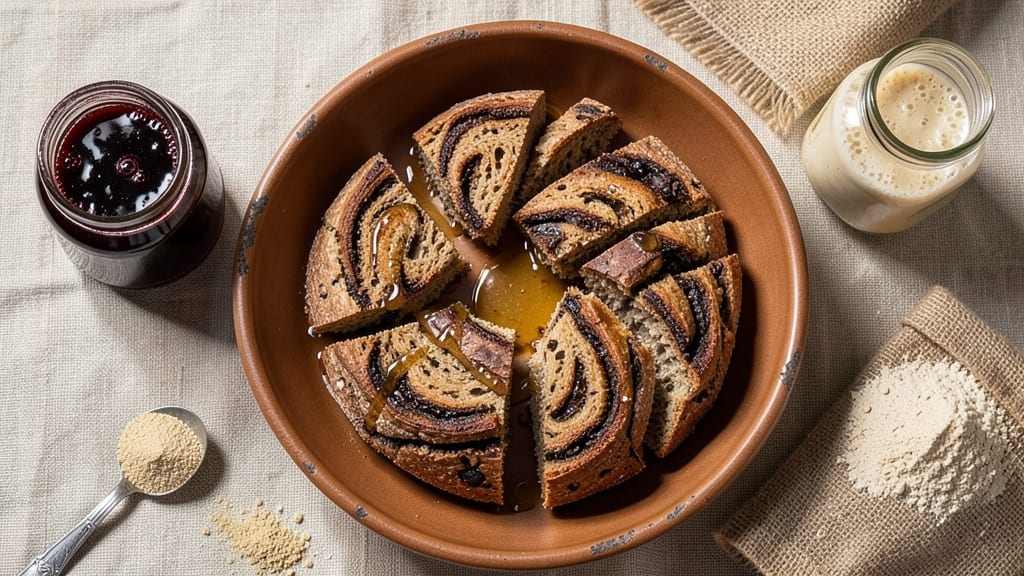
This artisan pumpernickel bread recipe delivers the deep molasses flavor and signature crusty crunch you crave—perfect for sandwiches, toast, or serving alongside soups. The secret lies in a long fermentation process that develops rich, complex flavors while creating that signature dense yet slightly chewy texture.
I’ve refined this recipe over years of baking, balancing traditional techniques with modern shortcuts to make it achievable for home bakers.
The bread begins with a robust sour dough starter, which is the foundation of its distinctive taste. After mixing the dough with whole wheat flour, molasses, and a touch of honey, it undergoes a slow fermentation—at least 12 hours, but overnight is ideal.
This patience pays off in the final product: a loaf with a dark, crackly crust and a moist, flavorful interior that’s packed with molasses sweetness and subtle spice notes.
What sets this recipe apart is the attention to detail during shaping and baking. The dough is tightly wrapped and baked at high heat to create that coveted crust, while the interior remains tender and flavorful.
The result is a loaf that’s hearty enough to stand up to hearty fillings but delicate enough to enjoy on its own. Whether you’re a seasoned baker or new to bread-making, this recipe delivers professional-quality results.
Once baked, the bread improves with age, developing even deeper flavors over the next few days. Store it wrapped at room temperature for up to a week, or freeze slices for quick toast.
Perfect for breakfast, lunch, or as a centerpiece for any meal, this pumpernickel bread is a labor of love that’s well worth the effort.
Ingredients for artisan pumpernickel bread
Pantry staples plus a few specialty touches for that signature pumpernickel depth.
| Ingredient | Amount | Notes |
|---|---|---|
| Active Sourdough Starter 🍞 | 2 cups | Unfed, 100% hydration |
| Whole Wheat Flour 🌾 | 3 cups | Unbleached, high protein |
| All-Purpose Flour 🌾 | 1 cup | For structure and rise |
| Dark Molasses 🍯 | ½ cup | Pure, unsulphured preferred |
| Honey 🍯 | ¼ cup | Pure, unprocessed |
| Active Dry Yeast 🍞 | ¼ tsp | Or 1 tsp instant yeast |
| Warm Water 💧 | 1 ½ cups | 105-110°F, not boiling |
| Sea Salt 🧂 | 1 ½ tsp | Fine grain preferred |
| Ground Cinnamon 🌿 | ½ tsp | For subtle warmth |
| Ground Cloves 🌶️ | ¼ tsp | Freshly ground for depth |
| Cornmeal 🌽 | ¼ cup | For dusting baking sheet |
| Large Egg 🥚 | 1 whole | For egg wash |
| Sesame Seeds 🌻 | 1 tbsp | Optional for topping |
The sourdough starter is non-negotiable here—it’s what gives that tangy, complex flavor. King Arthur or Bob’s Red Mill flours work best for the whole wheat base, but any high-protein flour will do. For molasses, Goya or Anthony’s Goods are my go-tos—they’re pure and unsulphured. If you’re new to sourdough, grab a small jar of active starter from Whole Foods or your local bakery to kickstart yours. The yeast is just insurance for the long fermentation; the starter’s wild yeast does most of the work. Look for cinnamon and cloves in the spice aisle—freshly ground cloves make a world of difference, but pre-ground works in a pinch.
No molasses? Blackstrap syrup at half the amount gets you close, but the flavor won’t be identical. Short on whole wheat flour? Substitute rye flour for 1 cup—it’s got that deep, earthy note. Running low on yeast? Skip it entirely; the starter’s fermentation will handle it. For the egg wash, water + 1 tsp oil works if you’re avoiding eggs. Sesame seeds are optional but add a nice crunch—if you skip them, a sprinkle of poppy seeds works too. The cornmeal is just for dusting; if you’ve got semolina, use that instead.
This dough is all about patience. Once mixed, it needs 12-18 hours to ferment at room temp—cover it with a damp towel to keep it moist. For storage, wrap the baked loaf tightly in parchment paper and foil; it’ll keep for 5-7 days at room temp. To revive stale slices, warm them in a 350°F oven for 5 minutes. Freeze slices for up to 3 months—just toast straight from frozen. The flavor actually improves over time, so make extra if you can.
Why You'll Love This Recipe
- No-Knead Magic: I swear by this—just mix, let it rise overnight, and bake. The sourdough starter does all the heavy lifting while you sleep, so you’re not stuck at the counter for hours.
- Deep, Rich Bite: That dark molasses and honey combo? It’s like a slow dance of flavors—slightly sweet, earthy, and just a hint of smoky depth. Every slice tells a story.
- Meal Prep Hero: Slice it fresh for toast, freeze the rest for quick breakfasts later. Honestly, I keep a loaf in the freezer just for lazy mornings—no reheating needed, just toast straight from frozen.
- Budget-Friendly Staple: Whole wheat flour and molasses stretch my grocery budget, and one loaf lasts my family a week. Plus, the sourdough starter means I’m not buying pricey yeast every time. Win-win.
Step-by-step instructions for artisan pumpernickel bread
Here's how to craft that signature dark, molasses-rich loaf with a crisp exterior and tender crumb.
Combine Wet Ingredients and Hydrate the Dough
In a large mixing bowl, whisk together the 2 cups active sourdough starter, 0.5 cup dark molasses, 0.25 cup honey, 1.5 cups warm water (between 105-110°F), and 1.5 tsp sea salt. The molasses will thicken slightly as it cools—this is normal. Let this mixture sit for 10 minutes while you prepare the dry ingredients.
This step is where the deep flavor begins. The warm water activates the yeast in your starter while the molasses and honey create that signature sweet-savory balance. If using instant yeast instead, dissolve it directly in the warm water first to ensure full activation.
Mix and Knead the Dough
Add the 3 cups whole wheat flour, 1 cup all-purpose flour, 0.5 tsp ground cinnamon, and 0.25 tsp ground cloves to the wet mixture. Use a wooden spoon to stir until a shaggy dough forms, then turn it out onto a lightly floured surface. Knead for 8-10 minutes until the dough becomes smooth and elastic but still slightly sticky.
Whole wheat flour absorbs more moisture than all-purpose, so don't be tempted to add extra flour during kneading. The dough should be soft but cohesive—if it feels too dry, add 1 tablespoon warm water at a time. The cloves and cinnamon will infuse subtle warmth, but don't worry if they don't fully dissolve during mixing.
Bulk Ferment for Maximum Flavor
Shape the dough into a loose ball and place it in a lightly oiled bowl, covering it with a damp kitchen towel. Let it ferment at room temperature for 4-6 hours or until it has nearly doubled in size. The dough should feel spongy and jiggly when gently pressed.
This long fermentation develops the complex flavors that make pumpernickel special. Check the dough after 3 hours—if it's rising slowly, move it to a slightly warmer spot (like near the oven with the light on). The molasses and honey will create a sticky surface, so use wet hands when handling the dough to prevent sticking.
Shape and Cold Proof
Turn the dough out onto a lightly floured surface and gently deflate it. Shape into a 9x5-inch loaf by folding the sides toward the center and rolling it tightly. Place the loaf seam-side down on a parchment-lined baking sheet dusted with 0.25 cup cornmeal. Cover and refrigerate for 12-24 hours to develop flavor and structure.
The cold proof intensifies the molasses flavor and tightens the gluten for a better oven spring. For best results, let it proof overnight. Before baking, brush the loaf with a beaten whole large egg and sprinkle with 1 tbsp sesame seeds for that classic pumpernickel crunch.
Bake to Deep Color and Crisp Crust
Preheat your oven to 375°F. Bake the loaf for 50-55 minutes until the internal temperature reaches 205-210°F and the crust is deep brown with crackly edges. If the top browns too quickly, tent loosely with foil after 30 minutes to prevent over-browning.
This bread continues cooking as it cools, so remove it from the oven when it reaches 200°F internal temperature. Let it cool on a wire rack for at least 2 hours before slicing—this prevents a gummy texture. The longer it rests, the more flavor develops, so be patient. Slice with a serrated knife for clean cuts through the dense crumb.
Pro Tips For Making Artisan Pumpernickel Bread
- Autolyse First: Mix the whole wheat flour and water before adding your starter or other ingredients—let it sit for 30 minutes. I used to skip this, but it makes the dough way easier to handle, especially with the dense whole wheat. The gluten relaxes, and you’ll thank yourself when kneading feels less like wrestling.
- Test Starter Strength: Your sourdough starter should float in water before using—if it doesn’t, bulk ferment longer or feed it more aggressively. I learned this the hard way when my bread turned dense and bland; a weak starter hides in plain sight. Do the float test the morning of baking.
- Molasses First, Then Honey: Dissolve the dark molasses in warm water before adding honey—this prevents clumping and ensures even distribution. I was lazy once and mixed them dry, and the bread had weird, sticky pockets. A quick whisk in warm water solves that.
- Steam the First 20 Minutes: Use a Dutch oven with boiling water on the bottom for the first 20 minutes of baking—this creates steam and gives you that deep, crackly crust. I tried skipping it once, and the top stayed dull and flat. Trust me, the extra 5 minutes of setup is worth it.
Flavor customization for artisan pumpernickel bread
Sweetness Control
Adjust the molasses-to-honey ratio to fine-tune sweetness. For a richer, deeper flavor, increase molasses to ⅔ cup while reducing honey to 2 tbsp. For a milder, more balanced loaf, cut molasses to ¼ cup and add 3 tbsp honey—this creates a smoother, caramel-like sweetness.
I’ve found that unsulphured molasses (like Anthony’s Goods) enhances depth without bitterness. 🍯
Spice Variations
Swap or add spices to create unique flavor profiles. For a winter spice twist, replace cloves with ½ tsp ground allspice and ¼ tsp nutmeg—this adds warmth without overpowering. A Mediterranean-inspired version works with ½ tsp ground coriander and ¼ tsp cardamom, giving a citrusy brightness.
Always toast whole spices briefly in a dry pan before grinding to unlock deeper aromas. 🌶️
Flour Substitutions
Experiment with flour blends to alter texture and flavor. For a lighter crumb, replace 1 cup whole wheat flour with 1 cup bread flour—this improves rise and tenderness.
A 100% rye version (swap all whole wheat with rye flour) delivers a denser, earthier loaf with a deeper molasses flavor. If avoiding gluten, use a 1:1 gluten-free flour blend (like Bob’s Red Mill 1-to-1) but expect a slightly gummier texture. 🌾
Crust Enhancements
Elevate the crust with simple additions. For a crunchy top, sprinkle 2 tbsp coarse sugar on the dough before baking—it caramelizes beautifully. A savory crust uses 1 tbsp smoked paprika mixed into the egg wash.
For a rustic look, score the dough with a razor blade in a crosshatch pattern before baking. I love the contrast of a dark molasses crust with a lightly toasted sesame seed finish. ✨
Dairy-Free Adaptations
Make this bread vegan with minimal adjustments. Replace the egg wash with 1 tbsp aquafaba (chickpea brine) or 1 tbsp melted coconut oil mixed with 1 tsp water. For extra richness, brush with 2 tbsp melted vegan butter after baking.
The molasses and honey already provide natural sweetness, so no substitutions are needed there. This version keeps all the depth while being completely plant-based. 🌱
Storage and Revival
Extend freshness with smart storage techniques. Wrap cooled loaves in beeswax wrap (instead of plastic) to retain moisture while allowing airflow. For quick revival, warm slices in a toaster oven at 325°F for 3 minutes—this restores crispness without drying.
Freeze unsliced loaves for up to 3 months; thaw at room temp and rewarm in a 200°F oven for 10 minutes to reactivate the crust. 💫
Nutrition facts
Frequently asked questions
Can I make this pumpernickel bread without a sourdough starter?
Yes! For beginners, use 1 packet (2¼ tsp) active dry yeast instead of the starter. Dissolve it in the warm water with 1 tbsp sugar to activate, then proceed with the recipe. The flavor won't be identical (it'll be less tangy), but you'll still get that signature molasses-rich loaf. For a more authentic taste, try making a quick starter with 1 cup flour + 1 cup water fermented for 24 hours before using.
Why does my pumpernickel bread taste too sweet?
The molasses and honey are the main culprits! To balance sweetness, reduce molasses to ¼ cup and honey to 2 tbsp while adding ½ tsp extra cinnamon to enhance warmth. For a more traditional flavor, let the bread sit 3-4 days before eating—the flavors mellow and deepen over time. If it's still too sweet, try adding 1 tsp black coffee granules to the dough to cut through the sweetness.
How do I prevent a dense, heavy loaf?
Over-kneading or skipping fermentation are the usual culprits. Knead just until the dough is smooth (8-10 minutes), and don't add extra flour—whole wheat dough needs moisture. For best results, ferment at room temp for 4-6 hours (not overnight) before cold-proofing. Also, bake at 375°F until internal temp reaches 205-210°F—underbaking makes bread gummy. A lighter crumb comes from using bread flour instead of all-purpose.
Can I bake this in a Dutch oven for a better crust?
For an even crustier exterior, shape the dough into a round boule (instead of a loaf) and bake in a preheated Dutch oven at 450°F for 20 minutes, then remove the lid and bake 25-30 minutes more. The steam creates a thick, crackly crust while keeping the interior moist. Brush with egg wash and sprinkle sesame seeds after removing from the Dutch oven for extra crunch.
What's the best way to serve this bread?
Toast thick slices for breakfast with butter and jam, or use for Reuben sandwiches with corned beef and sauerkraut. For a sweet option, spread with cream cheese and smoked salmon, or make French toast with cinnamon and maple syrup. The dense texture holds up well to hearty toppings—try it with avocado and chili flakes for a savory twist. Store-bought versions often lack the depth, so this homemade loaf shines in any application!