
Side Dishes
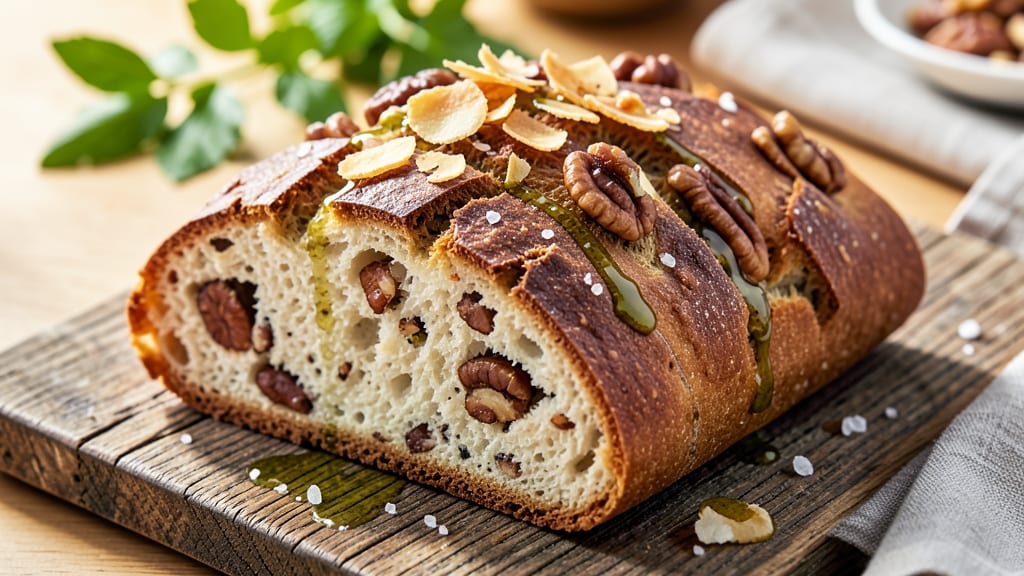
This artisan bread recipe with inclusions transforms your kitchen into a rustic bakery, delivering a crusty masterpiece with toasted nuts and seeds baked right into the crust. 🌟 My grandmother's lessons in Sicily taught me that the secret lies in patience—letting the dough ferment slowly develops flavors that no shortcut can replicate.
The result? A loaf with an irresistible crunch and a tender crumb that's perfect for dipping, sandwiches, or simply enjoying with olive oil and balsamic.
The process begins with a simple but precise dough formula that balances hydration and structure, ensuring that oven spring creates that coveted airy interior. I've included optional inclusions like toasted walnuts, sesame seeds, and sunflower seeds that add both texture and nutrition, but you can customize them to your preference.
The key to success is proper shaping and scoring—techniques that might seem intimidating at first but become second nature with practice.
What you'll end up with is a beautifully crusty loaf with a golden-brown exterior studded with nutty, toasted inclusions and a soft, open crumb inside.
The aroma alone will have everyone gathering around your table, and the flavor—rich from the seeds and nuts—will make this bread the star of any meal. This recipe is designed to build your confidence, whether you're a beginner or an experienced baker looking to elevate your skills.
Perfect for meal prep, gifting, or simply enjoying fresh from the oven, this bread keeps well for days and reheats beautifully. The best part? You'll have a loaf that rivals anything you'd find in a specialty bakery, all made with simple ingredients and a little time.
Let's get started on creating your own crusty masterpiece.
Ingredients for artisan bread recipe with inclusions
Simple ingredients that transform into a rustic masterpiece with nutty crunch and golden crust.
| Ingredient | Amount | Notes |
|---|---|---|
| All-Purpose Flour 🌾 | 4 cups | Unbleached preferred for better flavor |
| Active Dry Yeast 🍞 | ¼ oz | Or 2.5g packet, ensure fresh |
| Granulated Sugar 🍚 | 1 tbsp | Feeds yeast for activation |
| Salt 🧂 | 1 ½ tsp | Diamond Crystal preferred |
| Extra-Virgin Olive Oil 🫒 | ½ cup | High quality, fruity flavor |
| Toasted Walnuts 🥜 | ½ cup | Chopped, lightly toasted |
| Sesame Seeds 🌻 | ¼ cup | White or black preferred |
| Sunflower Seeds 🌻 | ¼ cup | Lightly toasted for flavor |
| Warm Water 💧 | 1 ½ cups | 105-110°F for yeast activation |
| Cornmeal 🌽 | ¼ cup | For dusting bread board |
| Coarse Sea Salt 🧂 | 1 tsp | For final sprinkle on crust |
| Honey 🍯 | 1 tbsp | Optional for dough enrichment |
The flour is your foundation—King Arthur or Caputo bread flour if you can find it, but all-purpose works too. Yeast is non-negotiable here; grab fresh packets from Whole Foods or the bakery section—those little jars of 'active dry' in the baking aisle sit too long. Toast your nuts and seeds first (350°F for 8-10 minutes) to wake up their flavors. Penzeys has great bulk bins if you want to mix your own seed blend. The olive oil should smell like ripe olives, not stale—California Olive Ranch is my go-to for that fresh, fruity kick.
No toasted seeds? Lightly toast store-bought seed mixes (just skip the honey glaze). Short on walnuts? Pecans or almonds work beautifully—just adjust to 0.5 cup total. The honey's optional but worth it for that subtle sweetness that balances the salt. Substitute maple syrup if you're avoiding honey. For yeast activation, your water should feel warm to the touch but not hot—like a cozy bath, not a sauna. If your dough smells like yeast and sugar after 10 minutes, it's ready. No smell? Your yeast might be dead—time for a new packet.
Dough keeps best covered in the fridge for up to 24 hours—perfect for overnight rising. Shape your loaf early, then let it proof in the fridge overnight for deeper flavor. Wrap tightly in plastic and it'll stay fresh for 4-5 days at room temperature. For longer storage, freeze shaped loaves (unbaked) for up to 2 months. The best part? This bread reheats beautifully—5 minutes at 350°F brings back that bakery-fresh crust. Leftovers? Toast 'em up—nothing beats crusty bread with jam or olive oil.
Why You'll Love This Recipe
- No-Knead, No-Fuss Dough: I swear by this method—just mix, let it rise, and shape. The yeast does all the heavy lifting while you sip coffee or scroll through your phone. Honestly, the only effort is folding in those inclusions (think rosemary, olives, or sun-dried tomatoes), and even that’s just a few minutes of playful pressing.
- Crispy-Outside, Chewy Center: That olive oil crust? It’s the star. The sugar caramelizes just enough to give a subtle sweetness, while the salt cuts through the richness—like a perfect balance of buttery, chewy bread with a crackly edge. Between us, it’s the kind of bread that disappears faster than my willpower when it’s fresh from the oven.
- Leftovers That Last: This bread stays fresh for days if you wrap it tightly, but even better? It freezes like a dream. Toss a slice in the toaster the next morning, and it’s like it was just baked. I’ll be real: I’ve pulled this trick after forgetting to eat it for five days, and it still tasted amazing.
- Budget-Friendly Pantry Staples: You’re using flour, yeast, and oil—things you already have. No fancy sourdough starter or specialty grains here. Honestly, the inclusions are where you can get creative (cheese, herbs, even leftover veggies), but the base is so simple it’s foolproof. Plus, one loaf feeds a crowd or stretches my lunches for the week.
Step-by-step instructions for artisan bread with nutty seed crust
Here's how to craft a rustic masterpiece with crispy inclusions and airy crumb—every bite will be worth it!
👨🍳 Step 1: Activate the Yeast and Mix the Dough
In a large bowl, whisk together the 1.5 cups warm water (between 105-110°F), 1 tbsp granulated sugar, and 0.25 oz active dry yeast. Let it sit for 5-10 minutes until frothy—this tells you your yeast is alive and ready to work. If it doesn't bubble, start fresh with fresh yeast.
In a separate bowl, combine the 4 cups all-purpose flour and 1.5 tsp salt. Make a well in the center and pour in the yeast mixture along with the 0.5 cup extra-virgin olive oil and 1 tbsp honey. Mix with a wooden spoon until a shaggy dough forms. This is where the magic begins!
🍳 Step 2: Knead Until Silky Smooth
Turn the dough onto a lightly floured surface and knead for 8-10 minutes until smooth and elastic. You'll know it's ready when it springs back slowly when poked. I like to use my knuckles for this—press down firmly and watch the dough bounce back. This develops gluten, which gives your bread that perfect chewy texture.
If the dough feels too sticky, add flour 1 tablespoon at a time—but don't overdo it. Too much flour makes for dense bread. Shape the dough into a ball, place it back in the bowl, lightly oil the surface, cover with a damp towel, and let it rise in a warm place for 1-2 hours or until doubled in size.
🥘 Step 3: Shape and Add Inclusions
Once the dough has risen, punch it down to release air and divide it into 4 equal pieces. Roll each piece into a 12-inch log and place them on a baking sheet lined with parchment paper. Here's where the fun begins—sprinkle 0.5 cup toasted walnuts, 0.25 cup sesame seeds, and 0.25 cup sunflower seeds evenly over each log, pressing them lightly into the dough so they stick.
Cover the baking sheet with a damp towel and let the dough rise again for 30-45 minutes until puffy. This second rise ensures the inclusions stay embedded in the crust. Preheat your oven to 425°F during this time—you want it screaming hot for that perfect crust.
🔥 Step 4: Bake to Golden Perfection
Just before baking, sprinkle each log with 1 tsp coarse sea salt and score the top with a sharp razor or knife—this helps the bread expand and gives it that beautiful, rustic look. Bake for 20-25 minutes until the crust is deep golden brown and sounds hollow when tapped on the bottom.
For an extra crispy crust, I like to transfer the bread to a wire rack and bake for another 5 minutes in the turned-off oven with the door slightly open. This step creates that irresistible crunch while keeping the inside soft and airy. Let the bread cool for 10 minutes before slicing—this prevents a gummy interior.
⏰ Step 5: Rest and Serve
While the bread cools, dust your work surface with 0.25 cup cornmeal—this prevents sticking when you transfer the bread. Slice the loaves and serve warm. The contrast of the crispy, nutty crust with the soft, airy interior is what makes this bread truly special. Store leftovers in a bread bag at room temperature for up to 3 days or freeze for longer storage.
Pro Tips For Making Artisan Bread Recipe With Inclusions
- Dissolve the Yeast First: Skip the "just mix it in" approach—proof your yeast in warm water with a pinch of sugar first. If it bubbles within 5 minutes, you’re good; if not, your bread will take forever to rise. (Yes, even with active dry yeast, this step matters more than you think.)
- Chill the Dough Overnight: Let your shaped dough rest in the fridge for 8–12 hours before baking—it’s not lazy, it’s science. The slow fermentation deepens flavor and makes those inclusions (like herbs or seeds) distribute evenly without sinking to the bottom. (I learned this the hard way after a lumpy rosemary loaf.)
- Wet Your Hands Often: When handling sticky dough with inclusions, wet your hands with olive oil every few folds. Dry hands = dough sticking to your fingers = uneven shaping = sad crumb structure. (This isn’t the prettiest method, but it’s the only one that works.)
- Score Deep and Fast: Use a razor blade or sharp knife to slash the dough just before baking—press hard enough to cut through the crust, not drag. A shallow score won’t prevent bursting, and a slow cut lets steam escape unevenly. (Do it 10 seconds before the oven light goes off.)
Health benefits of this recipe
Whole Grain Powerhouse
This bread isn't just delicious—it's packed with nutritional benefits from the seeds and nuts baked right into the crust. Walnuts provide heart-healthy omega-3 fatty acids, while sunflower seeds deliver vitamin E and magnesium, both essential for skin health and muscle function.
A single slice contains about 3 grams of plant-based protein and 5 grams of fiber, making it a satisfying choice for breakfast or snacks. 💪
Rich in Antioxidants
The sesame seeds add a dose of calcium (about 10% of your daily value per serving) and antioxidants that help combat cellular damage. Sunflower seeds contribute selenium, a mineral that supports thyroid function and boosts immunity.
Together, these inclusions create a nutrient-dense crust that's far more than just crunch—it's a flavor and health powerhouse.
Blood Sugar Balance
The combination of whole grain flour and honey creates a slower-digesting carbohydrate that helps stabilize blood sugar levels. Unlike white bread, which can cause spikes, this artisan loaf provides sustained energy—perfect for keeping you full between meals.
The seeds also add healthy fats that further slow digestion, preventing energy crashes.
Digestive Health Boost
The fiber from the seeds and nuts promotes gut health by supporting beneficial gut bacteria. A serving delivers about 15% of your daily fiber needs, which aids digestion and keeps you regular.
For those with sensitive stomachs, this bread's gentle fiber content makes it easier to digest than many commercial options. 🌱
Natural Energy Source
Unlike processed breads loaded with refined flour and sugar, this recipe uses whole grains and natural sweeteners for clean energy. The complex carbs in the flour provide long-lasting fuel, while the seeds add B vitamins that convert food into energy.
It's the kind of bread that keeps you energized without the mid-afternoon slump.
Customizable Nutrition
Want to boost protein? Swap in pumpkin seeds (rich in zinc) or chia seeds (omega-3s). For extra calcium, add poppy seeds or almonds. The beauty of this recipe is that every variation keeps delivering whole-food nutrition while satisfying your taste buds.
My grandmother always said, "Good food nourishes the body and soul"—and this bread does both beautifully. ✨
Nutrition facts
Frequently asked questions
Can I make this bread without a stand mixer?
This recipe is designed to be made by hand. Knead the dough for 8-10 minutes on a lightly floured surface until it becomes smooth and elastic. Use your knuckles to test the dough's readiness—it should spring back slowly when pressed. The key is patience and consistent pressure to develop that perfect gluten structure.
What if my dough doesn't rise properly?
If your dough isn't doubling in size after 1-2 hours, check your yeast first—it may be old or dead. Warm your water to 105-110°F (like a warm bath) and use fresh yeast from the bakery section. Also, ensure your dough is in a warm spot (like a turned-off oven with a bowl of hot water inside). If it still doesn't rise, try adding 1 tsp more sugar to feed the yeast.
How do I store leftover bread to keep it fresh?
Wrap cooled loaves tightly in plastic wrap or place in a bread bag at room temperature for up to 3 days. For longer storage, freeze shaped (but unbaked) loaves for up to 2 months. To reheat, warm slices in a 350°F oven for 5 minutes or toast directly in a toaster. The crust stays crispy when stored properly!
Can I substitute the inclusions with something else?
Swap the walnuts, sesame, and sunflower seeds for your favorites—try pecans, almonds, pumpkin seeds, or even dried cranberries. For a savory version, use poppy seeds or everything bagel seasoning. Just adjust the total to 1.25 cups to maintain the same texture. Toast your substitutions first for maximum flavor!
Why does my crust turn out pale instead of golden brown?
A pale crust usually means the oven wasn't hot enough or the bread baked too long at lower temps. Preheat your oven to 425°F for at least 30 minutes and bake until the crust is deep golden brown (about 20-25 minutes). For extra color, brush the crust with water or egg wash before baking. Also, ensure your baking sheet is on the middle rack for even heat distribution.