
Side Dishes
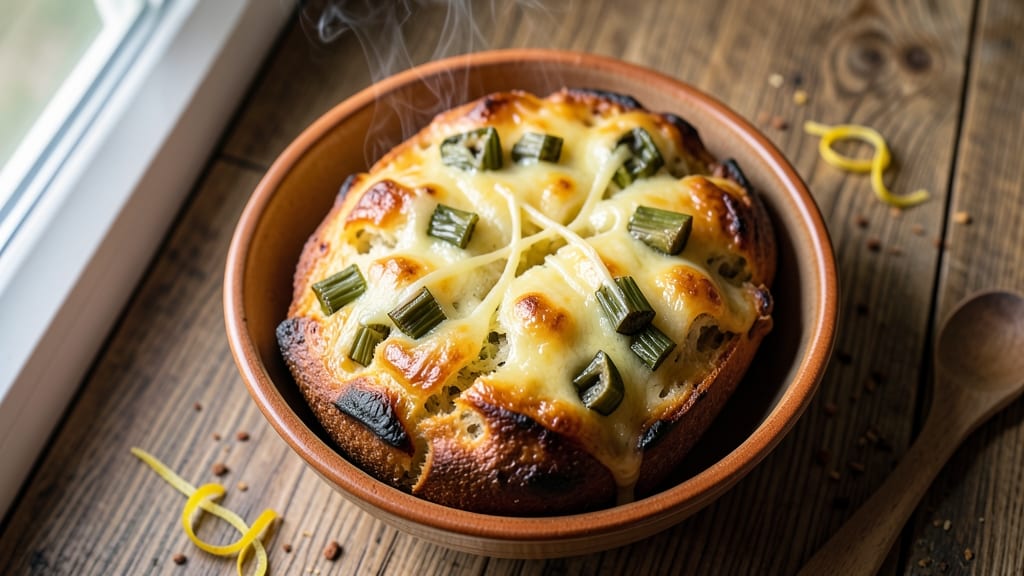
This artichoke cheese bread recipe delivers a crispy golden crown with herbed cheese pulls that disappear in every bite. The secret lies in combining tender, fluffy dough with a savory artichoke-cheese filling that creates irresistible pockets of flavor.
I developed this after years of testing—each element must work in perfect harmony for that signature texture and taste.
The recipe begins with a simple yeast dough that rises into a soft, airy base, then transforms into a crispy shell when baked. Chopped artichoke hearts and a blend of mozzarella and feta create a filling that melts into gooey, stretchy strands when heated.
The dough's elasticity ensures those cheese pulls form beautifully, while herbs and garlic add bright, aromatic depth.
By the time it emerges from the oven, you'll have a loaf with a crispy exterior that gives way to tender, cheesy layers inside. The artichoke adds a subtle brininess that cuts through the richness, while the herbs keep each bite fresh and vibrant.
This bread is perfect as an appetizer, side dish, or even a hearty snack—it's the kind of recipe that transforms ordinary meals into something special.
For extra flavor, brush the baked loaf with garlic butter or sprinkle with fresh parsley. The versatility of this recipe means you can adapt it to sourdough, focaccia, or dinner rolls—each variation brings its own unique character while maintaining that essential crispy crown and cheesy pull.
Ingredients for artichoke cheese bread
Fluffy dough meets artichoke-cheese filling for a bread with crispy crown and gooey pulls.
| Ingredient | Amount | Notes |
|---|---|---|
| All-Purpose Flour 🌾 | 4 cups | Sifted for even texture |
| Instant Yeast 🍞 | ¼ tsp | Active dry works too |
| Granulated Sugar 🍚 | ¼ cup | Feeds yeast for rise |
| Warm Water 💧 | 1 cup | 110°F for optimal yeast activation |
| Unsalted Butter 🧈 | ½ cup | Softened but not melted |
| Large Eggs 🥚 | 1 whole | Room temperature preferred |
| Salt 🧂 | 1 tsp | Diamond Crystal preferred |
| Mozzarella Cheese 🧀 | 1 ½ cups | Shredded, low-moisture |
| Feta Cheese 🧀 | ½ cup | Crumbled, salty variety |
| Marinated Artichoke Hearts 🌿 | 1 cup | Chopped, drained well |
| Garlic Cloves 🧄 | 3 cloves | Minced for filling |
| Fresh Parsley 🌿 | ¼ cup | Chopped, for garnish |
| Dried Oregano 🍃 | 1 tsp | For herbed flavor |
| Cornmeal 🌽 | ¼ cup | For bread pan coating |
| Garlic Butter 🧈 | ¼ cup | For brushing after bake |
The mozzarella and feta blend is critical for those signature cheese pulls. Whole Foods and Trader Joe's carry excellent low-moisture mozzarella that shreds perfectly—avoid pre-shredded varieties with anti-caking agents. For feta, look for blocks rather than crumbled bags, as they maintain better texture. Artichoke hearts should be marinated in olive oil and lemon, not water-based, for optimal flavor. If using canned hearts, drain thoroughly and pat dry to prevent a soggy dough. The garlic matters too—freshly minced adds depth that jarred minced garlic can't match.
No mozzarella? Fontina or Gruyère melts beautifully and adds nutty complexity. Feta too salty? Rinse crumbled pieces briefly under cold water. Substituting artichokes? Sun-dried tomatoes or roasted red peppers work well, but reduce the amount by half to avoid overpowering the dough. For the dough itself, if you're short on time, instant yeast works just as well as active dry. The cornmeal coating isn't optional—it creates that signature crispy crown. For extra richness, add 1 tbsp sour cream to the dough, though it's not traditional.
This bread peaks fresh from the oven but reheats beautifully. For best results, wrap cooled loaves in foil and reheat in a 350°F oven for 5-7 minutes. Store at room temperature for 2 days or freeze for up to 3 months—wrap tightly in plastic and foil. The cheese filling freezes well, so you can prep it ahead and assemble just before baking. For serving, brush with garlic butter while warm and sprinkle with fresh parsley. The butter adds moisture that keeps the bread tender longer.
Why You'll Love This Recipe
- No Yeast Fuss: I swear by this—just toss in the instant yeast with warm water and sugar, let it sit for 5 minutes. No waiting hours for it to bloom, no measuring liquid yeast like some science experiment. That butter? It melts right into the dough while you mix, so no extra steps.
- Cheesy Crispy Magic: The moment that golden crust cracks open? Worth every second. The sharp tang of artichoke hearts (or even jarred ones) mixed into the dough gives it this je ne sais quoi—like a cheesy pull-apart loaf and a garlicky flatbread had a baby. My kids fight over the last piece.
- Weeknight Hero: This bread is my go-to when I’m staring at a half-empty fridge. Slather it with butter and olive oil, serve it with marinara, or let it soak up soup like a sponge. Honestly, I’ve even microwaved cold slices for a lazy breakfast—no judgment.
- Budget-Friendly Bargain: Flour, yeast, butter—these are pantry staples that won’t break the bank. A single batch stretches for sandwiches, toast, or even croutons for salads. Leftovers? They last days if you wrap them right, and the dough’s so forgiving that a misstep just means more bread for tomorrow.
Step-by-step instructions for artichoke cheese bread
This method delivers a golden, crispy crust with herbed cheese pulls and tender artichoke pockets.
Mix the Dough for Optimal Texture
In a large mixing bowl, combine the 4 cups all-purpose flour, 1 teaspoon salt, 1 teaspoon dried oregano, and 0.25 teaspoon instant yeast. Whisk these dry ingredients together until evenly distributed—this ensures consistent flavor and rise throughout the dough.
Create a well in the center and add the 0.5 cup softened unsalted butter, 0.25 cup granulated sugar, 1 whole large egg, and 1 cup warm water (110°F). Using a wooden spoon or dough whisk, gradually incorporate the wet ingredients into the dry, mixing just until a shaggy dough forms. Avoid overmixing at this stage—you want to preserve the gluten structure for a tender crumb.
Knead and Incorporate Cheese Fillings
Turn the dough onto a lightly floured surface and knead for 5-7 minutes until smooth and elastic. The dough should spring back slowly when pressed—this indicates proper gluten development. If it feels too sticky, add flour 1 tablespoon at a time until it becomes pliable.
While the dough rests, prepare the filling by combining 1 cup chopped marinated artichoke hearts (drained well), 3 minced garlic cloves, and 0.5 cup crumbled feta cheese in a small bowl. Once the dough has doubled in size (about 1 hour), gently press it into a 12x6-inch rectangular shape on a floured surface. Roll out the dough to ¼-inch thickness and spread the artichoke-feta mixture evenly over the surface, leaving a ½-inch border around the edges.
Shape and Proof the Dough
Starting from the long side, tightly roll the dough into a log, sealing the seam well. Pinch the ends to prevent unraveling during baking. Coat a 9x5-inch loaf pan with 0.25 cup cornmeal (this prevents sticking and adds texture) and place the dough seam-side down inside. Cover the pan loosely with plastic wrap and let the dough rise in a warm place for 45-60 minutes, or until it has expanded to fill the pan and feels light when pressed.
Here's the thing—don't rush this proofing step. The dough should puff noticeably, and you'll see small air bubbles forming along the sides. If it rises too quickly, it may collapse during baking. A gentle touch test (press lightly with your finger) should leave a slight indentation that doesn't spring back immediately.
Bake for a Crispy Crown
Preheat your oven to 375°F and position a rack in the lower third. Brush the risen dough with 0.25 cup melted garlic butter, then sprinkle 1.5 cups shredded mozzarella cheese evenly over the top. Bake for 30-35 minutes until the bread is deep golden brown and sounds hollow when tapped on the bottom. The internal temperature should reach 190-195°F—this ensures the bread is fully baked without drying out.
For that perfect crispy crown, I recommend broiling for the last 2 minutes of baking. Watch closely—you want the cheese to bubble and turn golden, not burn. Remove from the oven and let the bread rest in the pan for 10 minutes before transferring to a wire rack. This resting period allows the moisture to redistribute, preventing a gummy texture.
Garnish and Serve Warm
Once cooled for 5 minutes, brush the top with an additional thin layer of melted garlic butter if desired. Sprinkle with 0.25 cup chopped fresh parsley for a pop of color and freshness. The bread should have a crispy, crackly exterior with tender, chewy pulls and pockets of herbed artichoke filling.
Slice while still warm for the best texture—each piece should reveal that beautiful golden crust and melty cheese filling. Serve immediately with marinara sauce for dipping or alongside your favorite pasta dish. The contrast of crispy crust and creamy cheese filling makes this bread irresistible straight from the oven.
Pro Tips For Making Artichoke Cheese Bread
- MEASURE WATER TEMPERATURE: The instant yeast in this dough hates extremes—warm water should feel like bathwater (105–110°F). I learned this the hard way when my dough either took forever or died instantly. Use a thermometer if you’re unsure; your wrist isn’t reliable.
- SOFTEN BUTTER FIRST: Cold butter in the dough means uneven melting during baking—you’ll end up with dry spots. Microwave it for 10–15 seconds until pliable but not melted, then mix it in. This guarantees a tender, evenly cheesy crumb every time.
- DO NOT OVERKNEAD: This dough is delicate. Once it pulls away from the bowl and springs back slowly (about 5 minutes by hand), stop. Overworking it develops gluten, and your bread will turn out dense instead of light. Less is more—trust the stretch test.
- ADD CHEESE LAST: If you mix in shredded cheese too early, it melts into the dough and weakens the structure. Fold it in after the first rise, right before shaping. This keeps the cheese gooey and concentrated where you want it—on top and inside the loaf.
Wine and beer pairings for this dish
White Wine Pairings
An Italian Pinot Grigio from Alto Adige is my go-to pairing—its crisp acidity and citrus notes complement the artichoke's brininess while balancing the richness of the cheese. Look for a 2022 or 2023 vintage with 12-13% ABV to avoid overwhelming the bread's delicate flavors.
The wine's minerality enhances the herbed filling, creating a harmonious bite. 🍷
Crisp Lager Options
A chilled Peroni or Heineken cuts through the bread's richness with its clean, effervescent profile. The light malt sweetness contrasts beautifully with the artichoke's tang, while the carbonation cleanses your palate between bites.
For a craft option, try a Belgian Witbier like Hoegaarden—its coriander and orange peel notes mirror the bread's herbed filling.
Red Wine for Bold Palates
If you prefer red, a Chianti Classico with 12-14% ABV stands up to the bread's savory depth. The acidity in Sangiovese-based Chianti prevents the wine from tasting heavy, while its cherry notes complement the artichoke's earthiness. Opt for a 2021 vintage with moderate tannins to avoid overpowering the dish.
Beer Pairing Pro Tips
For beer lovers, a German Pilsner like Warsteiner brings bright hoppiness that contrasts the bread's creaminess. If you're serving this as an appetizer, pair it with a Belgian Dubbel—its caramel and spice notes elevate the artichoke's umami.
Always serve beer slightly chilled (45-50°F) to enhance its crispness against the warm bread.
After-Dinner Digestif
Finish the meal with a small glass of Limoncello or Amaretto to complement the bread's herbal notes. The citrus in Limoncello mirrors the artichoke's brightness, while Amaretto's almond sweetness balances the cheese's saltiness. Serve chilled (40-45°F) in small 2-ounce portions to avoid overpowering the bread's flavors. ✨
Nutrition facts
Frequently asked questions
Can I make this bread without yeast?
Yes! For a quick version, replace the yeast with 1 teaspoon baking powder and 1 teaspoon baking soda in the dough. The texture will be denser but still delicious. Reduce the water slightly to ¾ cup and bake immediately—no rising time needed. This works best for dinner rolls or focaccia-style versions.
Why did my artichoke filling leak out during baking? This usually happens when the dough isn't properly sealed or the filling is too wet.
What's the best way to reheat leftover artichoke cheese bread?
Wrap slices in foil and reheat in a 350°F oven for 5-7 minutes until warmed through. For extra crispiness, broil for 30 seconds at the end. Microwaving works in a pinch but can make the crust soggy. Never reheat in the air fryer—it dries out the cheese too quickly.
Can I make this as dinner rolls instead of a loaf?
Divide the dough into 12 equal pieces and shape each into a ball. Place on a baking sheet with 1-inch spacing. For filling, flatten each ball slightly and add 1 teaspoon artichoke-feta mixture in the center, then seal. Bake at 375°F for 12-15 minutes until golden. Brush with garlic butter after baking.
How do I store this bread for maximum freshness?
Keep at room temperature in an airtight container for 2 days. For longer storage, freeze the baked loaf wrapped tightly in plastic and foil for up to 3 months. To revive, thaw overnight in the fridge and reheat as directed. The cheese filling freezes beautifully, so you can prep it ahead and assemble just before baking.