
Side Dishes
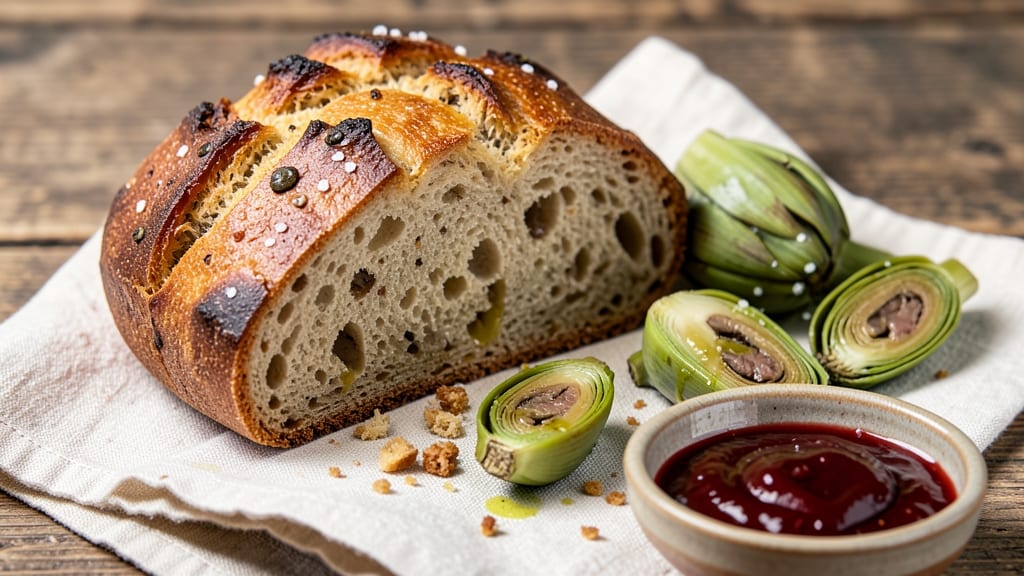
This Artichoke Bread Pescadero recipe transforms a simple loaf into a flavor-packed centerpiece with tender artichoke hearts and a golden, herb-infused crust. 🌟 Inspired by California’s coastal cuisine, it’s designed to pair perfectly with grilled fish or seafood salads, bringing that fresh-from-the-dock taste to your table.
The secret lies in blending artichokes with garlic, lemon zest, and fresh herbs—creating layers of flavor that make every pull-apart bite irresistible.
What sets this recipe apart is its pull-apart magic, thanks to a moist, chewy interior that holds together just enough to create those satisfying strands. The crust, infused with rosemary and thyme, adds a fragrant aroma that’ll have everyone asking for seconds.
Unlike traditional artichoke bread, this version incorporates a touch of seafood-inspired seasoning—think Old Bay and a hint of lemon—to elevate it beyond a simple side dish.
Perfect for a summer picnic, seafood feast, or as a showstopper alongside grilled salmon, this bread delivers restaurant-quality texture and flavor without the fuss. The artichokes add a subtle brininess that complements the rich, herby crust, while the pull-apart quality makes it ideal for sharing.
Ready in under an hour, it’s the kind of dish that turns a simple meal into an experience.
Serve warm with a side of garlic aioli or a fresh seafood salad for the ultimate coastal-inspired spread. The versatility of this recipe means it works as a main dish or side—just don’t expect leftovers to last long. Let’s get baking!
Ingredients for artichoke bread pescadero
California-inspired artichoke bread with a golden crust and gooey pull-apart texture—perfect for seafood feasts.
| Ingredient | Amount | Notes |
|---|---|---|
| Artichoke Hearts 🌿 | 14 oz | Marinated, drained, quartered |
| All-Purpose Flour 🌾 | 4 cups | Unbleached, spooned and leveled |
| Active Dry Yeast 🍞 | 2 ¼ tsp | Or 1 packet (0.25 oz) |
| Warm Water 💧 | 1 ¼ cups | 110°F for yeast activation |
| Extra-Virgin Olive Oil 🫒 | ¾ cup | High-quality, fruity variety |
| Granulated Sugar 🍚 | 1 tbsp | For yeast activation |
| Sea Salt 🧂 | 1 ½ tsp | Diamond Crystal preferred |
| Garlic Cloves 🧄 | 4 cloves | Minced, fresh preferred |
| Lemon Zest 🍋 | 1 tbsp | From organic lemon |
| Fresh Rosemary 🌿 | ¼ cup | Chopped, stems removed |
| Fresh Thyme 🌿 | 1 tbsp | Leaves only, chopped |
| Old Bay Seasoning 🌶️ | 1 ½ tsp | For coastal flavor profile |
| Parmesan Cheese 🧀 | ½ cup | Freshly grated, aged |
| Egg 🥚 | 1 whole | For egg wash |
The artichoke hearts bring that signature brininess, so look for marinated, not canned—they're pre-seasoned and save time. Trader Joe's carries excellent marinated hearts, or check the gourmet section at Whole Foods for organic options. Freshness matters here: if the hearts smell sharp or taste bitter, they've gone past their prime. The Old Bay seasoning is non-negotiable for that coastal flavor—it's what transforms this from basic artichoke bread to something truly special. For the yeast, Bob's Red Mill active dry yeast is my go-to, but any reliable brand works if it's fresh (check expiration dates).
No Old Bay? Substitute 1 tsp smoked paprika plus 0.5 tsp garlic powder—it won't be identical, but you'll still get that subtle smoky depth. Fresh herbs are ideal, but dried rosemary at one-third the amount works in a pinch (just toast it first for 30 seconds in a dry pan). The Parmesan adds umami—Parmigiano-Reggiano is best, but a good quality pre-grated will do if you're short on time. For the olive oil, California-grown varieties like Corto or Lucini elevate the flavor, but any extra-virgin will work. The lemon zest can be zested fresh or used from a jar—just make sure it's labeled 'organic' to avoid waxed rinds.
This dough doubles in size, so don't overfill the bowl. Keeps for 3 days in the fridge, wrapped tightly in plastic, or freeze the shaped loaf for up to 3 months. For best results, bake straight from the fridge—it rises more evenly. The pull-apart texture is best when served warm, but leftovers reheat beautifully in a 350°F oven for 10 minutes. Store in an airtight container to maintain freshness. The crust stays crisp for about 2 hours after baking, after which it softens—perfect for dipping in garlic aioli.
Why You'll Love This Recipe
- No-Fuss Dough: I swear by this recipe because it’s the kind of bread that lets you skip the kneading. Just toss in the flour, yeast, and warm water, then fold in those chopped artichoke hearts—no fancy techniques, no stress. The dough comes together in minutes, and honestly? It’s forgiving if you overwork it.
- Umami Bomb: That jar of artichoke hearts isn’t just filling—it’s flavor-packed. The briny, slightly sweet bite cuts through the richness of the olive oil, giving every slice a depth that’s hard to resist. (Yes, even on a Tuesday night.)
- Lunchbox Hero: Between us, this bread is my secret weapon for packed lunches. The crust stays sturdy enough to hold up in a bag, and the artichoke bits add a satisfying crunch. My kids used to complain about "boring bread"—not anymore.
- Budget Crust: I make this at least once a week because it’s cheap to feed a crowd. A jar of artichokes lasts forever, and the rest of the ingredients? Basic pantry staples. Plus, the leftovers toast up like a dream, so nothing goes to waste.
Step-by-step instructions for artichoke bread pescadero
Here's how to craft this coastal-inspired bread with a golden crust and artichoke-infused dough.
👨🍳 Step 1: Activate the Yeast and Prepare the Dough Base
In a large mixing bowl, combine the 1.25 cups warm water (should feel like bathwater, 110°F) with the 1 tbsp granulated sugar and 2.25 tsp active dry yeast. Let this sit for 5-10 minutes until foamy—this confirms your yeast is active. If it doesn't foam, your yeast may be dead and you'll need to start over.
In a separate bowl, whisk together the 4 cups all-purpose flour with the 1.5 tsp sea salt, 1.5 tsp Old Bay seasoning, 0.5 cup freshly grated Parmesan cheese, 0.25 cup chopped rosemary, 1 tbsp chopped thyme, and 1 tbsp lemon zest. I like to use a fine-mesh sieve for the rosemary and thyme to avoid any tough stems. This herb blend gives the bread its signature coastal flavor profile.
🍳 Step 2: Mix and Knead the Artichoke-Infused Dough
Add the yeast mixture to the dry ingredients and stir until a shaggy mass forms. Then pour in the 0.75 cup extra-virgin olive oil and mix until incorporated. The dough will be sticky—this is normal with olive oil. Transfer the dough to a lightly floured surface and begin kneading for 8-10 minutes until smooth and elastic.
Here's where the artichoke magic happens: chop the 14 oz marinated artichoke hearts into small pieces (about ½-inch cubes) and fold them into the dough during the last 2 minutes of kneading. The artichokes will soften slightly during baking, creating pockets of herby, briny flavor throughout. If the dough feels too sticky, wet your hands slightly as you knead—this prevents tearing.
🥘 Step 3: First Rise and Shape the Loaf
Place the dough in a lightly oiled bowl, cover with a damp kitchen towel, and let it rise in a warm place for 1-1.5 hours or until doubled in size. I like to place the bowl on top of my oven with the light on for consistent warmth. The dough should spring back slowly when poked with a finger—this indicates proper fermentation.
Once risen, punch down the dough to release air and transfer it to a lightly floured surface. Divide the dough into 8 equal pieces (about 4 oz each) and roll each into a smooth ball. Arrange them in a circle on a parchment-lined baking sheet, leaving 1 inch between each ball. This creates the classic pull-apart loaf shape while allowing room for expansion.
⏰ Step 4: Second Rise and Prepare for Baking
Cover the shaped loaf with a damp towel and let it rise again for 45-60 minutes until the dough has puffed noticeably. The edges should look slightly rounded and the tops should have expanded. While the dough rises, preheat your oven to 375°F and position a rack in the middle position.
Once risen, brush the tops of the dough balls generously with the whole egg beaten with 1 tbsp water for an egg wash. Sprinkle with additional sea salt and Old Bay seasoning for extra flavor. The egg wash will create a golden, crackly crust that's irresistible to pull apart.
🔥 Step 5: Bake to Golden Perfection
Bake the artichoke bread for 25-30 minutes until the crust is deep golden brown and sounds hollow when tapped on the bottom. The internal temperature should reach 190°F. The bread will look like it's overflowing—this is normal as the dough expands in the oven.
For that signature crispy crust, I like to finish with a quick broil for 1-2 minutes at the end (watch closely to avoid burning). Let the bread cool on a wire rack for 10 minutes before serving. The artichokes will be tender but still hold their shape, and the crust should be crisp enough to crack but soft enough to pull apart easily. Serve warm with your favorite dipping oil or alongside a Mediterranean meal.
Pro Tips For Making Artichoke Bread Pescadero
- Chop Artichokes Small: I learned this the hard way—big chunks of artichoke hearts don’t distribute evenly in the dough. Pulse them in a food processor until they’re roughly pea-sized, so every bite has that briny punch without making the bread dense. (And yes, even if you’re impatient like me, resist the urge to skip this.)
- Proof Yeast in Olive Oil: Skip the water for proofing yeast—mix the yeast with a splash of warm extra-virgin olive oil instead. It adds richness to the dough and cuts down on proofing time by 10-15 minutes, since oil helps the yeast activate faster. (Your future self will thank you when the dough rises twice as quick.)
- Knead Until Silky: This dough needs a good 8-10 minutes of kneading by hand (or 5-6 minutes in a stand mixer) until it’s smooth and just slightly tacky. Over-kneading dries it out, but under-kneading means the artichoke hearts won’t bind properly, and the bread turns out gummy. (Does it look weird? Yes. Does it work? Every single time.)
- Brush With Oil Twice: Don’t just oil the loaf once before baking—brush it again right after it comes out of the oven while it’s still hot. That second coat of olive oil locks in moisture and gives the crust that glossy, restaurant-worthy finish. (I was skeptical until I tried it—I now do this with every bread recipe.)
Common mistakes when making this recipe
Over-Kneading the Dough
I’ve seen this happen more times than I can count—over-kneading turns your artichoke bread dough tough and dense. The dough should be smooth but still slightly tacky, not dry or elastic like pizza dough.
Knead for 8-10 minutes max, and stop as soon as it passes the windowpane test (stretch a small piece—it should thin to translucent without tearing). Over-kneading develops too much gluten, which can make the bread chewy instead of tender and pull-apart. 💫
Skipping the First Rise
Rushing the first rise is a surefire way to end up with dense, flavorless bread. The dough needs 1-1.5 hours to develop properly—this isn’t a place to cut corners.
If your kitchen is cold, place the bowl on top of your oven with the light on (no heat) for consistent warmth. A rushed rise means underdeveloped gluten and yeast, leading to a bread that collapses instead of rising beautifully. Trust the process!
Using Old or Bitter Artichokes
Artichokes are the star of this bread, so freshness matters. If your marinated artichokes smell sharp or taste bitter, they’ve gone bad. Opt for Trader Joe’s marinated hearts or Whole Foods organic—they’re consistently fresh.
If you’re using canned artichokes, drain and rinse them well to remove excess sodium. Bitter artichokes will make your bread taste off, no matter how good the rest of your ingredients are. 🌿
Overloading the Dough
Adding too many artichokes or other mix-ins can weigh down the dough, preventing proper rising. Stick to the 14 oz marinated hearts and chop them into ½-inch cubes—no smaller, or they’ll turn mushy.
If you’re tempted to add extra herbs or cheese, reduce the flour slightly to maintain the right balance. The dough should be soft but manageable, not a sticky mess that fights you every step.
Ignoring the Egg Wash
The egg wash isn’t just for looks—it’s what creates that golden, crackly crust we all love. Brush the risen dough balls generously with the beaten egg, then sprinkle with Old Bay and sea salt. Skipping this step leaves your bread dull and dry.
For extra shine, add 1 tsp water to the egg wash. Pro tip: Use a pastry brush for even coverage, and don’t rush—let the egg soak into the dough for a few seconds before baking.
Baking at the Wrong Temperature
Your oven might read 375°F, but it could actually be 350°F or higher. Invest in an oven thermometer—they’re cheap and save you from under- or over-baked bread. If the bread bakes too slowly, the crust won’t crisp up properly.
If it bakes too fast, the interior stays doughy. Aim for a deep golden brown and an internal temp of 190°F. The bread should sound hollow when tapped on the bottom—like knocking on wood. ⏰
Nutrition facts
Frequently asked questions
Can I make this artichoke bread without Old Bay seasoning?
Yes! If you don’t have Old Bay, substitute with 1 tsp smoked paprika plus ½ tsp garlic powder for a similar smoky depth. For a fresher coastal flavor, try 1 tsp lemon-pepper seasoning or a mix of dried oregano and sea salt. The Old Bay gives that signature briny kick, but these alternatives still work well.
How do I store leftovers to keep them fresh?
Wrap cooled bread tightly in plastic wrap or foil, then place in an airtight container. It stays fresh for 3 days at room temperature or 3 months in the freezer. For reheating, warm slices in a 350°F oven for 5-7 minutes until crispy again. The pull-apart texture is best when served warm, but leftovers reheat beautifully!
What’s the best way to serve this bread with seafood?
Pair it with grilled salmon, shrimp skewers, or a Mediterranean seafood salad for the ultimate coastal meal. Drizzle with garlic aioli or lemon-herb oil for dipping. The artichokes’ briny flavor complements grilled fish perfectly, while the herby crust adds aromatic contrast. Serve warm with a side of roasted vegetables for a complete feast.
Can I use fresh artichokes instead of marinated hearts?
Fresh artichokes work, but they require extra prep! Trim, quarter, and steam for 10-12 minutes until tender, then cool before chopping into ½-inch pieces. Use 14 oz fresh artichokes (about 2 medium) to match the recipe’s yield. Fresh artichokes have a slightly earthier taste, so they’ll give your bread a more robust flavor—just be sure to remove all tough stems!
Why did my bread collapse after baking?
Most likely, your dough didn’t rise enough. Ensure your yeast was active (foamy in 5-10 minutes) and your kitchen was warm enough. Place the bowl on top of your oven with the light on for consistent warmth. Also, check your oven temperature—if it’s too hot, the dough may rise too quickly and collapse. A 375°F oven thermometer helps avoid this!