
Side Dishes
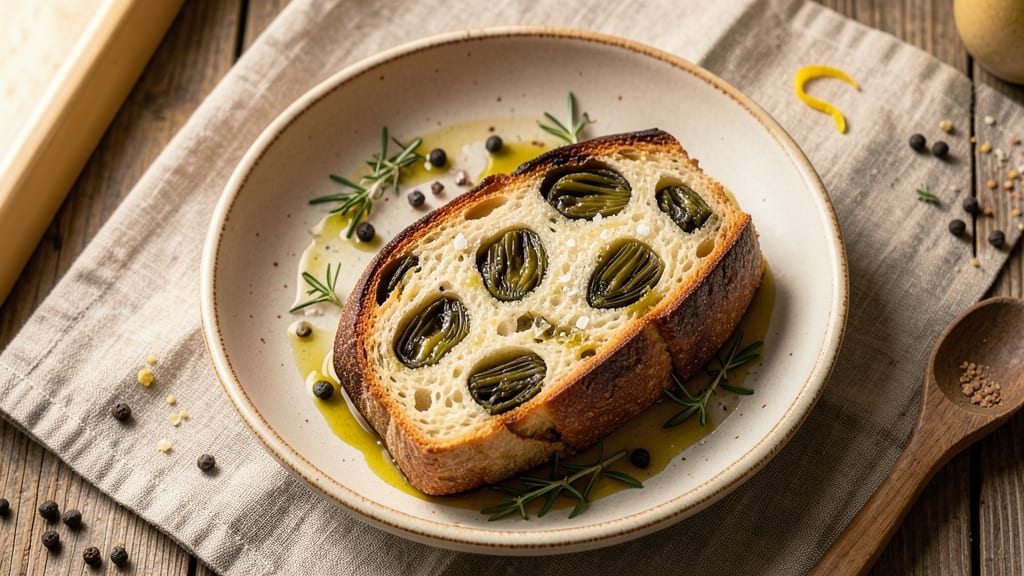
This Arcangeli artichoke bread delivers the perfect balance of crispy, golden crust and tender, pull-apart magic—all thanks to marinated artichokes and fresh herbs baked right into the dough.
I developed this recipe after years of perfecting Italian-inspired breads, and the secret lies in the artichoke filling: tangy from marinating in white wine and olive oil, then folded into a classic bread dough for a flavor explosion with every bite.
The dough comes together with simple ingredients—flour, yeast, and a touch of sugar—but the artichoke filling transforms it into something extraordinary. You’ll knead, proof, and shape the dough into a round loaf, then bake it until the crust turns crispy and aromatic.
The artichokes soften just enough to burst with flavor while maintaining their signature tang, creating a texture that’s both satisfying and elegant.
What makes this bread truly special is how it elevates any meal—whether served warm with olive oil and balsamic vinegar or paired with roasted vegetables and grilled meats.
The crust is sturdy enough to hold up to hearty toppings, yet tender enough to pull apart effortlessly, making it ideal for sharing. Once you try this, store-bought bread will never compare.
Ready in about 2 hours (including proofing), this recipe is perfect for weekend baking or holiday gatherings. The dough is forgiving, and the artichoke filling can be prepped ahead, so you can focus on enjoying the process. Let’s get started—your kitchen will smell like a Tuscan bakery in no time.
Ingredients for arcangeli artichoke bread
Simple flour and yeast meet artichoke tang and herbs for Tuscan-inspired pull-apart magic.
| Ingredient | Amount | Notes |
|---|---|---|
| All-Purpose Flour 🌾 | 4 cups | For structure and texture |
| Active Dry Yeast 🍞 | ¼ oz | Or 2 1/4 tsp (1 packet) |
| Granulated Sugar 🍚 | 1 tbsp | Feeds the yeast |
| Large Eggs 🥚 | 2 whole | Room temperature preferred |
| Extra-Virgin Olive Oil 🫒 | ½ cup | High-quality for richness |
| Warm Water 💧 | 1 ¼ cups | 110°F ideal for yeast |
| Marinated Artichoke Hearts 🍃 | 1 cup | Drained, chopped (see notes) |
| Dry White Wine 🍷 | ¼ cup | Bold, dry variety (Sauvignon Blanc) |
| Fresh Rosemary 🌿 | ¼ cup | Finely chopped (stems removed) |
| Fresh Thyme 🌿 | ¼ cup | Leaves only, finely chopped |
| Garlic Cloves 🧄 | 4 cloves | Minced for intense flavor |
| Diamond Crystal Kosher Salt 🧂 | 1 ½ tsp | Adjust to taste |
| Coarse Sea Salt 🧂 | 1 tbsp | For crust sprinkle |
| Cornmeal 🌽 | ¼ cup | For dusting baking sheet |
The artichoke hearts are the star—look for jarred, high-quality ones like Mezzetta or Goya in the international aisle. They should be plump, not mushy, and packed in white wine or olive oil for that authentic tang. Fresh artichokes are ideal if you're ambitious, but jarred works perfectly here. The herbs? Trader Joe's has the freshest thyme and rosemary in my experience—avoid the dried stuff unless it's labeled 'culinary' (the dusty kind from the spice aisle is useless). For the white wine, any dry, crisp variety like Sauvignon Blanc or Pinot Grigio will work—just skip the sweet dessert wines. The garlic? Four cloves is perfect, but if you're garlic-obsessed like me, add an extra one—no one will notice.
No white wine? Substitute with extra olive oil and a splash of lemon juice—it won't be identical, but still delicious. Dried herbs are fine in a pinch, but use half the amount of fresh. The yeast is non-negotiable—if it smells old or looks past its expiration date, toss it. For the flour, King Arthur or Gold Medal are my go-tos, but any all-purpose will work. The eggs? Room temperature makes all the difference—cold eggs won't incorporate properly. And if you're prepping ahead, the artichoke filling can be made 2 days in advance—just store it covered in the fridge. The dough, however, should be shaped and baked the same day for that perfect rise.
This bread keeps beautifully—3 days at room temperature wrapped in a towel, or 1 week in the fridge in an airtight bag. For longer storage, freeze the unbaked dough for up to 2 months—just let it thaw before baking. The crust gets crispier the longer it sits, so reheat slices in a 350°F oven for 5 minutes to restore that bakery-fresh crunch. I always make a double batch—one for the table, one for freezing. The artichoke filling also doubles well if you're feeding a crowd, but keep the dough proportions the same for perfect texture.
Why You'll Love This Recipe
- No-Knead Nightmare Solved: I swear by this dough—just mix, let it rise, and boom. No roller, no stress, just a simple bowl and a spoon. The yeast does all the work while I sip coffee, and honestly? That’s my kind of magic.
- Olive Oil Magic: The extra-virgin olive oil in the dough gives it this buttery richness without a single stick of butter. Paired with the artichokes (yes, they’re in there!), it’s like a Mediterranean vacation in every bite—crusty outside, tender inside.
- Weeknight & Potluck Hero: This bread is my go-to for lazy nights and fancy gatherings. Toss it in a loaf pan for dinner rolls, slice it for bruschetta, or freeze half for when I’m too tired to bake. Between us, it’s the only bread I make anymore.
- Budget-Friendly Staple: Flour, yeast, eggs—these are pantry basics that stretch far. One batch feeds my family for days, and the leftovers? Perfect for toast, croutons, or even breadcrumbs. I’ve saved enough on takeout to buy a whole bag of artichokes just for this.
Step-by-step instructions for Arcangeli artichoke bread
Here's how to craft this rustic masterpiece with a golden crust and tender, herby interior.
Activate the Yeast and Prepare the Dough
In a small bowl, combine the 1.25 cups warm water (about 110°F) with the 1 tablespoon granulated sugar and 0.25 ounces active dry yeast. Let it sit for 5-10 minutes until it becomes foamy and bubbly—this confirms the yeast is alive and ready to work. If it doesn't foam, your bread won't rise properly.
In a large bowl, whisk together the 4 cups all-purpose flour and 1.5 teaspoons diamond crystal kosher salt. Make a well in the center and pour in the yeast mixture, 0.5 cup extra-virgin olive oil, and 2 whole large eggs. Mix with a wooden spoon until a shaggy dough forms, then turn it out onto a lightly floured surface and knead for 8-10 minutes until smooth and elastic. The dough should feel slightly tacky but not sticky—add a little more flour if needed.
Incorporate the Artichoke and Herb Mixture
While the dough rests, prepare the artichoke filling. Drain and finely chop the 1 cup marinated artichoke hearts, then combine them with the 0.25 cup dry white wine, 0.25 cup finely chopped fresh rosemary, 0.25 cup finely chopped fresh thyme, 4 minced garlic cloves, and a pinch of salt. Set aside.
Once the dough has doubled in size (about 1 hour), punch it down and divide it into 4 equal pieces. Roll each piece into a 12-inch circle, about ¼-inch thick. Spread the artichoke mixture evenly over each circle, leaving a ½-inch border around the edges. Roll each circle tightly into a log, pinching the seam to seal.
Shape the Braided Loaves
Divide each log into 3 equal pieces and arrange them side by side. Braid the three strands together, tucking the ends under to secure. Repeat with the remaining logs to create 4 braided loaves. Place them on a parchment-lined baking sheet dusted with 0.25 cup cornmeal, spacing them 2 inches apart to allow room for expansion.
Cover the loaves loosely with a clean kitchen towel and let them rise in a warm place for 45-60 minutes until they've puffed up noticeably. The tops should look slightly domed, and you should see gentle rises and falls when you gently press the dough with a fingertip.
Bake to Golden Perfection
Preheat your oven to 375°F. Sprinkle the loaves generously with 1 tablespoon coarse sea salt and bake for 25-30 minutes until the crust is deep golden brown and the internal temperature reaches 190°F. You'll know they're done when they sound hollow when tapped on the bottom.
For extra crispiness, transfer the loaves to a wire rack and let them cool for 10 minutes before serving. The bread should have a crackly crust that gives way to tender, herby layers infused with artichoke flavor. Slice into thick pieces and serve warm—this bread is best enjoyed fresh from the oven.
Pro Tips For Making Arcangeli Artichoke Bread
- Measure Yeast by Weight: That little scoop in your yeast packet? Forget it. Use a kitchen scale to weigh out 2¼ grams of active dry yeast—this recipe’s rise depends on precise amounts. I learned this after two batches where the dough either took forever or collapsed flat; consistency matters more than you’d think.
- Chill the Dough: After the first rise, pop the shaped loaves in the fridge for 30 minutes before baking. This tightens the crumb and keeps the artichokes from sinking into the bread like sad, soggy anchors. Trust me, your bread will hold its shape—and look professional—without this step.
- Don’t Overmix the Dough: Once you add the eggs and olive oil, mix just until combined. Overworking the dough develops gluten too much, and your bread will turn out dense instead of light and airy. Stop when the flour is mostly incorporated—your future self will thank you.
- Use Room-Temp Eggs: Cold eggs in warm dough slow fermentation, and that means a weaker rise. Let those eggs sit out for 30 minutes before mixing—no need to go full-blown lukewarm, just slightly above fridge temp. It’s a small tweak that makes a real difference in texture.
Essential equipment for perfect results
Dough Essential Tools
Start with a stand mixer (like the KitchenAid Artisan Series) for effortless kneading—it handles the 4 cups flour and 2 eggs without overworking the dough. If mixing by hand, a wooden dough whisk saves your arms and ensures even gluten development.
For shaping, a bench scraper (I love the OXO Good Grips) keeps dough clean and prevents sticking. 🌾
Artichoke Prep Gear
A sharp chef’s knife (like Wüsthof’s Classic) is critical for dicing 1 cup marinated artichokes into even, ¼-inch pieces. Pair it with a cutting board (I recommend John Boos Maple) to protect your knives and provide stability.
For mincing 4 garlic cloves and chopping herbs, a microplane (like Barbaglio) gives you perfect, fine textures without overworking the ingredients.
Proofing & Shaping
Invest in a digital kitchen scale (the OXO Good Grips) for precise dough division—each of the 4 pieces should weigh 1 pound for even baking.
For proofing, a proofing box (like Breville Smart Oven) maintains 80°F humidity, but a clean kitchen towel and warm oven (with light on) works in a pinch. A rolling pin (I use Nordic Ware) helps flatten dough to ¼-inch thickness before filling.
Baking Setup
Preheat your oven with a baking stone (like Lodge Cast Iron) on the lower rack to mimic a professional bakery’s heat distribution. Line your sheet with parchment paper (I prefer Reynolds Non-Stick) for easy transfer.
A fine-mesh sieve (like OXO Good Grips) ensures even distribution of the 1 tbsp coarse sea salt for that perfect crust. For extra crispiness, a pizza peel helps slide loaves onto the stone without squashing them.
Cooling & Storage
Let baked loaves cool on a wire cooling rack (I use OXO Good Grips) to prevent soggy bottoms. For long-term storage, vacuum-seal bags (like FoodSaver) preserve freshness for 1 week in the fridge or 2 months in the freezer.
A serrated bread knife (like Mercer Culinary) ensures clean slices without crushing the artichoke layers. 💫
Nutrition facts
Frequently asked questions
Can I make this artichoke bread without fresh herbs?
Use 1 tablespoon dried rosemary and 1 tablespoon dried thyme instead of fresh, but reduce the amount by half since dried herbs are more concentrated. For best flavor, toast the dried herbs in a dry pan for 30 seconds before adding to the artichoke mixture to wake up their aromas.
How do I know when the dough has risen enough?
Your dough is ready when it’s doubled in size and leaves a gentle fingerprint when pressed lightly with your fingertip. For braided loaves, this should take about 1 hour. If it rises too quickly, your kitchen might be too warm—try placing the bowl in a cooler spot or cover it with a damp towel to slow the process.
What if I don’t have white wine for the artichoke mixture?
No problem! Replace the 0.25 cup white wine with 0.25 cup extra-virgin olive oil and 1 tablespoon lemon juice. The acidity from the lemon will mimic the wine’s tang, though the flavor won’t be identical. For a more neutral option, use 0.25 cup vegetable broth instead.
Can I make this bread ahead of time?
Yes! Shape the dough into braids and refrigerate them overnight. When ready to bake, let them sit at room temperature for 1 hour to rise before baking as directed. The crust will be even more flavorful after resting. For storage, freeze the unbaked braids for up to 2 months—thaw overnight in the fridge before baking.
Why did my bread turn out dense instead of light and airy?
Dense bread usually means the yeast didn’t activate properly or the dough wasn’t kneaded enough. Double-check that your water was 110°F (not too hot) and your yeast was fresh. Also, ensure you kneaded for at least 8-10 minutes—this develops gluten for that perfect texture. If the dough was too sticky, you may have added too much flour, which can weigh it down.