
Main Courses
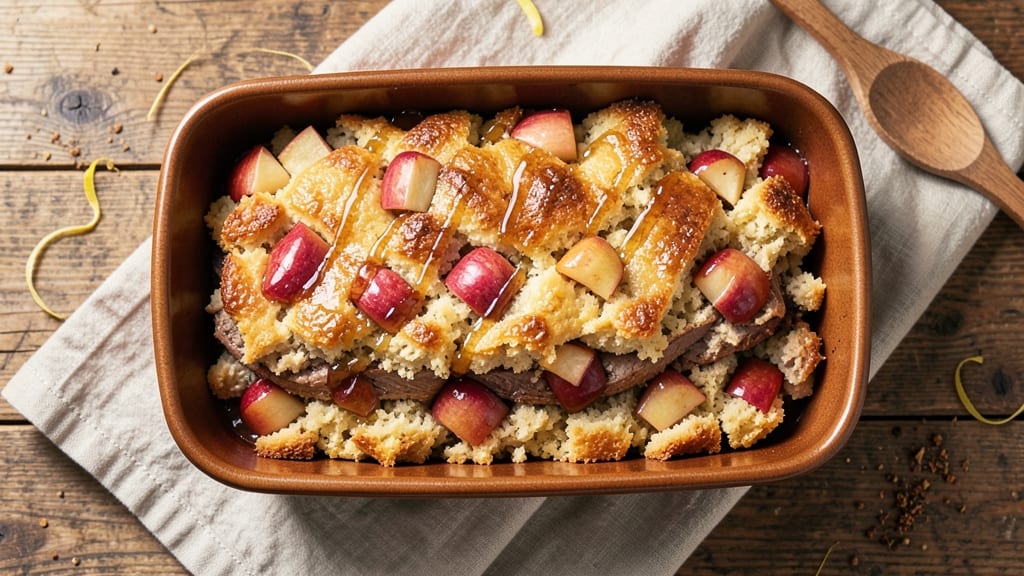
This apple scrapple bread recipe for the great harvest transforms humble scraps into a heritage-style centerpiece that captures autumn's warmth in every bite.
The scrapple base—traditionally made from pork and cornmeal—gets a seasonal upgrade with tender apple pieces, while the dough rises to form a golden, crunchy top that begs to be slathered with butter.
What makes this recipe special is how it bridges old-world comfort with modern convenience, turning simple ingredients into something extraordinary.
The magic begins with the scrapple mixture, where leftover pork and cornmeal create a savory foundation that pairs beautifully with sweet apples. The dough, enriched with a touch of apple cider, develops a perfectly crisp exterior while staying soft inside.
Baking at just the right temperature ensures the top turns a rich amber, signaling that your bread is ready to be sliced and served.
What you’ll end up with is a hearty loaf that’s equal parts rustic and refined—ideal for harvest dinners, holiday gatherings, or a cozy weeknight meal. The scrapple adds depth, the apples bring brightness, and the crunchy top makes every slice feel like a celebration.
This isn’t just bread; it’s a taste of tradition, reimagined for today’s kitchen.
Pair it with apple butter or a sharp cheddar for the ultimate Great Harvest spread. The recipe scales easily, so you can feed a crowd or save leftovers for days—though they likely won’t last that long. Let’s get baking!
Ingredients for apple scrapple bread recipe great harvest
Transform scraps into harvest heritage with this scrapple bread's savory-sweet balance.
| Ingredient | Amount | Notes |
|---|---|---|
| Pork Shoulder Scrapple 🐖 | 1 ½ lb | Pre-cooked, diced small (or homemade) |
| Cornmeal 🌾 | 2 cups | Fine grind for texture |
| Granulated Sugar 🍚 | ½ cup | Light brown preferred |
| Apple Pieces 🍎 | 2 cups | Tart apples, diced small (Honeycrisp ideal) |
| Apple Cider 🍏 | ½ cup | Unfiltered for depth |
| All-Purpose Flour 🌾 | 4 cups | King Arthur preferred |
| Active Dry Yeast 🍞 | 1 packet | 2.25 tsp (7g) equivalent |
| Warm Water 💧 | 1 ¼ cups | 110°F for yeast activation |
| Unsalted Butter 🧈 | ½ cup | Cold, cubed for dough |
| Salt 🧂 | 1 ½ tsp | Diamond Crystal preferred |
| Ground Cinnamon 🌿 | 1 tsp | Freshly ground for warmth |
| Eggs 🥚 | 1 whole | Room temperature for binding |
| Corn Oil 🫒 | 2 tbsp | For greasing loaf pan |
The pork shoulder scrapple is non-negotiable for that authentic rustic flavor—pre-cooked diced scrapple from specialty stores like Penzeys or your local butcher's deli case works perfectly. If making homemade scrapple, use equal parts pork shoulder and cornmeal for the base. Tart apples like Honeycrisp or Granny Smith hold up best during baking, though Fuji works in a pinch. The apple cider should be unfiltered for that deep, complex flavor—Woodchuck brand is my go-to, but any quality cider will do. For the cornmeal, fine grind ensures the right texture, while King Arthur flour gives the dough that professional rise.
No scrapple on hand? Substitute with finely chopped, well-seasoned pork sausage (about 1.5 lbs) for a similar texture, though the flavor will differ slightly. Running short on apples? Pear or quince work beautifully here—just reduce to 1.5 cups. The apple cider can be swapped for white grape juice if needed, though it loses some depth. For the yeast, instant yeast works at the same measurement, but active dry yeast requires the warm water activation step. The butter must be cold—Plugrá brand stays solid longest in warm kitchens. If you're gluten-sensitive, Bob's Red Mill 1:1 gluten-free flour replaces the all-purpose flour at a 1:1 ratio, though texture will differ.
This bread keeps beautifully—wrapped in a clean kitchen towel at room temperature for 2 days, or 3 months frozen in a sealed bag. For best results, slice before freezing and reheat individual portions in a 350°F oven for 5 minutes. The scrapple mixture can be prepped 2 days ahead and stored in the fridge, saving time on baking day. The dough benefits from a slow rise overnight in the fridge for enhanced flavor. When serving, brush warm slices with melted butter and sprinkle with extra cinnamon for that perfect harvest touch.
Why You'll Love This Recipe
- I’ll be real: this is my go-to for lazy Sundays and Thanksgiving leftovers. Serve it warm with butter, or slice it cold for sandwiches—no one judges. (Yes, even on a Tuesday night.)
- Scrapple’s Second Life: Honestly, I’m obsessed with how this turns scrapple—something you’d usually fry or bake alone—into something new. The cornmeal crust gives it a rustic crunch, while the apples and cider soften it just enough to feel like a cozy, hearty loaf instead of leftover scraps.
- Sweet-Savory Magic: Between us, the combo of salty scrapple, caramelized apples, and that hint of apple cider tang is ridiculously good. The sugar doesn’t make it cloying—it just deepens the scrapple’s natural richness, like a hug in bread form.
- Weeknight or Holiday: I’ll be real: this is my go-to for lazy Sundays and Thanksgiving leftovers. Serve it warm with butter, or slice it cold for sandwiches—no one judges. (Yes, even on a Tuesday night.)
Step-by-step instructions for apple scrapple bread
This heritage-style bread delivers rustic comfort with a crispy top and tender interior.
Activate the Yeast and Prepare the Dough Base
In a large mixing bowl, combine the 1 packet active dry yeast with the 1.25 cups warm water (about 110°F) and let it sit for 5-10 minutes until foamy. This activation step is critical—you'll see small bubbles forming on the surface, indicating the yeast is alive and ready to work. If it doesn't foam, your yeast may be inactive, and you'll need to start over.
Next, whisk together the 4 cups all-purpose flour, 2 cups cornmeal, 1.5 tsp salt, and 1 tsp ground cinnamon in the same bowl. The cornmeal adds a subtle gritty texture that pairs beautifully with the scrapple and apples. Gradually mix in the yeast-water mixture until a shaggy dough forms. Avoid overmixing at this stage—just combine until no dry flour remains.
Incorporate Wet Ingredients and Scrapple
Add the 1.5 lb pork shoulder scrapple (pre-cooked and diced small), 2 cups apple pieces, 0.5 cup granulated sugar, 0.5 cup apple cider, and 1 whole egg to the dough mixture. The scrapple should be cool but not cold—warm scrapple works best for binding. Use your hands or a dough scraper to gently fold everything together until just combined. You'll notice the dough becomes sticky and slightly wet, which is normal given the high moisture content from the scrapple and apples.
Cut the 0.5 cup unsalted butter into small cubes and distribute them throughout the dough. The butter will melt slightly as it incorporates, creating pockets of richness. Work quickly but thoroughly to ensure even distribution. If the dough feels too sticky to handle, wet your hands slightly with water to prevent sticking. The goal is a cohesive, slightly tacky dough that holds together when pressed gently.
Knead and Rest the Dough
Turn the dough onto a lightly floured surface and knead for 5-7 minutes until smooth and elastic. You're not creating gluten like you would with bread dough—this is more about distributing the ingredients evenly. The dough should be soft but not overly sticky; if it's too wet, add 1-2 tablespoons flour at a time until it comes together cleanly. Shape the dough into a loose ball, place it back in the bowl, cover with a damp towel, and let it rest at room temperature for 1 hour. This resting period allows the flour to hydrate fully and the flavors to meld.
During this time, grease a 9x5-inch loaf pan generously with 2 tablespoons corn oil, ensuring the sides and bottom are well coated. The oil prevents sticking and contributes to that classic scrapple bread crust. While the dough rests, preheat your oven to 375°F. The residual heat from the oven will help create a crispy top once the bread goes in.
Shape and Bake for Crispy Perfection
After the dough has rested, gently shape it into a rectangular loaf that fits snugly into your prepared pan. Press the dough into the corners of the pan to ensure even baking. The surface should be smooth but slightly uneven—this irregularity will contribute to the bread's rustic charm. Cover the loaf with the damp towel and let it proof in the oven for 10-15 minutes. You'll see it rise slightly and puff up as the yeast activates from the oven's warmth.
Bake the scrapple bread for 45-50 minutes until the top is deep golden brown with a crispy, almost crackly crust. The internal temperature should reach 190°F when measured with an instant-read thermometer. If the top browns too quickly, tent the loaf with aluminum foil to prevent over-browning while allowing the interior to cook through. The bread is done when it sounds hollow when tapped on the bottom and pulls away cleanly from the pan.
Cool and Serve for Maximum Comfort
Remove the bread from the oven and let it cool in the pan for 10 minutes before transferring it to a wire rack. This brief cooling period helps set the crust and prevents it from becoming soggy. Serve the scrapple bread warm, sliced into thick pieces. The contrast of the crispy top, tender interior, and savory-sweet scrapple and apple filling makes every bite a comforting experience. Pair it with a dollop of whipped butter or a side of sharp cheddar cheese for an elevated treat.
Real talk: The bread tastes best on the first day, but you can store leftovers wrapped in plastic at room temperature for 2 days or freeze slices for up to 3 months. To reheat, warm in a 350°F oven for 10-15 minutes until crispy again. The secret to reheating lies in the residual moisture from the scrapple—it keeps the interior soft while the crust re-crispifies.
Pro Tips For Making Apple Scrapple Bread Recipe Great Harvest
- SOAK THE SCRAPPLE: I learned this the hard way—dry scrapple turns into a dry, dense brick. Toss the scrapple cubes in warm apple cider for 10 minutes before mixing; they’ll absorb flavor and stay tender. (Yes, even if you’re impatient like me.)
- GRATE THE APPLES: Skip pre-sliced apples—they release too much moisture and make the bread gummy. Use a box grater for uniform, fine pieces that distribute evenly and caramelize better. Save the scraps for cider or compost.
- DON’T OVERMIX THE DOUGH: After adding cornmeal and sugar, stir just until combined—lumps are fine. Overworking the batter develops gluten, and this bread needs a tender, crumbly texture. Two minutes max with a spatula.
- BAKE LOW AND SLOW: This isn’t a loaf that needs a rush. Bake at 325°F (not 350°) for 45–50 minutes until the top is golden and a toothpick comes out clean. Higher heat = a crusty exterior and underbaked center. Trust the process.
Serving suggestions for leftovers
Butter Slather
Warm slices of apple scrapple bread are a match made in heaven with whipped butter—I mean, trust me, it’s non-negotiable. 🧈 Use European-style butter like Plugrá or Kerrygold for that rich, creamy texture that melts beautifully.
Spread about 1 tablespoon per slice while still warm, then sprinkle with a pinch of flaky sea salt and a dusting of ground cinnamon for that perfect harvest touch. For extra decadence, mix in 1 teaspoon of apple cider reduction into the butter before whipping.
Cheese Pairings
Aged cheddar is my go-to for this bread—sharp white cheddar like Cabot or Wedgewood cuts through the sweetness and complements the scrapple’s savory depth. Slice ½-inch thick pieces and serve alongside the bread for guests to assemble their own sandwiches.
For a tangy twist, try blue cheese crumbles like Gorgonzola dolce—the creamy texture contrasts wonderfully with the crispy crust. 🧀
Apple Butter Spread
Homemade apple butter is the ultimate companion—its spiced sweetness mirrors the flavors in the bread. Look for unsweetened versions with cinnamon and cloves to avoid overpowering the scrapple. I love Molly’s Natural Apple Butter for its balance.
Serve it warm in a small bowl with a drizzle of honey on the side for dipping. The combination of the bread’s crispy top and the apple butter’s smooth texture is pure comfort food magic. 🍏
Harvest Sides
Round out your Great Harvest spread with roasted butternut squash (tossed in olive oil, salt, and sage) or a simple apple and walnut salad with arugula, dried cranberries, and a balsamic glaze.
The earthy sweetness of the squash and the crunch of the walnuts enhance the bread’s rustic charm. For a heartier option, serve with sausage and kale sausage balls—the smoky flavor ties everything together beautifully. 🍂
Warm Beverage Pairings
Sip on spiced apple cider (warm with cinnamon sticks, cloves, and orange peel) to complement the bread’s flavors. For a cozy touch, add a splash of bourbon or rum to the cider for an adult twist.
If you prefer coffee, a strong brew with a dash of vanilla syrup balances the scrapple’s richness. ☕ For tea lovers, chai latte with a hint of cardamom enhances the spiced notes in the bread.
Make-Ahead Serving Tips
Slice the bread 1-2 hours before serving to ensure clean cuts and easy handling. Store slices in an airtight container at room temperature if serving later in the day. To keep the crust crispy, reheat individual slices in a 350°F oven for 5 minutes before serving.
For a buffet-style presentation, arrange slices on a wooden board with small bowls of butter, cheese, and apple butter for guests to customize their own plates. The rustic presentation makes it feel like a true harvest feast. 🍽️
Nutrition facts
Frequently asked questions
What’s the best apple variety for this scrapple bread?
Use tart apples like Honeycrisp or Granny Smith—they hold up best during baking and balance the scrapple’s savory flavor. For a sweeter touch, Fuji works too, but reduce sugar to ¼ cup. Avoid overly soft varieties like McIntosh.
Can I make this bread without scrapple?
Yes! Substitute with finely chopped pork sausage (about 1.5 lbs) or crumbled bacon (rendered and cooled). For a vegetarian option, use mushrooms sautéed with smoked paprika and onions. The texture will differ slightly, but the flavor remains rich.
Why does my scrapple bread turn out dense?
Overmixing the dough or skipping the resting period can cause density. Knead just until ingredients combine (5-7 minutes) and let the dough rest for 1 hour before shaping. Also, ensure your yeast is active—test it in warm water first if unsure.
How do I store leftovers to keep the crust crispy?
Wrap slices in parchment paper and store in an airtight container at room temperature for 2 days. For longer storage, freeze slices (up to 3 months) and reheat in a 350°F oven for 5 minutes until crispy again. The scrapple’s moisture keeps the interior soft!
Can I make this gluten-free?
Yes, but texture will differ. Replace all-purpose flour with a 1:1 gluten-free blend like Bob’s Red Mill and add 1 tsp xanthan gum to mimic gluten’s structure. Use 1 extra tablespoon gluten-free flour per cup to account for absorption differences.