
Side Dishes
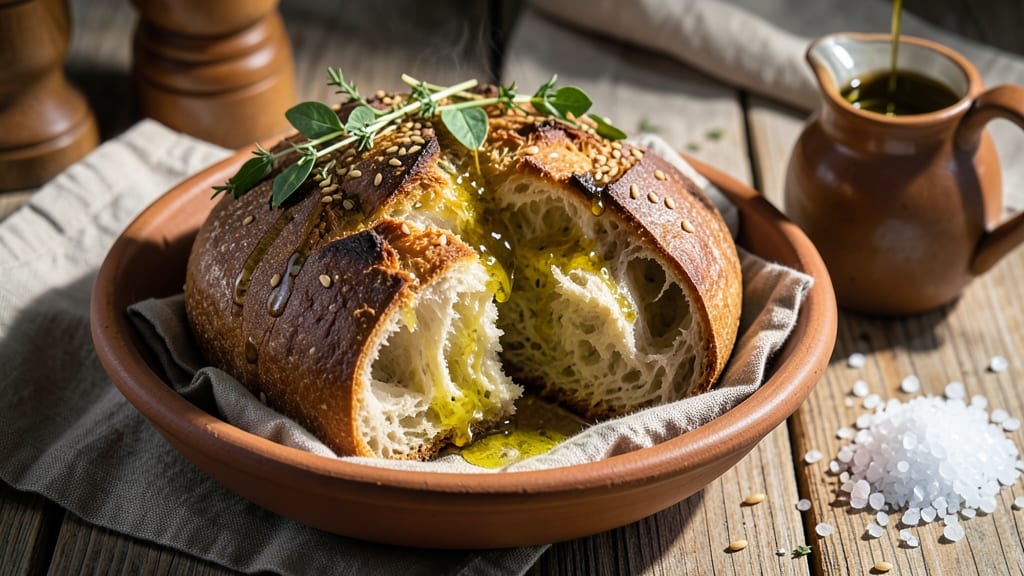
This ancient Greek barley bread recipe transports you to the streets of Athens with its nutty, rustic crunch and simple yet satisfying flavor. 🌾 Backed by historical texts, this bread relies on just three core ingredients—barley flour, water, and a touch of olive oil—to create a loaf that was a staple in ancient diets.
The beauty lies in its minimalism: no yeast, no sugar, just the pure essence of ancient grain baking.
The dough comes together effortlessly, requiring only mixing and shaping before baking in a hot oven or even a clay pot for that authentic touch. What makes this bread special is its crusty exterior and tender, nutty crumb—a perfect balance achieved through precise baking techniques.
Unlike modern breads, this version stays fresh for days, making it ideal for meal prep or gifting.
Once baked, you'll have a loaf that pairs beautifully with olive oil and fresh herbs, or serves as a sturdy base for dips and spreads. The aroma alone—warm, earthy, and slightly sweet—will evoke images of ancient kitchens and communal feasts. This is bread that tells a story with every bite.
Whether you're recreating history or simply craving a wholesome, grain-focused loaf, this recipe delivers authentic results with modern convenience. Ready to bake bread like the ancients did?
Ingredients for ancient greek barley bread
Three core ingredients transform into rustic, nutty barley bread with ancient authenticity.
| Ingredient | Amount | Notes |
|---|---|---|
| Barley Flour 🌾 | 4 cups | Medium or coarse grind preferred |
| Extra-Virgin Olive Oil 🫒 | ¼ cup | High-quality, fruity variety |
| Warm Water 💧 | 1 ½ cups | Room temperature or slightly warm |
| Sea Salt 🧂 | 1 ½ tsp | Fine grain preferred |
| Active Dry Yeast 🍞 | ¼ tsp | Optional for quicker rise |
| Sesame Seeds 🌱 | 1 tbsp | For topping (optional) |
Barley flour is the heart of this bread—look for medium or coarse grind at specialty stores like Whole Foods or Bob's Red Mill for the best texture. The flour should smell nutty and fresh, not stale. If you can't find barley flour, whole wheat flour works in a pinch, though the flavor will differ slightly. For the olive oil, Kalamata or Greek varieties add an extra layer of authenticity, but any extra-virgin works. The water should be warm but not hot—just warm enough to touch comfortably—to help activate the flour's natural enzymes. Skip the yeast if you want to stay strictly traditional, but adding it cuts the rise time significantly.
No barley flour? Spelt or rye flour can substitute at a 1:1 ratio, though the bread will have a denser crumb. Running short on olive oil? Avocado oil or melted coconut oil work in a bind, though they lack the fruity depth. The sesame seeds are purely decorative, but if you're feeling ambitious, try toasting them in a dry pan for 30 seconds before sprinkling—they'll add a nutty crunch. For a true ancient touch, skip the yeast entirely and let the dough rest for at least 4 hours before shaping, allowing the natural fermentation to develop deeper flavors.
This bread keeps beautifully for 5-7 days wrapped in a cotton towel or stored in a bread box. For longer storage, freeze the cooled loaf wrapped in foil for up to 3 months. The crust stays crisp for the first day or two, so slice it fresh when serving. Leftovers reheat wonderfully in a 350°F oven for 5-10 minutes, wrapped in foil to restore moisture. The nutty aroma alone makes this bread perfect for gifting—just wrap it in parchment paper tied with twine for an authentic Greek touch.
Why You'll Love This Recipe
- Five-Ingredient Magic: The pantry staples here—barley flour, olive oil, yeast—are things I already have. No fancy substitutions, no last-minute grocery runs. Just mix, let it rise, and bake. That’s it.
- Earthy Olive Oil Crust: The moment it comes out of the oven, that golden crust crackling with olive oil? It’s like a hug for your hands. The barley’s nutty bite pairs perfectly with the rich, fruity oil—simple ingredients, but somehow ridiculously satisfying.
- Lunchbox Hero: Between us, this bread is my go-to for meal prep. Tear it into chunks, pack it with hummus or olives, and it stays fresh for days. My kids actually ask for it—no sad sandwiches here.
- Budget Bread Wins: A loaf costs me pennies compared to store-bought, and it lasts forever. Freeze slices for toast later, or crumble it into soups. Honestly, I’ve saved enough on bread alone to buy a whole bottle of extra-virgin olive oil. Worth it.
Step-by-step instructions for ancient Greek barley bread
Transform simple ingredients into a rustic loaf with crisp exterior and tender crumb—just like ancient bakers did.
👨🍳 Step 1: Activate the Yeast and Mix the Dough
In a large mixing bowl, combine the 1.5 cups warm water with the 0.25 tsp active dry yeast. Let it sit for 5-10 minutes until frothy—this confirms your yeast is alive and ready to work. If it doesn't bubble, your bread won't rise properly.
Add the 4 cups barley flour and 1.5 tsp sea salt to the bowl. Pour in the 0.25 cup extra-virgin olive oil and use a wooden spoon to mix until a shaggy dough forms. The barley flour will be coarser than wheat flour, so don't expect a smooth texture yet.
🍳 Step 2: Knead Until Elastic and Smooth
Turn the dough onto a lightly floured surface and knead for 8-10 minutes until it becomes elastic and smooth. You'll notice the dough is denser than wheat dough—this is normal for barley bread. Press down gently with your knuckles; if it springs back slowly, it's ready.
Real talk: barley dough is trickier than wheat. If it feels too sticky, add flour 1 tablespoon at a time until it holds together. But don't overdo it—the extra flour will make your bread dry. The goal is a dough that's slightly tacky but not wet.
⏰ Step 3: First Rise for Flavor Development
Lightly oil a large bowl, place the dough inside, and cover with a damp towel. Let it rise in a warm place for 1-2 hours or until it doubles in size. Barley dough rises slower than wheat dough, so be patient. You'll know it's ready when the dough feels light and springs back when poked.
Here's the thing—barley bread develops more flavor during this first rise. The longer you let it rise (up to 4 hours in the fridge), the more complex the taste becomes. But don't exceed 2 hours at room temperature or the yeast will overproof the dough.
🔥 Step 4: Shape and Second Rise
Punch down the risen dough to release air, then shape it into a round loaf or divide it into two smaller rounds. Place them on a parchment-lined baking sheet, cover with the damp towel, and let rise again for 30-45 minutes until puffy. The dough should feel light and springy when pressed gently.
For that authentic ancient Greek look, make a shallow dimple in the center of each loaf with your finger. This creates a decorative pattern while allowing steam to escape during baking. Sprinkle the 1 tbsp sesame seeds on top if using—this adds both texture and a subtle nutty flavor.
🔥 Step 5: Bake Until Golden and Crisp
Preheat your oven to 400°F with a baking stone or inverted baking sheet inside for 30 minutes. This creates steam for a crisp crust. Bake the bread for 30-35 minutes until the exterior is deep golden brown and sounds hollow when tapped on the bottom.
Here's where it gets fun—barley bread develops its signature crusty exterior while maintaining a tender crumb inside. If the top browns too quickly, tent with foil. The internal temperature should reach 190-200°F when done. Let cool on a wire rack for 15 minutes before slicing—this prevents a gummy texture.
Pro Tips For Making Ancient Greek Barley Bread
- Bloom the Yeast First: Skip mixing yeast directly into the barley flour—it’ll clump and die. Instead, proof it in warm water (about 110°F) with a pinch of sugar or honey for 5–10 minutes until frothy. Barley flour’s density needs that head start to rise properly.
- Use Lukewarm Water: Hot water kills yeast; cold water won’t activate it. Fill a bowl with warm water (test with your wrist—should feel like bathwater), then dissolve the yeast and a teaspoon of sugar in it. No thermometer? Wait until the water’s just cool enough to hold your finger for 10 seconds.
- Knead Like a Greek Fisherman: Barley dough is sticky and stubborn—don’t fight it. Wet your hands, then slap and fold the dough on a floured surface for 5 minutes until it springs back when poked. Over-kneading makes it tough; under-kneading means it won’t hold shape.
- Salt the Olive Oil: Mix the sea salt directly into the olive oil before adding it to the dough. This distributes flavor evenly and prevents a bland crust. Use about 1 teaspoon per ¼ cup oil—trust me, the bread’s texture improves more than you’d think.
Creative variations of this recipe
Ancient Greek Style
For a truly authentic experience, bake your barley bread in a clay pot or earth oven—just like ancient Greeks did. Place the shaped dough directly into a preheated 400°F clay pot with a lid, then bake for 40-45 minutes until the crust is deep golden brown.
The clay retains heat beautifully, creating a crisp exterior while keeping the interior tender. If you don’t have clay, use a cast-iron Dutch oven for similar results. 🌾
Herb-Infused Twist
Add 1 tbsp dried oregano or 1 tbsp fresh rosemary directly to the dough for an aromatic twist inspired by Mediterranean flavors. The herbs complement the nutty barley perfectly, evoking the scents of ancient Greek kitchens.
For extra depth, mix 1 tsp dried thyme with the sesame seeds before sprinkling on top. This variation pairs wonderfully with olive oil dips.
Sweet Honey Version
Transform this bread into a sweet treat by adding 2 tbsp honey to the dough during mixing. The natural sweetness balances the earthy barley, creating a loaf perfect for breakfast or dessert.
Brush the baked bread with an extra 1 tbsp honey mixed with 1 tsp lemon zest for a golden glaze. This version is a nod to ancient Greek desserts often enjoyed with wine or cheese.
Whole Grain Boost
For added texture and nutrition, replace 1 cup of the barley flour with whole wheat flour or spelt flour. The extra fiber makes the bread heartier, while the nuttier flavor deepens the ancient grain profile.
If using spelt, reduce the water by 2 tbsp since spelt absorbs moisture differently. This variation is ideal for those seeking a denser, more rustic loaf.
Savory Seed Topping
Swap sesame seeds for a mix of 1 tbsp poppy seeds and 1 tbsp flaxseeds for a crunchy, omega-3-rich topping. Toast the seeds in a dry pan for 2 minutes until fragrant before sprinkling on the dough.
This combination adds a subtle earthy note that pairs beautifully with the barley’s natural flavors. It’s a simple way to elevate the bread’s texture and nutritional value.
Modern Adaptation
For a quicker rise, add 1 tsp instant yeast to the dough and reduce the first rise to 45 minutes. This modern shortcut keeps the traditional flavor while cutting prep time in half.
If you’re short on time, bake the bread immediately after shaping—just skip the second rise and bake for 40-45 minutes instead. The crust will still be crisp, though the crumb may be slightly denser. ✨
Nutrition facts
Frequently asked questions
Can I make this barley bread without yeast?
Ancient Greeks often baked barley bread without yeast. Simply mix your dough and let it rest for 4-6 hours at room temperature, or overnight in the fridge. The dough will develop flavor through natural fermentation. For best results, shape and bake immediately after resting—no second rise needed.
Why does my barley dough feel so dense?
Barley flour is naturally denser than wheat flour, so expect a heavier dough. The key is kneading until it springs back when pressed. If it feels too sticky, add flour 1 tbsp at a time, but avoid overworking it. The dense texture actually creates that authentic ancient crumb—just bake longer (40-45 minutes) for a crisp exterior.
How do I store leftover barley bread?
Wrap cooled bread in a cotton towel or place in a bread box for 5-7 days to maintain freshness. For longer storage, freeze the loaf wrapped in foil for up to 3 months. To reheat, warm at 350°F for 5-10 minutes wrapped in foil. The crust stays crisp for 2 days if stored properly.
What's the best way to achieve that ancient Greek crust?
Use a clay pot or cast-iron Dutch oven for authentic results. Preheat it with the dough inside for 30 minutes at 400°F, then bake covered for 40 minutes. The trapped steam creates a crisp exterior. For modern ovens, bake on a stone with a tray of boiling water below for steam. Brush baked bread with olive oil while warm for extra shine.
Can I substitute barley flour with something else?
For closest results, use spelt or rye flour (1:1 ratio). Whole wheat works but makes the bread denser. If you must use all-purpose flour, add 1 tbsp vital wheat gluten per cup to mimic barley's structure. The flavor will differ, but the texture will be more familiar. For a nutty taste, try buckwheat flour (though it's gluten-free).