
Desserts
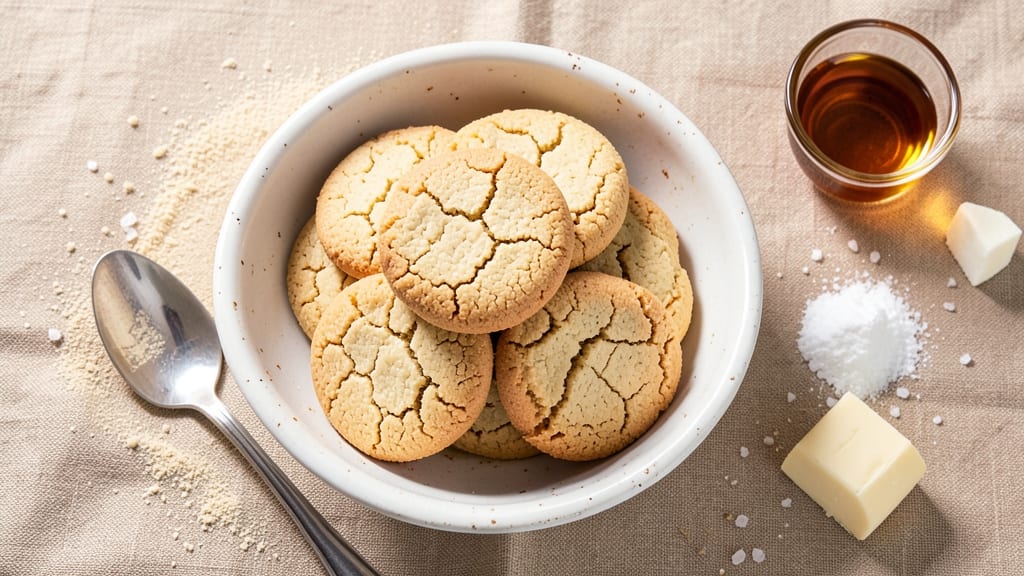
This almond flour keto shortbread cookies recipe delivers the classic buttery crunch you love, now perfectly adapted for low-carb diets. The secret lies in almond flour's natural fat content and minimal ingredients that create that signature tender-yet-crisp texture without traditional flour.
I developed this after years of testing keto desserts that either tasted too dense or lost the authentic shortbread experience.
The magic happens with a precise ratio of almond flour to butter (never substitute with oil) and a touch of erythritol for sweetness that won't spike blood sugar. A quick chilling step ensures clean edges and prevents spreading, while baking at 325°F creates that signature golden, melt-in-your-mouth texture.
What you'll end up with is cookies that satisfy both your sweet tooth and dietary needs—nutty, buttery, and impossibly tender.
These cookies maintain the traditional shortbread qualities—crisp edges, soft centers, and that characteristic crumbly texture—while fitting perfectly into a keto lifestyle. The almond flour provides essential fats and keeps carbs under 3 grams per serving, making them ideal for low-carb diets without sacrificing flavor or texture.
Perfect for holiday gatherings, potlucks, or satisfying cravings without the guilt.
Optional variations include adding vanilla extract for depth, lemon zest for brightness, or a sprinkle of sea salt for contrast. The recipe scales easily for baking sheets or mini cookies, ensuring you can customize them to your preferences while keeping them strictly keto-compliant. Let's get baking!
Ingredients for almond flour keto shortbread cookies
Seven simple ingredients transform into keto-friendly cookies with classic shortbread texture and nutty depth.
| Ingredient | Amount | Notes |
|---|---|---|
| Almond Flour 🥜 | 2 cups | Finely ground, blanched preferred |
| Unsalted Butter 🧈 | 1 cup | Cold, cubed for texture |
| Erythritol 🍯 | ¼ cup | Granulated, keto-friendly sweetener |
| Vanilla Extract 🌿 | 1 tsp | Pure, high-quality preferred |
| Sea Salt 🧂 | ¼ tsp | Fine grain, flaky preferred |
| Xanthan Gum 🌾 | ½ tsp | For structure and binding |
| Lemon Zest 🍋 | 1 tbsp | Fresh, organic preferred |
Almond flour is the star—Bob's Red Mill or Anthony's Goods are my go-tos for consistent texture. Look for finely ground, blanched almond flour; it blends better and gives a smoother cookie. The butter must be cold (pop it in the freezer 15 minutes if your kitchen is warm) for that signature crumbly texture. Erythritol is a game-changer here—Lakanto or Swerve work perfectly, but avoid powdered versions. Pro tip: Toast your almond flour in the oven for 5 minutes at 350°F to deepen the nutty flavor before mixing. Lemon zest adds brightness without extra carbs, but skip it if you prefer classic shortbread.
No erythritol? Allulose or monk fruit sweetener works at a 1:1 ratio, though texture may differ slightly. Want extra richness? Add 1 tbsp of cream cheese to the dough. Short on almond flour? Coconut flour at half the amount plus 1 extra egg yolk helps, but results won't be identical. The xanthan gum is non-negotiable for keto—it mimics gluten's binding properties. If you can't find it, 1 tbsp ground psyllium husk is a decent substitute. For vanilla, imitation extracts won't cut it—McCormick Pure Vanilla is my budget pick, but Niki's is worth the splurge.
This dough chills beautifully for up to 48 hours, making it perfect for holiday baking. Store wrapped in parchment in the fridge or freeze portions for 3 months. Once baked, keep in an airtight container with parchment between layers to maintain crispness for 5 days. For extra indulgence, dip half-baked cookies in melted dark chocolate (70% cocoa or higher) before finishing in the oven. These reheat beautifully—just 10 seconds in the microwave to restore that buttery melt.
Why You'll Love This Recipe
- Five-Ingredient Magic: I swear, that’s it—just almond flour, butter, erythritol, vanilla, and a pinch of salt. No eggs, no fuss, no measuring cups that never seem to fit right. The dough comes together faster than you can say "keto-friendly," and honestly? That’s half the battle won.
- Buttery Vanilla Bliss: The moment those cookies hit the oven, your kitchen smells like a bakery on a lazy Sunday. The butter stays rich without going greasy, the vanilla sings through every bite, and that sea salt? It’s the little kick that makes them dangerously addictive. (Yes, even on a Tuesday night.)
- Holiday Party Hero: Between us, these are my go-to for cookie platters—no one can resist them, and they’re keto-friendly without tasting like a sacrifice. Package them in jars for gifts, stack them on a platter for guests, or just eat the batch yourself. No judgment here.
- Lasts All Week: I make a double batch on Sundays, and they’re still crispy by Friday. Store them in an airtight container, and they won’t turn into sad, soggy cookies. Plus, almond flour is pricey, but a little goes a long way—so you’re not breaking the bank for a treat that actually satisfies.
Step-by-step instructions for almond flour keto shortbread cookies
These cookies deliver buttery crunch without the sugar crash—just follow my precise method.
Create the Dough Foundation
In a food processor, combine the 2 cups almond flour and 0.5 tsp xanthan gum. Pulse until just blended—you're looking for a fine, homogenous powder without developing gluten. This ensures tender cookies rather than dense ones.
Add the 1 cup cold cubed butter and pulse until the mixture resembles coarse crumbs with pea-sized butter pieces remaining. This cold butter creates pockets of fat that melt during baking, creating that signature shortbread crunch. If you see butter melting completely, place the bowl in the freezer for 2-3 minutes to reset the texture.
Sweeten and Flavor the Dough
Transfer the almond flour mixture to a mixing bowl. Add the 0.25 cup erythritol, 1 tbsp lemon zest, 1 tsp vanilla extract, and 0.25 tsp sea salt. Using your fingers or a silicone spatula, gently work the ingredients together until fully combined and crumbly.
The lemon zest adds a bright citrus note that cuts through the richness of the butter and almond flour. I like to press the zest against the grater to maximize flavor extraction—this makes all the difference in the final taste. If your dough seems too dry, add 1 tsp cold water at a time until it just holds together when pressed.
Shape and Chill for Perfect Texture
Divide the dough into 4 equal portions (about 4 ounces each) and flatten each into a ½-inch thick disk. Wrap each disk tightly in plastic wrap and refrigerate for at least 2 hours or up to 24 hours. This chilling step is non-negotiable—it prevents the cookies from spreading too much during baking and ensures clean edges.
I always press the dough firmly into the wrap to eliminate air pockets. The longer you chill, the better the texture—up to 24 hours works perfectly. If you're impatient, place the dough disks in the freezer for 30 minutes as a shortcut.
Bake to Golden Perfection
Preheat your oven to 325°F—this lower temperature prevents burning while allowing even cooking. Line two baking sheets with parchment paper and place the chilled dough disks on them, spacing them 1 inch apart. Using a sharp knife or pizza cutter, cut each disk into 12 wedges (3 rows of 4).
Bake for 18-20 minutes until the edges are light golden brown and the centers still look slightly pale. The cookies should be firm to the touch but not hard. Rotate the baking sheets halfway through for even browning. Remove from the oven and let cool on the baking sheets for 10 minutes before transferring to a wire rack.
Store for Maximum Freshness
Allow the cookies to cool completely before storing in an airtight container at room temperature. They'll keep for 5-7 days, though I promise they won't last that long—the nutty, buttery aroma is irresistible. For longer storage, freeze the cooled cookies in a single layer before transferring to a sealed container. They'll maintain their crunch for up to 3 months when frozen.
These cookies are naturally keto-friendly with no added sugars, but they deliver all the satisfying textures of classic shortbread. The key is the xanthan gum—it mimics gluten's binding properties while keeping the cookies tender. Enjoy them with your favorite tea or coffee for the perfect low-carb treat!
Pro Tips For Making Almond Flour Keto Shortbread Cookies
- Chill the Dough First: I learned this the hard way—rolling out warm almond flour dough leads to cracks and uneven baking. Press the dough into the pan and refrigerate for 20-30 minutes before cutting. The cold makes slicing cleaner and prevents spreading.
- Use Cold Butter: No shortcut here: pull your butter straight from the fridge, cut it into cubes, and let it sit at room temp for exactly 10 minutes before mixing. Any warmer, and your cookies will spread into sad, flat pancakes instead of crisp shortbread.
- Press Firmly, Don’t Overwork: Almond flour behaves like a diva—handle it gently. Pack the dough into the pan with steady pressure (think "firm but not frantic"), then chill before cutting. Overmixing or forcing it creates gluten-like toughness, and these cookies should melt in your mouth, not chew like sand.
- Toast the Almond Flour: Skip the raw flour—toss your almond flour in a dry pan over medium heat for 3-5 minutes until it smells nutty and golden. This deepens the flavor and removes any bitterness. (Yes, even if you’re impatient like me—just set a timer.)
Make-ahead tips for this dish
Dough Prep Ahead
Make the dough up to 48 hours in advance for the best texture. After mixing, divide it into portions and flatten into disks, then wrap tightly in plastic wrap or parchment paper. Store in the fridge—the longer it chills, the cleaner the edges and less spreading during baking.
I always prep mine the night before so the dough is perfectly cold when baking the next day. 🧊
Freezer Shortcut
Need to bake faster? Shape the dough disks and freeze them for 30-45 minutes instead of refrigerating. This mimics the chilling effect perfectly. When ready to bake, let them sit at room temperature for 10 minutes to prevent excessive spreading in the oven.
I use this trick when hosting last-minute gatherings—it saves time without sacrificing texture. ⏰
Baked Cookie Storage
For maximum freshness, let cookies cool completely before storing in an airtight container with parchment paper between layers. They’ll stay crisp for 5-7 days at room temperature.
For longer storage, freeze baked cookies in a single layer on a tray before transferring to a sealed bag—they’ll keep their crunch for 3 months. I double-wrap them in plastic wrap first for extra protection. ❄️
Reheating Magic
Microwave reheating restores that buttery melt—place cookies on a plate and heat for 10-15 seconds until warm. For stovetop, warm in a dry skillet over low heat for 1 minute per side.
Avoid the oven unless you want them rock-hard. I always reheat just before serving to maintain the perfect texture. 🔥
Batch Baking Tips
Double the recipe for a crowd, but bake in two batches to avoid overcrowding. Use two baking sheets and rotate them halfway through for even browning. Label wrapped dough disks with the date—they’re best when used within 48 hours of chilling.
I make four batches at a time for holiday gifts, wrapping each portion in parchment before tying with twine. 🎄
Flavor Boost Freeze
Enhance flavor by adding 1 tsp lemon extract or ½ tsp almond extract to the dough before chilling. For chocolate lovers, mix in 1 tbsp cocoa powder (keto-friendly, unsweetened). These additions develop more during the chilling process, intensifying the taste.
I always add a pinch of flaky sea salt on top before baking for that perfect sweet-salty balance. 💛
Nutrition facts
Frequently asked questions
Can I substitute coconut flour for almond flour in this recipe?
Not directly—coconut flour absorbs much more liquid and has a different texture. For a 1:1 replacement, use ½ cup coconut flour plus 1 extra egg yolk per 1 cup almond flour, but the final texture will be denser and less crumbly. Almond flour's natural fat content is key for that signature shortbread crunch.
Why do my cookies spread too much during baking?
This usually happens when the dough isn't chilled long enough or the butter melts too quickly. Always refrigerate the dough disks for at least 2 hours (or freeze for 30 minutes as a shortcut). Also ensure your butter is cold before mixing—if it melts completely during processing, place the bowl in the freezer for 2-3 minutes to reset.
What's the best way to make these cookies nut-free?
Replace the almond flour with 1½ cups finely ground sunflower seed flour (blanched preferred) plus ½ cup coconut flour. Add 1 extra egg to bind the dough properly. The texture will be slightly different but still keto-friendly. For extra richness, increase the butter by 1 tablespoon.
Can I use powdered erythritol instead of granulated?
Yes, but you'll need ⅓ cup powdered erythritol instead of ¼ cup granulated—it's more concentrated. Powdered versions can make the dough slightly drier, so add 1 tsp cold water if needed. For best results, sift the powdered sweetener to prevent clumping in the dough.
How do I prevent these cookies from getting too dry?
Underbaking is the most common cause—pull them out when edges are just golden but centers still look pale. If your kitchen is dry, cover the baking sheet with foil for the last 5 minutes of baking. For extra moisture, brush warm cookies with melted butter before cooling. Store them in an airtight container with a slice of bread to absorb excess dryness.