
Side Dishes
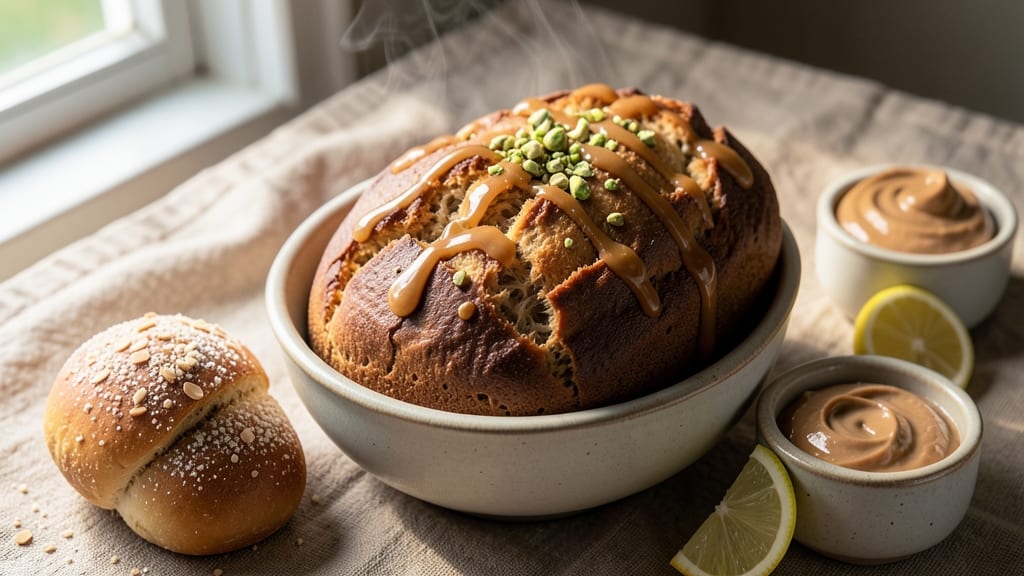
This almond butter bread recipe delivers a rich, nutty-sweet loaf that rivals bakery favorites—without the fuss. 🌟 The secret lies in blending creamy almond butter directly into the dough, creating a moist, tender crumb with every slice packed with flavor.
Perfect for breakfast, snacks, or gifts, this recipe transforms simple ingredients into a showstopping loaf with minimal effort. The process is straightforward: mix the dough, let it rise, and bake until golden. No special equipment needed—just patience for the proofing stage, which develops that signature fluffy texture.
The almond butter adds natural sweetness and richness, while optional mix-ins like chocolate chips or cinnamon swirls take it to the next level. What you’ll end up with is a fragrant, moist loaf with a crisp crust and a tender interior that’s impossible to resist.
Each slice is packed with almond flavor, making it a standout for any occasion. Whether you’re feeding a crowd or treating yourself, this bread is a game-changer. For extra indulgence, top with a simple glaze or sprinkle seeds before baking. Let’s get started on this foolproof, nutty-sweet masterpiece!
Ingredients for almond butter bread
Nine pantry staples and two specialty items create this nutty-sweet loaf masterpiece.
| Ingredient | Amount | Notes |
|---|---|---|
| All-Purpose Flour 🌾 | 3 ½ cups | Unbleached preferred for lighter texture |
| Almond Butter 🥜 | 1 cup | Creamy, unsweetened preferred |
| Non-Dairy Milk 🥛 | ¾ cup | Almond or oat milk works best |
| Granulated Sugar 🍚 | ½ cup | Or coconut sugar for refined option |
| Vegan Butter 🧈 | ½ cup | Melted, full-fat preferred |
| Active Dry Yeast 🍞 | 2 ¼ tsp | Ensure freshness with warm water test |
| Apple Cider Vinegar 🍎 | 1 tbsp | Activates yeast properly |
| Salt 🧂 | 1 ½ tsp | Fine sea salt preferred |
| Flaxseed Meal 🌱 | 1 tbsp | Mixed with 3 tbsp water for egg substitute |
| Chocolate Chips 🍫 | ½ cup | Vegan chocolate chips preferred |
| Cinnamon 🌿 | 1 tsp | Ground for even distribution |
| Vanilla Extract 🌸 | 1 tsp | Pure vanilla for best flavor |
| Sesame Seeds 🌻 | 2 tbsp | For topping before baking |
The almond butter is non-negotiable here—Creamy, unsweetened from Marukyu or Justin's delivers the best texture and flavor. Natural almond butter with chunks works too, but blend it first for a smoother dough. For the yeast, Fresh yeast from the refrigerated section is more reliable than active dry if you're unsure about freshness. The flaxseed egg substitute is a game-changer for binding without eggs, and Bob's Red Mill flaxseed meal is my go-to for consistency. Store-bought vegan chocolate chips like Enjoy Life brand melt beautifully and keep the recipe cruelty-free.
No almond butter? Cashew butter or tahini work in a pinch, though texture may vary slightly. Substitute the non-dairy milk with soy milk for richer flavor or coconut milk for a tropical twist. Running low on chocolate chips? Chopped walnuts or pecans add crunch without sweetness. The cinnamon can be swapped for cardamom or nutmeg for different flavor profiles, but stick with vanilla extract—imitation vanilla lacks depth. For the flax egg, chia seeds or mashed banana are alternatives, though flax provides the best binding. Always measure your yeast carefully—too much makes the bread dense.
This dough is best made fresh, but you can prep it up to 24 hours ahead and let it rise in the fridge overnight for deeper flavor. Once baked, store wrapped at room temperature for 2-3 days or freeze slices for 3 months. For extra indulgence, brush warm slices with melted vegan butter and sprinkle with cinnamon sugar. The bread reheats beautifully—wrap slices in foil and warm in a 350°F oven for 5-7 minutes to restore freshness.
Why You'll Love This Recipe
- No Mixer Needed: I swear by this—just stir the almond butter right into the dry ingredients until it’s almost crumbly. The non-dairy milk comes next, and suddenly, you’re kneading something that’s almost like dough, but way more forgiving. My hands stay clean, and the kids don’t complain about sticky fingers.
- Rich Without Guilt: That first bite? Chewy, nutty, and just sweet enough—like a cross between banana bread and a cookie, but with none of the heaviness. The almond butter gives it this deep, buttery richness, while the vegan butter keeps it light. Honestly, I’ve caught myself sneaking slices when I thought no one was looking.
- Breakfast or Snack Hero: I make a batch on Sundays, and it disappears by Wednesday—on toast with jam, slathered with peanut butter, or straight from the fridge as a grab-and-go lunch. The texture holds up for days, and the sweetness balances out salty toppings like avocado or hummus. (Yes, even on a Tuesday night.)
- Pantry Staple Magic: Between us, this recipe uses things you already have—flour, sugar, butter—plus almond butter, which is cheaper than buying fancy bread mixes. A single batch feeds my family for days, and the leftovers? They actually improve overnight. I’ll be real: it’s my secret weapon for lazy mornings and impromptu guests.
Step-by-step instructions for almond butter bread
Here's how to create a tender, nutty-sweet loaf with perfect texture and flavor.
👨🍳 Step 1: Activate the Yeast and Prepare the Flax Egg
In a small bowl, combine the 1 tbsp flaxseed meal with 3 tbsp warm water (about 110°F) and stir. Let it sit for 5 minutes until it thickens into a gel-like consistency—this is your egg substitute. In a separate small bowl, mix the 2.25 tsp active dry yeast with ¼ cup warm non-dairy milk (about 110°F) and 1 tbsp apple cider vinegar. Let it foam for 5-10 minutes until bubbly. This ensures your yeast is alive and ready to work.
I always test my yeast first by dropping a tiny bit into warm water with sugar—if it bubbles immediately, you're good to go. The vinegar helps activate the yeast faster, and the warm milk creates the perfect environment for fermentation. If your mixture doesn't bubble, start over with fresh yeast.
👨🍳 Step 2: Mix Wet Ingredients for a Smooth Dough
In a large mixing bowl, combine the 1 cup almond butter, 0.5 cup vegan butter (melted), 0.5 cup granulated sugar, 1 tsp vanilla extract, 1 tsp cinnamon, and the remaining 0.5 cup non-dairy milk. Mix with a hand mixer or wooden spoon until completely smooth and creamy. The mixture should look like thick, nutty pudding. This is where the rich, nutty flavor develops, so don't skip blending thoroughly.
Here's the thing—almond butter can be oily, so mixing well ensures even distribution. If your mixture looks too thick, add 1-2 tbsp more milk to reach a smooth consistency. The goal is a homogeneous batter that will incorporate easily with the dry ingredients later.
🥘 Step 3: Combine Wet and Dry Ingredients
Gradually add the 3.5 cups all-purpose flour and 1.5 tsp salt to the wet mixture, mixing on low speed with a hand mixer or using a wooden spoon. Once combined, stir in the flax egg and the activated yeast mixture. The dough will be sticky but manageable. At this point, fold in the 0.5 cup chocolate chips by hand, reserving a few for topping if desired.
I use a silicone spatula to scrape down the sides of the bowl and ensure everything gets incorporated. The dough should come together into a shaggy mass. If it's too sticky to handle, wet your hands slightly to prevent sticking. The chocolate chips will add pockets of decadence, but don't overmix—they should remain distinct in the final loaf.
🔥 Step 4: Knead and Let the Dough Rise
Lightly flour a clean surface and turn out the dough. Gently knead for 3-5 minutes until smooth and elastic. The dough will still be sticky, but it should hold together when pressed. Place the dough in a lightly greased loaf pan (about 8.5x4.5 inches) and smooth the top. Cover the pan tightly with plastic wrap or a damp kitchen towel.
Let the dough rise in a warm place (like a turned-off oven with a bowl of hot water) for 1-1.5 hours until it doubles in size and puffs above the pan. You'll see the edges pull away from the pan slightly, and the dough will look domed. Poke the dough gently—if it springs back slowly, it's ready. If it springs back quickly, give it another 15-20 minutes.
🔥 Step 5: Bake to Golden Perfection
Preheat your oven to 350°F. Sprinkle the reserved 2 tbsp sesame seeds evenly over the risen dough. Bake for 50-55 minutes until the top is golden brown and a toothpick inserted into the center comes out clean. The bread should smell rich and nutty when done—this is your cue that it's fully baked.
If the top browns too quickly, tent the loaf with aluminum foil after 20 minutes to prevent over-browning. Let the bread cool in the pan for 10 minutes before transferring to a wire rack. This resting period prevents the loaf from collapsing as it cools. The sesame seeds will add a delightful crunch and nutty flavor that complements the almond butter perfectly.
Pro Tips For Making Almond Butter Bread
- STIR THE ALMOND BUTTER WELL: Don’t just dump almond butter into the wet ingredients and mix once—whisk it vigorously for at least 30 seconds. The clumps in natural almond butter (even creamy) will make your batter lumpy, and those lumps turn into dense pockets in the bread. I learned this the hard way when my first batch had weird, gummy spots.
- WEIGH YOUR FLOUR LIKE A PRO: Scooping flour from the bag is a disaster waiting to happen—packing varies wildly, and your bread will turn out either dry or gummy. Use a kitchen scale for precision (1 cup all-purpose flour is about 125g). If you’re measuring by volume, spoon it into the cup and level it off—no tapping the bowl.
- BAKE UNTIL THE CENTER HITS 205°F: Almond butter bread is dense, so it needs that internal temperature to pull away from the pan cleanly. A toothpick check is useless here—stick a thermometer in the center. If it’s under 200°F, it’ll taste underdone and gummy. (Yes, even if it looks "done" at the edges.)
- LET THE BREAD COOL 10 MINUTES: Slicing almond butter bread too soon is how you end up with a crumbly mess. The structure needs time to set—10 minutes at room temp is all it takes. I know, I know, you’re hungry, but trust me: patience here keeps every slice intact.
Common mistakes when making this recipe
Overmixing the Dough
Almond butter bread dough is naturally sticky, so it’s tempting to keep mixing until it looks perfect. But overmixing develops too much gluten, which can make your bread dense instead of tender. Stop mixing as soon as the dry ingredients are fully incorporated—just until a shaggy dough forms.
I’ve ruined a loaf or two by overworking it, and the result was a tough, chewy texture instead of the soft, pillowy crumb we want. 🥖
Skipping the Flax Egg Test
Your flaxseed "egg" needs to thicken properly for the bread to hold together. If you skip the 5-minute wait or use cold water, the flax won’t gel correctly, and your dough will be too loose. I’ve seen home bakers rush this step and end up with a collapsed loaf.
Test it by pressing the flax mixture—it should hold its shape like a thick pudding. If it’s still runny, let it sit a few more minutes.
Yeast Not Activated
Nothing’s worse than baking a flat, dense loaf because your yeast didn’t activate. Always test your yeast by mixing a pinch with ¼ cup warm milk and 1 tsp sugar—if it doesn’t bubble within 5 minutes, your yeast is dead.
I keep a small jar of fresh yeast in the fridge for this exact reason. If your yeast fails, start over with a new packet. The vinegar in the recipe helps activate it faster, but it’s not a substitute for fresh yeast.
Underproofing the Dough
Rushing the rise is a common mistake that leads to a compact, heavy loaf. The dough needs 1-1.5 hours to double in size—don’t cut it short! I’ve learned the hard way that skipping this step results in a bread that’s dense and lacks that light, airy texture.
Use the "finger test": gently press the dough with your finger. If it springs back slowly, it’s ready. If it bounces back quickly, give it more time.
Baking Without a Pan
Free-form baking might sound tempting, but almond butter bread needs structure to hold its shape. Without a loaf pan, the dough will spread unevenly, and the bread will collapse as it cools. Always use an 8.5x4.5-inch pan lightly greased with vegan butter or oil.
I line my pan with parchment paper for easy removal, which also prevents sticking. If you’re set on free-form, shape the dough into a round boule and bake on a tray, but expect a denser texture.
Overbrowning the Crust
Almond butter bread has a delicate crust that can burn quickly if left unattended. If your oven runs hot or the top browns too fast, tent the loaf with foil after 20 minutes to trap moisture.
I’ve seen loaves turn dark and dry because someone forgot to check on them. The bread should be golden brown, not charcoal. For even baking, rotate the pan halfway through the 50-55 minutes in the oven.
Nutrition facts
Frequently asked questions
Can I make this almond butter bread without a loaf pan?
The recipe is designed for a loaf pan to maintain structure, but you can try free-form shaping if you prefer. For best results, shape the dough into a round boule and bake on a parchment-lined tray. However, expect a denser texture since the pan helps create that signature tall loaf shape. The bread will still taste delicious but may spread more during baking.
How do I store or reheat almond butter bread?
Store wrapped at room temperature for 2-3 days or freeze slices for up to 3 months. To reheat, wrap slices in foil and warm in a 350°F oven for 5-7 minutes or use the microwave for 10-15 seconds. The oven method restores crispness better while the microwave keeps it soft. For extra indulgence, brush warm slices with melted vegan butter and sprinkle with cinnamon sugar.
What if I don't have almond butter? Can I substitute?
Yes! Cashew butter or tahini work well as substitutes, though the flavor will differ slightly. Use the same amount as almond butter. For a nut-free version, try sunflower seed butter or even applesauce mixed with peanut butter (if avoiding nuts). The texture may vary, but the bread will still be delicious. Just note that tahini has a stronger flavor, so you might want to reduce the salt slightly.
Why did my bread turn out dense instead of light?
Dense bread usually results from overmixing the dough (developing too much gluten) or underproofing (not letting it rise long enough). The dough should be sticky but manageable—stop mixing as soon as the dry ingredients are incorporated. For proofing, use the "finger test": gently press the dough. If it springs back slowly, it's ready. If it bounces back quickly, give it 15-30 more minutes in a warm place.
Can I add other mix-ins besides chocolate chips?
Try chopped walnuts, pecans, or dried fruit like cranberries or cherries for variation. For a spiced twist, add 1 tsp pumpkin pie spice or zest from 1 orange. Just