
Side Dishes
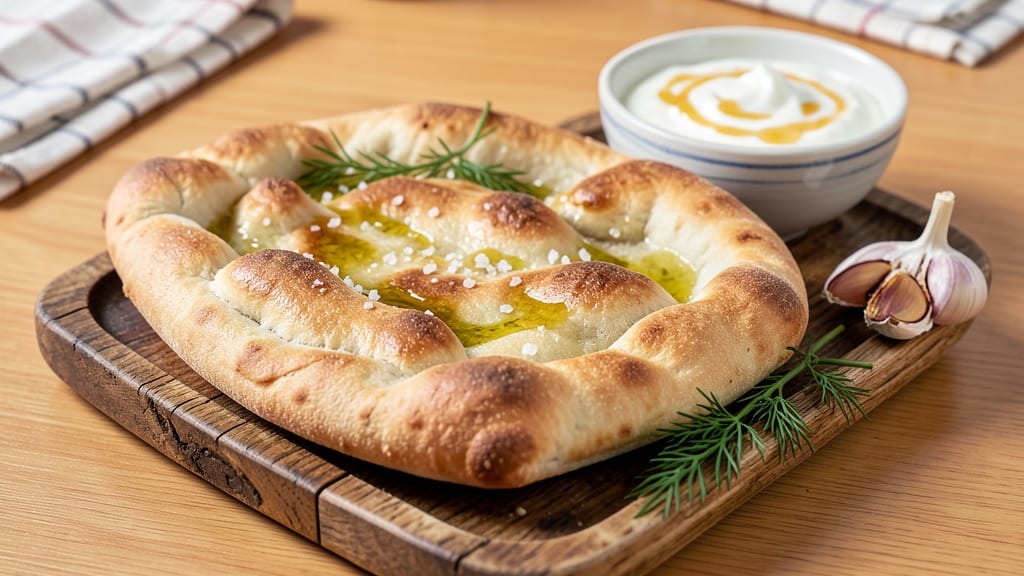
This Albanian pita bread recipe brings the heart of the Balkans to your kitchen with its signature flaky layers and herby yogurt twist. 💛 The secret lies in the dough's delicate balance of flour, yeast, and olive oil, which creates those iconic tender layers when baked.
Unlike many flatbreads, this version incorporates yogurt into the dough, adding a subtle tang and improving elasticity for perfect shaping.
The traditional method involves letting the dough rest for at least 2 hours, allowing the gluten to relax and develop flavor. This patience pays off when you stretch the dough into thin, even circles—just a few millimeters thick—and bake them until puffed and golden.
The yogurt not only enhances flavor but also helps create that signature flakiness that makes this bread irresistible.
What you'll end up with is bread that's crisp around the edges yet soft and pillowy inside, with a delicate herby aroma from the yogurt. These pitas are perfect for stuffing with Albanian specialties like lamb, feta, and peppers, or simply serving alongside soups and grilled meats.
The dough can be made ahead, making this an ideal recipe for meal prep.
This recipe delivers authentic Albanian flavors while being simple enough for home cooks. The key is in the dough preparation and baking technique—once mastered, you'll have a versatile bread that elevates any meal. Let's get started on creating this traditional staple in your own kitchen.
Ingredients for albanian pita bread
The heart of Albanian pita lies in these 12 ingredients—flour for structure, yogurt for flakiness, and herbs for that signature Balkan aroma.
| Ingredient | Amount | Notes |
|---|---|---|
| All-Purpose Flour 🌾 | 4 cups | Plus 1 tbsp for dusting |
| Plain Yogurt 🧀 | 1 cup | Greek or regular, unsweetened |
| Active Dry Yeast 🍞 | ¼ tsp | Or 1 packet instant yeast |
| Extra-Virgin Olive Oil 🫒 | ¼ cup | High quality, fruity |
| Granulated Sugar 🍯 | 1 tbsp | Or honey for subtle sweetness |
| Salt 🧂 | 1 tsp | Diamond Crystal preferred |
| Warm Water 💧 | 1 ¼ cups | 110°F for optimal yeast activation |
| Sesame Seeds 🌰 | 2 tbsp | For topping, optional |
| Fresh Dill 🌿 | ¼ cup | Chopped, for yogurt mix |
| Fresh Parsley 🌿 | ¼ cup | Chopped, for yogurt mix |
| Garlic Cloves 🧄 | 2 cloves | Minced, for yogurt mix |
| Lemon Juice 🍋 | 1 tbsp | Freshly squeezed |
The flour is non-negotiable here—King Arthur or Gold Medal work best for that tender crumb. Yogurt should be plain and unsweetened—Greek yogurt adds protein, but regular works too. For yeast, Bob's Red Mill active dry is reliable, but check the expiration date. Olive oil matters: California Gold or Colavita bring authentic flavor. The herbs? Fresh is best—dried works in a pinch, but the bright flavor is worth the trip to the market. Pro tip: Toast your sesame seeds in a dry pan for 30 seconds before topping—they'll release their aroma when baked.
No sesame seeds? Poppy seeds or everything bagel seasoning add a nice crunch. Short on dill? Mint or tarragon at half the amount gives a different but still fresh vibe. The yogurt mix can be prepped ahead—store it in the fridge for up to 2 days. Using instant yeast? Skip the warm water step and mix it directly with the dry ingredients. For extra flakiness, chill the dough for 30 minutes before shaping. And if your kitchen's hot, use a stand mixer with a dough hook—it keeps things cooler and more manageable.
Dough keeps for 2 days wrapped in plastic in the fridge, or 3 months frozen. For freezing, shape the dough into balls, wrap tightly, and thaw overnight in the fridge before baking. The baked pitas stay fresh for 3 days at room temperature, wrapped in a clean kitchen towel. Reheat in a 350°F oven for 5 minutes to restore crispiness. I always make a double batch—one for the week, one to freeze for lazy days when I just want fresh bread without the effort.
Why You'll Love This Recipe
- No-Knead Magic: I swear by this dough—just mix, let it rise, and roll. No punchy arms, no flour everywhere. The yogurt keeps it tender while the olive oil gives that signature shine without extra fuss.
- Tangy Crisp Delight: That yogurt and olive oil combo? It’s the secret. The outside gets golden and crackly, but the inside stays soft—like a hug for your sandwich or wrap. Honestly, I’ll take this over store-bought any day.
- Weeknight Workhorse: Stuff it with gyro meat, feta, and cucumbers for dinner. Freeze extras for lazy mornings with scrambled eggs. It’s my go-to for picnics, charcuterie boards, or even a quick flatbread pizza.
- Pantry-Friendly Staple: Five ingredients, all budget basics. A batch lasts me a week, and the leftovers toast up fresh. Between us, this is the kind of bread that makes grocery shopping feel like a win.
Step-by-step instructions for Albanian pita bread
Master the art of creating tender, flaky pita with a fragrant herby yogurt twist.
👨🍳 Step 1: Prepare the Yogurt Dough Base
In a medium bowl, combine the 1 cup plain yogurt, 0.25 cup extra-virgin olive oil, 1 tbsp granulated sugar, 1 tsp salt, 2 cloves minced garlic, 0.25 cup chopped fresh dill, 0.25 cup chopped fresh parsley, and 1 tbsp lemon juice. Whisk until smooth and well incorporated. The mixture should be thick but pourable—this will form the flavorful foundation of your dough.
I like to let this yogurt mixture sit for 5 minutes while I prepare the rest. This allows the garlic and herbs to infuse properly, giving your bread that signature Albanian brightness. The lemon juice brightens the flavors while the olive oil keeps the dough tender. Don't skip this step—it's what makes this pita stand out.
👨🍳 Step 2: Mix the Dough and Knead Properly
In a large bowl, stir together the 4 cups all-purpose flour and 0.25 tsp active dry yeast. Make a well in the center and pour in the yogurt mixture along with 1.25 cups warm water (110°F). Using a wooden spoon, gradually incorporate the flour until a shaggy dough forms.
Turn the dough onto a lightly floured surface and knead for 8-10 minutes until smooth and elastic. You'll know it's ready when it springs back slowly when poked. I press down gently on the dough during the first minute—this prevents it from curling and ensures even contact with the surface. The dough should be slightly tacky but not sticky; add a bit more flour if needed.
⏰ Step 3: First Rise for Maximum Flavor
Lightly coat a large bowl with olive oil and place the dough inside. Cover with a damp towel and let rise in a warm place for 1-2 hours, or until doubled in size. The warm environment helps activate the yeast properly—if your kitchen is cold, place the bowl near a warm oven with the light on.
During this rise, the dough will develop its airy texture. I like to gently press the dough after 30 minutes to check for even expansion. If one area rises faster than others, rotate the bowl to ensure balanced proofing. The herby yogurt mixture will continue to infuse during this time, creating that distinctive Albanian flavor profile.
🍳 Step 4: Shape and Second Rise for Flaky Layers
Punch down the risen dough and divide it into 4 equal portions. On a floured surface, roll each portion into a 12-inch circle about ¼-inch thick. The key here is even thickness—this ensures consistent cooking and those signature flaky layers. I like to rotate the dough as I roll to maintain uniform thickness.
Place the rolled dough onto parchment-lined baking sheets, cover with a damp towel, and let rise for another 30-45 minutes until puffy. This second rise is crucial for creating those airy pockets. I press lightly on the dough to check—it should spring back slowly but leave a slight indentation.
🔥 Step 5: Bake to Perfection with Sesame Topping
Preheat your oven to 425°F with a baking stone or inverted baking sheet inside. Brush the tops of the pita with a little olive oil and sprinkle with 2 tbsp sesame seeds. Bake for 12-15 minutes until the tops are golden brown and the bottoms are crisp.
Here's the thing—don't overbake. You want the centers to remain soft and pillowy. The pita should sound hollow when tapped on the bottom. As soon as they're done, transfer to a wire rack to cool for 5 minutes before serving. The sesame seeds add a delightful crunch that contrasts beautifully with the soft interior.
Pro Tips For Making Albanian Pita Bread
- STIR THE YEAST FIRST: Mix the yeast with the warm water and sugar before adding yogurt—this guarantees it activates faster. I learned this the hard way after once waiting 20 minutes for yeast that never bubbled because it got drowned in yogurt’s acidity.
- USE THICK YOGURT: Grab the thickest plain yogurt you can find (Greek-style works best)—thin yogurt makes the dough gummy. My grandmother swore by this, and she was right: the texture stays light and airy, not dense.
- DON’T OVERHANDLE THE DOUGH: Once you knead it 5-6 times, stop—overworking develops gluten, and these pitas need to stay tender. I was skeptical until I tried it: the bread stays soft even after baking.
- SEAR WITH OLIVE OIL: Brush the hot skillet with extra-virgin olive oil before adding the pitas—it prevents sticking and adds a subtle fruity depth. (Yes, even if you’re impatient like me, wait for the oil to shimmer before cooking.)
Best sauces and condiments for this recipe
Herby Yogurt Dip
The star pairing for Albanian pita is the herby yogurt dip you make with the leftover yogurt mixture. Whisk together ½ cup plain yogurt, 1 tbsp lemon juice, 1 minced garlic clove, 1 tbsp chopped dill, 1 tsp olive oil, and a pinch of salt.
This creamy, tangy dip cuts through rich fillings like lamb or feta while enhancing the pita's herby notes. Serve it warm or chilled—it's perfect with stuffed pitas or as a side for grilled meats. 🌿
Spicy Tomato Relish
For a bold contrast, try a spicy tomato relish made with 1 cup crushed tomatoes, 1 tbsp red wine vinegar, ½ tsp smoked paprika, ½ tsp red pepper flakes, and 1 tsp honey.
Simmer for 10 minutes until thickened, then cool before spreading on warm pita. The acidity and heat balance the bread's richness, making it ideal for hearty Albanian dishes like byrek. I love adding a sprinkle of crumbled feta on top for extra depth. 🌶️
Garlic and Olive Oil
Keep it simple with garlic-infused olive oil—just warm ¼ cup extra-virgin olive oil with 2 minced garlic cloves and 1 tsp dried oregano over low heat for 2 minutes. Drizzle this fragrant oil over freshly baked pita before stuffing or serving alongside soups.
The aromatic garlic and olive oil elevate the bread's natural flavors without overpowering them. Store leftovers in the fridge for up to 5 days. 🫒
Honey and Walnut Spread
For a sweet-savory twist, blend ¼ cup walnuts, 2 tbsp honey, 1 tbsp tahini, and 1 tsp lemon zest until smooth. This nutty, slightly sweet spread pairs beautifully with Albanian pita, especially when stuffed with grilled vegetables or mild cheeses.
The walnuts add crunch, while the honey balances the bread's tangy yogurt base. Spread a thin layer on warm pita and fold—it's a crowd-pleaser for breakfast or dessert. 🍯
Pickled Vegetable Toppings
Brighten your pita with quick-pickled vegetables—slice ½ red onion, ½ cucumber, and 1 bell pepper, then soak in a mix of ½ cup vinegar, 1 tbsp sugar, and 1 tsp salt for 30 minutes.
Drain and pat dry before adding to stuffed pita. The crisp, tangy vegetables contrast the soft bread perfectly, making every bite refreshing. I often use this with lamb-filled pitas for a fresh crunch. 🥒
Spiced Butter
For a luxurious touch, melt ¼ cup butter with 1 tsp ground cumin, ½ tsp turmeric, and a pinch of salt. Brush this fragrant spiced butter on warm pita before stuffing or serving as a dipping sauce.
The earthy spices complement the herby yogurt in the dough, creating a cohesive flavor profile. Leftovers keep in the fridge for 3 days—perfect for quick meals. 🧈
Nutrition facts
Frequently asked questions
Why does Albanian pita bread have yogurt in the dough?
The yogurt creates that signature flaky texture and adds a subtle tang that balances the bread's richness. It also helps keep the dough soft and elastic, making it easier to roll out thin while preventing cracking. The herby yogurt mixture infuses the dough with bright flavors that pair perfectly with Albanian dishes.
Can I make this dough ahead of time?
Yes! The dough keeps well for 2 days in the fridge wrapped tightly in plastic. For longer storage, shape into balls, wrap tightly, and freeze for up to 3 months. Thaw overnight in the fridge before baking. This makes it perfect for meal prep.
What's the secret to getting those perfect flaky layers?
The key is in the dough's resting time and even thickness when rolling. Let the dough rise fully (at least 2 hours) and roll each piece into a ¼-inch thick circle. The second rise before baking creates those air pockets that become flaky layers when baked.
How do I know when the pita is done baking?
Your pita is ready when the tops are golden brown and the bottoms sound hollow when tapped. Overbaking makes them tough—aim for 12-15 minutes at 425°F. Transfer to a wire rack immediately to prevent sogginess.
Can I use this dough for stuffed pitas?
This dough is perfect for stuffing. After baking, let the pita cool for 5 minutes to soften slightly, then stuff with Albanian favorites like lamb, feta, and roasted peppers. The herby yogurt flavor enhances the filling beautifully.