
Side Dishes
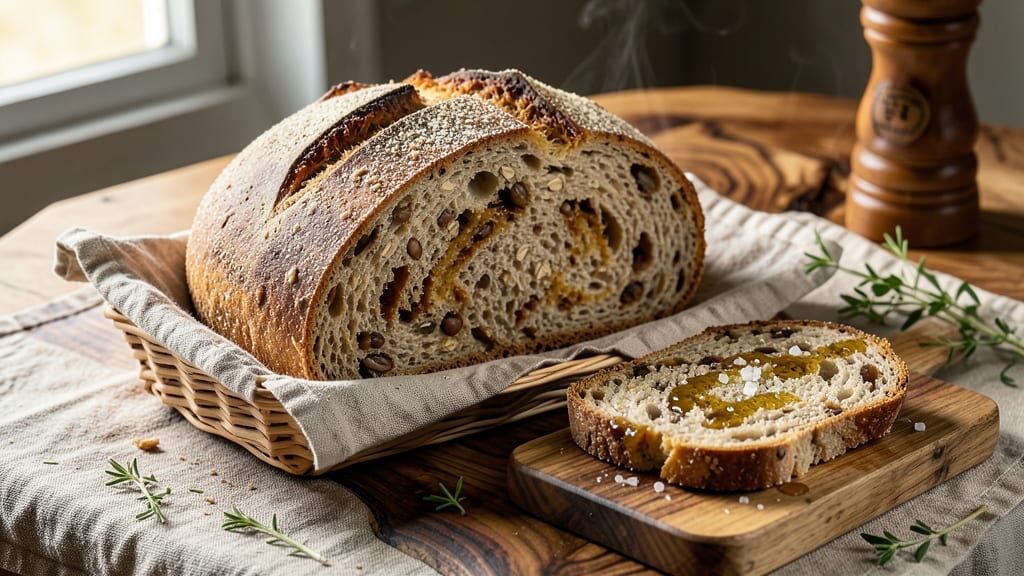
This six-grain bread recipe delivers a rustic crust and nutty crunch that transforms ordinary meals into something extraordinary. 🌾 The blend of wheat, rye, barley, oats, corn, and millet creates a hearty texture with deep, complex flavors that stay fresh for days.
Perfect for sandwiches, toast, or serving alongside soups, this bread is designed to impress without requiring advanced baking skills.
The secret lies in the hydration ratio and fermentation time—balanced just right to create a tender crumb with a satisfying snap. Each grain contributes its own unique character: rye adds earthiness, oats bring chewiness, and corn introduces subtle sweetness.
With simple ingredients and a straightforward process, you’ll achieve bakery-quality results in your own kitchen.
By the time it emerges from the oven, you’ll have a loaf with a deep golden crust and a crumb so inviting it practically melts in your mouth. The nutty undertones from the grains pair beautifully with butter, jam, or even as a side for hearty stews.
This recipe is your gateway to homemade bread that tastes like it came from a countryside bakery.
Store it at room temperature for up to 5 days or freeze for longer shelf life—though it’s unlikely to last that long. Whether you’re a beginner or an experienced baker, this foolproof method ensures success every time. Ready to bake?
Ingredients for 6 grain bread
Six distinct flours and one yeast packet—this is all you need for bakery-worthy bread.
| Ingredient | Amount | Notes |
|---|---|---|
| Bread Flour 🌾 | 3 cups | High-protein for structure |
| Whole Wheat Flour 🌾 | 1 cup | Adds nutty depth |
| Rye Flour 🌾 | ½ cup | Earthy flavor base |
| Barley Flour 🌾 | ½ cup | Chewy texture |
| Oat Flour 🌾 | ½ cup | From rolled oats |
| Cornmeal 🌽 | ½ cup | Fine-ground preferred |
| Millet Flour 🌾 | ¼ cup | Subtle sweetness |
| Active Dry Yeast 🍞 | 2 ¼ tsp | Fresh yeast if available |
| Granulated Sugar 🍚 | 1 tbsp | Feeds yeast fermentation |
| Salt 🧂 | 2 tsp | Diamond Crystal preferred |
| Extra-Virgin Olive Oil 🫒 | ½ cup | For dough elasticity |
| Warm Water 💧 | 1 ½ cups | 110°F for yeast activation |
| Honey 🍯 | 1 tbsp | Enhances crust color |
| Sesame Seeds 🌻 | 1 tbsp | For decorative crust |
The grains make or break this recipe. Bob's Red Mill has excellent pre-ground flours, but if you're grinding your own, use a high-quality grain mill—King Arthur makes a great one. Rye and barley flours can be tricky to find; check the bulk section at Whole Foods or Sprouts. For the millet flour, Bob's Red Mill or Anthony's Goods are reliable brands. If you can't find millet flour, sub with an extra 0.25 cup of oat flour—it won't be identical but still delicious. The yeast is non-negotiable: if it's past its expiration date, toss it. Fresh yeast from the refrigerated section at Trader Joe's gives the best rise.
No rye flour? Substitute with extra whole wheat at the same amount—it won't be identical, but the earthy notes remain. Running low on barley flour? Swap with whole wheat, though the texture will be slightly less chewy. Cornmeal can be replaced with fine-ground corn flour if you don't have coarse cornmeal. The honey is optional but worth it for that deep golden crust—Manuka honey adds an extra floral note. For a vegan option, replace honey with maple syrup. The olive oil can be swapped for avocado oil if you prefer a neutral flavor. And if you're short on sesame seeds, poppy seeds or everything bagel seasoning work beautifully for topping.
This dough is a beast—it needs time. Let it ferment overnight in the fridge for 8-12 hours for maximum flavor development. Shape the loaf in a 9x5-inch loaf pan lined with parchment paper for easy removal. Bake at 375°F until the internal temperature hits 205°F. Store wrapped at room temperature for 5 days or freeze for up to 3 months. The bread reheats beautifully—wrap in foil and warm in a 350°F oven for 10 minutes. I always make a double batch; one loaf disappears in a day, and the second gets frozen for lazy mornings.
Why You'll Love This Recipe
- I swear by this: just toss the flours—bread, whole wheat, rye, barley, oats—into a bowl, add water and yeast, and stir. No kneading, no fuss. My hands stay clean, and the dough comes together faster than my old heavy-knead method.
- No-Fuss Mixing: I swear by this: just toss the flours—bread, whole wheat, rye, barley, oats—into a bowl, add water and yeast, and stir. No kneading, no fuss. My hands stay clean, and the dough comes together faster than my old heavy-knead method.
- Earthy Depth: That rye and barley? They bring a nutty, almost toasty richness that plain white bread can’t touch. Honestly, it’s the kind of flavor that makes you slow down and actually taste your sandwich instead of shoveling it in.
- Weeknight Hero: This bread is my go-to for toast, grilled cheese, or even a quick open-faced sandwich. Between us, it’s the only loaf I bake that doesn’t get judged for being "too healthy"—my kids grab it just like the store-bought stuff.
Step-by-step instructions for six-grain bread
Here's how to craft this nutty, rustic bread with a perfect crumb and crispy crust.
🍳 Step 1: Activate the Yeast and Mix the Dough
In a large bowl, combine the 1.5 cups warm water (about 110°F—too hot and you'll kill the yeast), 1 tbsp granulated sugar, and 1 tbsp honey. Sprinkle the 2.25 tsp active dry yeast over the top and let it sit for 5-10 minutes until it becomes frothy. This foaming action confirms your yeast is alive and ready to work its magic.
In a separate large mixing bowl, whisk together all the dry ingredients: the 3 cups bread flour, 1 cup whole wheat flour, 0.5 cup rye flour, 0.5 cup barley flour, 0.5 cup oat flour, 0.5 cup cornmeal, 0.25 cup millet flour, and 2 tsp salt. Make a well in the center and pour in the yeast mixture along with the 0.5 cup extra-virgin olive oil. Use a wooden spoon to stir until a shaggy dough forms.
👨🍳 Step 2: Knead Until Elastic and Smooth
Turn the dough out onto a lightly floured surface and knead vigorously for 8-10 minutes until it becomes smooth and elastic. You'll know it's ready when it springs back slowly when poked and forms a windowpane when stretched thin. The multiple flours make this dough denser than all-purpose, so don't be surprised if it feels heavier—it's supposed to!
Here's the thing—this dough contains whole grains and seeds that can make it gummy if overworked. Knead just until the ingredients come together uniformly, then stop. The gluten development will continue during the bulk fermentation, so we don't need to overdo it here.
⏰ Step 3: First Rise (Bulk Fermentation)
Lightly oil a large mixing bowl, place the dough inside, and cover with a damp kitchen towel. Let it rise in a warm spot for 1.5-2 hours until it has nearly doubled in size. You'll see bubbles forming on the surface and the dough will feel light and airy when pressed gently with one finger. This first rise develops the flavor and structure that makes this bread special.
I like to place my dough in a slightly warm oven (with the light on) for even heating. If your kitchen is cold, the dough might take longer to rise. The goal is to let the yeast work its magic slowly—this creates those beautiful open crumbs and complex flavors from the grains.
🍳 Step 4: Shape and Second Rise
Punch down the risen dough to release air, then divide it into two equal pieces. Shape each piece into a round loaf by pulling the edges toward the center and sealing the seam. Place the shaped loaves on a parchment-lined baking sheet, cover with the damp towel again, and let them rise for another 45-60 minutes until puffy. The second rise gives the bread its final structure and airy texture.
For extra flavor, you can brush the tops with a little water or egg wash before baking. I like to sprinkle the 1 tbsp sesame seeds over each loaf now for that beautiful decorative crust. This is also when you'll notice the aroma developing—those nutty, earthy notes from all the different grains.
🔥 Step 5: Bake to Golden Perfection
Preheat your oven to 375°F with a Dutch oven inside for 30 minutes. This creates steam that gives the bread its signature crisp crust and open crumb. Carefully transfer the shaped loaves to the hot Dutch oven, cover, and bake for 30 minutes. Remove the lid and bake for another 15-20 minutes until the bread is deep golden brown and sounds hollow when tapped on the bottom.
The internal temperature should reach 190-200°F when measured with an instant-read thermometer. Let the bread cool on a wire rack for at least 1 hour before slicing—this resting period allows the crumb to set properly and prevents a gummy texture. The longer you wait, the better the texture will be, but it's worth it for that perfect slice every time.
Pro Tips For Making 6 Grain Bread
- SIFT THE FLOURS: Mix the rye and barley flours separately first—they’re heavier and absorb moisture differently. I learned this the hard way when my first batch turned into a dense brick because the wet ingredients got trapped in those fine particles before they even hit the bread flour.
- WEIGH DON’T SCOOP: Use a kitchen scale for every flour, especially oat flour—it’s notoriously inconsistent when scooped. The whole wheat and rye flours will pack differently, and your bread’s texture will thank you for the precision (yes, even if you’re impatient like me).
- STOP KNEADING WHEN IT’S TOUGH: This dough fights back. Test for readiness by poking it—if it springs back slowly (not immediately), it’s done. Over-kneading turns the barley and rye into gummy goo, and no one wants a bread that feels like chewing bubblegum.
- HYDRATE THE OAT FLOUR: Sprinkle oat flour over the wet ingredients first, then mix. It soaks up liquid like a sponge, and doing it this way guarantees even distribution. Skip this, and you’ll end up with dry pockets that ruin the crumb—trust me, I’ve made that mistake.
Health benefits of this 6 grain bread
Whole Grain Powerhouse
This six-grain bread packs a nutritional punch with each slice delivering a blend of complex carbohydrates, fiber, and plant-based protein.
The combination of whole wheat, rye, barley, oats, corn, and millet creates a hearty texture while providing sustained energy—perfect for breakfast or post-workout recovery. 💪 The fiber content from these grains supports digestive health and keeps blood sugar levels stable, making it an excellent choice for balanced meals.
Gluten-Friendly Adaptations
While traditional versions contain gluten, you can adapt this recipe by substituting 1-2 cups of gluten-free flour blend (like Bob's Red Mill 1:1) for the wheat flour. The rye and barley will still contribute earthy flavor, though the texture will be denser.
For those with celiac disease, ensure all flours and ingredients are certified gluten-free—cross-contamination can be an issue with shared equipment.
Protein and Mineral Boost
Each grain brings unique minerals: rye provides magnesium and B vitamins, barley offers selenium and fiber, and millet contributes calcium and iron. The oats add soluble fiber, while cornmeal delivers thiamine.
Together, they create a nutrient-dense loaf that rivals many processed breads. For an extra protein kick, sprinkle 1 tbsp vital wheat gluten before baking.
Low-Glycemic Advantage
This bread earns its place in low-glycemic diets thanks to the whole grains and seeds. The low glycemic index of rye and barley helps prevent blood sugar spikes, making it ideal for diabetics or anyone monitoring carbohydrate intake.
The seeds add crunch while contributing healthy fats that further slow digestion, keeping you satisfied longer.
Allergen Considerations
For nut-free kitchens, omit sesame seeds and replace with poppy seeds or sunflower seeds. If you're avoiding gluten, use a dedicated gluten-free flour blend and ensure no cross-contamination. The recipe naturally avoids dairy, eggs, and common allergens, making it versatile for most dietary restrictions.
Always check flour labels—some rye and barley flours may be processed in facilities handling nuts.
Nutrition facts
Frequently asked questions
Why does my six-grain dough feel heavier than regular bread dough?
Whole grains and seeds absorb more moisture and create denser dough due to their higher fiber content. The rye, barley, and oats especially contribute to this texture, but it's exactly what gives this bread its satisfying chew and nutty depth. Knead just until combined—overworking can make it gummy!
Can I substitute any of the grains if I can't find them?
Swap millet with extra oat flour (same amount) or barley with whole wheat. For cornmeal, use fine-ground corn flour if needed. The key is maintaining the balance of textures—each grain plays a role in the final crumb. Try replacing 1 grain at a time to test flavor changes.
How do I know when the bread is fully baked?
Look for three signs: the crust should be deep golden brown, tapping the bottom should sound hollow, and the internal temperature should reach 190-200°F. An instant-read thermometer is your best tool—this prevents overbaking while ensuring doneness.
Why does my bread taste bland after baking?
Underproofed dough or insufficient grain flavor development often causes this. Let the dough ferment overnight in the fridge for deeper flavor, and toast the bread to enhance the nutty notes. The grains need time to develop their full character—rushing the process dulls their natural sweetness and earthiness.
Can I make this bread without a Dutch oven?
Yes! Use a metal loaf pan or line a baking sheet with parchment and place a tray of boiling water below for steam. The bread will have a slightly less crisp crust but still bake beautifully. For extra crunch, brush the top with water before baking and sprinkle with seeds.