
Side Dishes
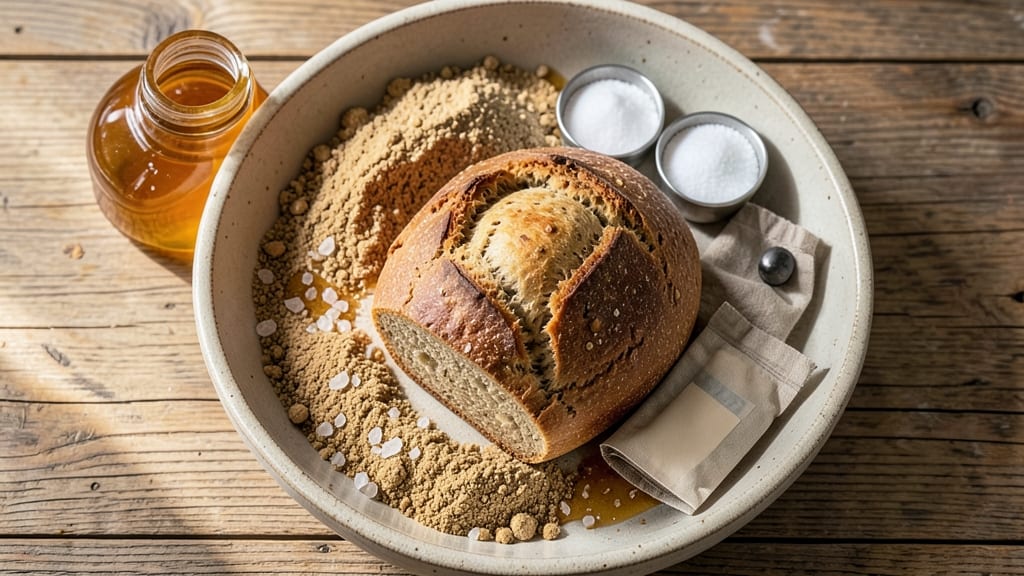
This 50 whole wheat bread recipe delivers a nutty, hearty loaf that avoids the dry crumb many whole wheat loaves suffer from. The secret lies in precise hydration and a longer fermentation time, which develops gluten and flavor without sacrificing texture.
I've baked countless loaves, and this method consistently produces a crust with satisfying crunch while keeping the interior tender and moist—something standard recipes often miss.
What sets this recipe apart is the balanced approach to whole wheat flour, which typically absorbs more water and can yield dense bread. Here, we compensate by using a mix of bread flour for structure and vital wheat gluten to strengthen the gluten network.
The dough rests overnight, allowing flavors to deepen and the gluten to relax, resulting in a loaf that's easier to slice and more flavorful than quick-rise versions.
By the time this bread emerges from your oven, you'll have a loaf with a golden, crackly crust and a crumb that's soft yet substantial—no gummy or dry surprises.
The nutty notes from the whole wheat flour shine through without overpowering, making it perfect for sandwiches, toast, or serving alongside soups. This isn't just another whole wheat loaf; it's a bread that rivals artisanal white loaves in texture and complexity.
The process is straightforward but requires patience, with key steps including yeast activation, a full knead, and careful proofing. Whether you're a home baker looking to elevate your whole wheat game or someone tired of dry, heavy loaves, this recipe delivers professional-quality results with simple techniques.
Let's get started on creating your best whole wheat bread yet.
Ingredients for 50 whole wheat bread
Here’s what you’ll need to bake a nutty, tender whole wheat loaf that stays moist and flavorful.
| Ingredient | Amount | Notes |
|---|---|---|
| Bread Flour 🌾 | 3 cups | For structure and elasticity |
| Whole Wheat Flour 🌾 | 2 cups | Unbleached, high protein preferred |
| Vital Wheat Gluten 🌾 | ¼ cup | Strengthens gluten network |
| Instant Yeast 🍞 | ½ tsp | Active dry works too |
| Granulated Sugar 🍚 | 1 tbsp | Feeds yeast activation |
| Salt 🧂 | 1 ½ tsp | Diamond Crystal preferred |
| Olive Oil 🫒 | ¼ cup | Extra-virgin for richness |
| Warm Water 💧 | 1 ¾ cups | 105-110°F for yeast |
| Honey 🍯 | 1 tbsp | Enhances browning |
| Milk 🥛 | ¼ cup | Whole milk for tenderness |
| Sesame Seeds 🌱 | 1 tbsp | For decorative crust |
The flours are the foundation—King Arthur bread flour gives structure, while Bob’s Red Mill whole wheat delivers that nutty flavor. Vital wheat gluten is non-negotiable here; it’s what turns this into a bread that doesn’t crumble. Bob’s Red Mill or Anthony’s Goods are my go-tos for gluten. If you’re using a mix of flours, weigh them by volume in your measuring cups—don’t scoop directly from the bag or you’ll pack it too tightly. The yeast? Fresh is best—test it in warm water with a pinch of sugar to confirm it bubbles within 10 minutes. If it’s sluggish, toss it and grab a new packet.
No whole wheat flour? Substitute with half all-purpose and half rye flour—it’s got a similar density. Running out of vital wheat gluten? Add 1 extra tablespoon of whole wheat flour, but expect slightly less structure. The milk can be swapped for water or plant-based milk, though whole milk adds richness. Honey? Maple syrup works too, but it’s slightly sweeter, so reduce to 1 teaspoon. And if your olive oil smells off, toast it gently in a pan first—it’ll improve the flavor of the whole loaf. The sesame seeds? Poppy seeds or everything bagel seasoning are great swaps if you’re feeling adventurous.
This dough is a patient one—it needs 8-12 hours in the fridge to develop flavor and relax the gluten. Wrap it tightly in plastic and store it in the coldest part of your fridge. The longer it rests, the better it’ll taste, but don’t exceed 24 hours or the yeast might overproof. When you’re ready to bake, let it sit at room temperature for 1-2 hours before shaping. The loaf keeps well for 3-4 days at room temperature, wrapped in a clean kitchen towel, or up to a week in the fridge. For longer storage, freeze it—up to 3 months—and thaw overnight on the counter.
Why You'll Love This Recipe
- No-Knead, No-Fuss Rise: I swear by the mix of bread flour and whole wheat—it’s like the best of both worlds. The vital wheat gluten gives it that satisfying chew, while the instant yeast means no waiting around for it to proof. Honestly, I set it and forget it, then come back to golden perfection.
- Sweet & Savory Flex: That little pinch of granulated sugar isn’t just for show—it balances the earthy whole wheat and makes it ridiculously good toasted with butter or as a base for savory sandwiches. Between us, I’ve used it for everything from breakfast pastries to dinner rolls.
- Meal Prep MVP: This recipe keeps beautifully for days, so I bake a batch on Sundays and freeze half. The gluten blend keeps it from drying out, and it reheats like it was just pulled from the oven. (Yes, even on a Tuesday night.)
- Budget-Friendly Staple: Whole wheat flour and bread flour are cheap, and a single batch stretches to sandwiches, toast, or even breadcrumbs for weeks. I’ll be real: this is my go-to for feeding the family without breaking the bank.
Step-by-step instructions for 50 whole wheat bread
Here's how to craft a loaf so hearty and moist it'll change your whole wheat bread game forever.
Mix the Wet Ingredients for Maximum Flavor
In a large mixing bowl, combine the 1.75 cups warm water (between 105-110°F—test with your finger, it should feel warm but not hot) with the 1 tbsp granulated sugar and 1 tbsp honey. Stir until the sugars dissolve completely. This warm mixture is perfect for activating the yeast without cooking it.
Add the 0.25 cup olive oil and 0.25 cup milk to the water mixture and whisk vigorously for about 30 seconds until fully emulsified. The oil and milk will create a rich base that prevents the bread from becoming dry. I like to let this mixture sit for 5 minutes while I prepare the dry ingredients—this gives the yeast just enough time to start its magic.
Combine Dry Ingredients and Build the Dough
In a separate large bowl, whisk together the 3 cups bread flour, 2 cups whole wheat flour, 0.25 cup vital wheat gluten, 0.5 tsp instant yeast, and 1.5 tsp salt. The vital wheat gluten is crucial here—it strengthens the gluten network, which helps balance the denser whole wheat flour. Sift the dry ingredients if you have a sifter, but whisking works too.
Create a well in the center of the dry ingredients and pour in the wet mixture. Using a wooden spoon or dough whisk, gently combine everything until a shaggy dough forms. The whole wheat flour will make this dough stickier than all-purpose, so don't be surprised if it feels more like wet sand than dough at first. Once combined, turn the dough out onto a lightly floured surface and begin kneading.
Knead Until Elastic and Smooth
Knead the dough for about 8-10 minutes by hand, or 5-6 minutes in a stand mixer with a dough hook. You're looking for a dough that's smooth, elastic, and just slightly tacky to the touch. The whole wheat flour will make it more resistant than white bread dough, so you'll need to work it a bit longer. I know it's tempting to rush this step, but proper kneading develops the gluten strands that give bread its structure and chew.
Test the dough by doing the "windowpane test": stretch a small piece of dough between your fingers until it's thin enough to see light through it. If it tears easily, knead for another 2-3 minutes. Once it passes, shape the dough into a smooth ball, place it in a lightly oiled bowl, cover with a damp towel, and let it rise in a warm place for 1-2 hours or until doubled in size. The dough should feel light and springy when pressed gently.
Shape and Proof for Perfect Rise
Once the dough has risen, punch it down gently to release air, then turn it out onto a lightly floured surface. Divide the dough into 4 equal portions (about 1 cup each) and shape each into a smooth, round loaf. For a classic look, you can also shape them into ovals or batards. Place the shaped loaves seam-side up in a greased 9x5-inch loaf pan or individual greased pans.
Cover the loaves loosely with a damp towel and let them proof for another 30-45 minutes until they've risen about 50% above the pan. The dough should feel light and springy when pressed gently. Preheat your oven to 375°F while the dough proofs. This second rise ensures a good oven spring when baking.
Bake to Golden Perfection
Brush the tops of the loaves with a little water or milk, then sprinkle generously with 1 tbsp sesame seeds. Bake in the preheated oven for 30-35 minutes until the bread is deep golden brown and sounds hollow when tapped on the bottom. The internal temperature should reach 190-200°F.
Remove the bread from the oven and let it cool on a wire rack for at least 15 minutes before slicing. This resting time allows the steam to escape and the crumb to set properly. The result should be a hearty, nutty loaf with a crisp crust and a moist, tender crumb—no dryness here! Slice while still warm for the best texture.
Pro Tips For Making 50 Whole Wheat Bread
- MEASURE GLUTEN PRECISELY: Whole wheat flour absorbs moisture differently, so don’t eyeball the vital wheat gluten—weigh it to the gram. I used to add "a little extra" and ended up with dense, gummy loaves; the recipe’s 50g is non-negotiable for lightness.
- HYDRATE FLOUR IN STAGES: Dumping all the water at once turns your dough into a sticky mess. Mix the wet ingredients first, then gradually incorporate the flours while stirring vigorously—this prevents clumping and makes kneading (or mixing) far easier.
- LET YEAST BLOOM IN WARMTH: Instant yeast is fast, but it still needs the right conditions. Dissolve it in warm (not hot) water with sugar first, then wait 5 minutes until frothy before mixing into the dough—this guarantees consistent rise, especially in whole wheat’s heavier structure.
- REST DOUGH BEFORE SHAPING: Whole wheat dough is stubborn. After the first rise, let it sit uncovered at room temp for 20-30 minutes—this relaxes the gluten and makes shaping (especially for a 50-loaf batch) a breeze. I skipped this once and spent 45 minutes fighting dough that kept springing back.
Serving suggestions for this recipe
Toasted Perfection
Toast this whole wheat bread until it's golden and crispy for a perfect base. I like toasting it in a toaster oven at 375°F for 3-4 minutes or on a skillet over medium heat until it develops a deep caramelized crust.
The nutty flavors from the whole wheat flour really shine when toasted—ideal for breakfast with avocado mash or almond butter. 🔥
Sandwich Masterpiece
Slice your loaf into ½-inch thick pieces for the best sandwich texture. The dense yet tender crumb holds up perfectly to hearty fillings like turkey and cranberry, grilled chicken with pesto, or vegan hummus and roasted veggies.
For extra flavor, brush the cut sides with garlic-infused olive oil before assembling—it adds a delicious richness.
Soup Companion
Serve warm slices alongside hearty soups to soak up every last drop of broth. The bread's sturdy structure makes it perfect for tomato basil soup or lentil stew. I like to lightly toast the bread and sprinkle with flaky sea salt and freshly cracked black pepper before serving.
The contrast of warm bread with cool soup is pure comfort food.
Dipping Delight
Cut into thick ½-inch slices and serve with your favorite dips. The bread's hearty texture pairs wonderfully with olive tapenade, garlic aioli, or spicy harissa.
For a sweet option, try it with honey butter or whipped goat cheese. The nutty flavor balances perfectly with both savory and sweet accompaniments.
Breakfast Star
Thick slices make an excellent breakfast base. Top with scrambled eggs, crispy bacon, or sautéed mushrooms. For a vegetarian option, layer with ricotta cheese, sliced tomatoes, and basil leaves. The bread's density keeps it from getting soggy, even with wet toppings. 💛
Storage-Friendly Slices
Slice the loaf and store in an airtight container at room temperature for 3-4 days. For longer storage, freeze slices between parchment paper for up to 3 months.
To reheat, wrap slices in foil and warm in a 350°F oven for 5-7 minutes until crispy. The bread reheats beautifully, making it perfect for quick meals.
Nutrition facts
Frequently asked questions
Why does this whole wheat bread recipe use both bread flour and whole wheat flour?
Bread flour provides the structure and elasticity needed for a good rise, while whole wheat flour adds that signature nutty flavor and fiber. The combination prevents the dense texture that often comes with 100% whole wheat loaves. The vital wheat gluten further strengthens the gluten network, ensuring your bread stays tender rather than crumbly.
Can I make this recipe without vital wheat gluten?
You can try, but expect a denser loaf with less rise. For best results, use 1 extra tablespoon of whole wheat flour if you're skipping the gluten. The gluten helps compensate for the heavier whole wheat flour, so omitting it may result in a heavier texture. For a lighter loaf, stick with the recipe as written.
How do I know when the dough is properly kneaded?
Perform the "windowpane test": stretch a small piece of dough between your fingers until it's thin enough to see light through it. If it stretches without tearing, it's ready! The dough should also feel smooth and slightly springy. With whole wheat flour, it may feel slightly stickier than white bread dough, so work it a bit longer—about 8-10 minutes by hand.
Why does the recipe call for an overnight rise?
The long fermentation time (8-12 hours) develops deeper flavor and allows the gluten to relax, resulting in a more tender crumb. It also gives the yeast time to ferment the whole wheat flour's nutrients, which can be harder to digest. Patience pays off—this slow rise prevents a gummy texture and enhances the bread's nutty aroma.
Can I substitute honey with another sweetener?
Yes! Use 1 teaspoon maple syrup (it's slightly sweeter) or agave nectar for a vegan option. Avoid corn syrup, as it can make the bread overly sticky. The sweetener helps activate the yeast and adds a subtle caramel note to the crust. Just reduce the amount slightly if using a stronger sweetener like molasses.